5 Reasons Why I Typically Avoid Eating Shrimp

Shrimp is the most popular seafood in North America, but I’d rather not eat it, and you might feel the same way after reading this blog. Here are the 5 main reasons why I typically avoid eating shrimp:

1 – Harmful food additives used to prevent discoloration

I have read a few articles that mention that a food additive is used to prevent discoloration in shrimp. Apparently, this additive has estrogen-like effects in the body that may reduce sperm count in men and increase breast cancer risk in women.

2 – Polluted shrimp farms

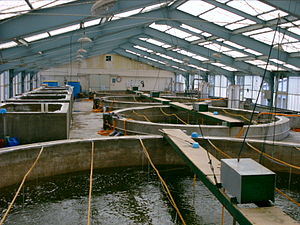
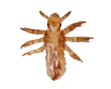
shrimp poolI teach nutrition classes at the International Academy of Natural Health Sciences, where one of the foundational recommendations is to avoid eating shrimp as most contain toxins and harbour parasites that can harm our health. Why is this? It has to do with how most of the shrimp we eat are farmed. Shrimp farming crams tons of shrimp into small ‘ponds’ – just like the overcrowded conditions related to conventional beef/chicken/etc farming. Overcrowded conditions increase the risk of disease for most living things. Imagine all of these farmed shrimp crammed into a small man-made ‘pond’. The water gets polluted with their poop (and potentially other substances in and around the farming facility) and this polluted water is a breeding ground for bacteria and parasites (check out the picture below of a typical parasite … kinda looks like a shrimp, don’t you think?). Can you guess what the solution to this pollution problem is? Read #3 to find out!

parasite

3 – Antibiotics and disinfectants

If you said dumping tons of antibiotics and/or disinfectants and other chemicals into the water, you got it! While many of these substances are banned in North America, most shrimp are farmedtoxins elsewehere – and when we eat those shrimp, we also ingest the antibiotics and disinfectants they were exposed to. Some of these chemicals/pesticides are neurotoxins (neuro = nervous system; toxins = poisons); that is, they can harm delicate nervous system tissue, including the brain. Think ADHD, Parkinson’s and memory loss as examples of health issues that can be caused or exasperated by neurotoxins.


4 – Mystery origins

You might be thinking that the solution would be to buy wild shrimp (aka Gulf shrimp), and that may be a good idea, if it weren’t for the fact that some testing found that 25% of shrimp samples labeled as wild were actually farm-raised. Additionally, much of the shrimp eaten by North Americans is imported without being labelled as such, so we have no way of knowing if what we’re eating is wild and clean, or farmed and toxic.

5 – Sketchy inspections

90% of the shrimp we eat in North America is imported – and many sources state that less than 2% of imported shrimp gets inspected by government regulatory agencies.

If you still want to eat shrimp, here’s some advice.

I do my best to avoid shrimp when eating out or when invited to dinner parties by letting the servers/hosts know that I’m allergic to shellfish. It’s taken seriously as shellfish allergies can cause very severe symptoms.

While I’ve never had any food allergy testing, thankfully, I typically feel a bit ‘off’ when I eat shellfish. Why do I say ‘thankfully’? Because I see this as my body doing me a favour and telling me, through unpleasant symptoms, to stay away from it.

If you still want to eat shrimp after reading this article, here’s a resource from Seafood Watch that will help you make the best choices when buying shrimp, as well as other shellfish and fish. They even have a great app you can download for convenient use while you’re shopping.
seafood watch app

Take control of what you can!

References

Shrimp Nutrition: Is Shrimp Healthy or Harmful to Your Health?

6 Disgusting Facts About Farmed Shrimp


Is Your Cell Phone Use Increasing Your Risk For Cancer?

This month, I don’ t have one video for you; instead, at the end of this post, I am going to suggest that you watch a few short videos that will hopefully lead you to taking a proactive step related to protecting your health.

Are You Among the 81% or 67%?

In the past few weeks, you may have seen or heard about the potential health risks of using cell phones. It was all over the news, including being the main topic covered on the March 24 2017 Episode of Market Place entitled “The Secret Inside Your Cell Phone”.

The take home message was that while cell phone manufacturers are required to inform users that the devices should be kept anywhere from 5 mm to 15 mm away from the body in order to ensure that electromagnetic radiation (EMR) exposure levels remain at or below the ‘safe’ tested levels, 81% of Canadians have never heard/seen this warning (have you?) … and about 70% of Canadians don’t’ carry their phones that far away from their bodies (are you one of them?).

Interestingly, when cell phone EMR emissions were tested to mimic the phone being right up against the body, all three types of phones tested (Samsung Galaxy, LG 5, and the iPhone 7) exceeded the safety limit, with EMR levels increasing by 3 to 4 times.

Remember When Cigarettes Were Promoted By Physicians?

doctor promoting cigarettesIt seems that those who have a vested interest in the mobile market were not concerned with this test, or with the fact that many scientists claim that current safety levels and testing procedures are out of date as they don’t reflect current technology and the way cell phones are currently used. They also argue that the research is not conclusive.

What we do know is that the potential health risks of EMR is not a new issue. It has been around for decades. While it may be true that more research is needed, I for one, don’t feel like waiting until the research is definitive; after all, not that many decades ago, cigarette ad campaigns featured images of physicians promoting the safety of various cigarette brands to consumers.

What is most concerning to me is that so many children today are almost born with a cell phone in their pocket, especially since research shows children are most susceptible to the dangers of EMR (for one, they have thinner skulls than adults do).

What Can You Do To Protect Yourself?

I first wrote about the potential health risks associated with EMR and cell phone use in 2008. Around that time, I also became aware of a device calledgia chip on my phone the Gia Wellness Cell Guard chip that supposedly protected against EMR emitted from cell phones. The Gia Wellness Cell Guard has been designed to neutralize the negative effects of exposure to electromagnetic radiation, as well as to strengthen the resilience of the body’s biofield to stress.

When I first heard about this product, I have to admit that I was a bit skeptical, so I did my own testing on it with the help of some of my clients and my Meridian Stress Assessment System. Readings were very different for individuals depending on whether or not they used a cell guard chip.

I am not an EMR expert that can share a conclusive result with you; however, I would like to direct you to a few videos that attempt to explain how a Gia Wellness Cell Guard works. You can watch them here. I was willing to risk spending the money on getting a chip for my cell phone just in case this issue turns out to be one of those one of those instances where an ounce of prevention (e.g. around US $45) is worth a pound of cure. The photo above is of the back of my cell phone with a Gia Wellness Cell Guard chip on it. The chip is about the size of a dime. It’s really thin so you can still fit a phone case over it.

You can learn more about Gia Wellness Cell Guard chips, as well as place an order for them by clicking here. I encourage you to watch the videos to learn more about the technology behind this product. If you decide not purchase a chip, then please consider these additional ways to minimize your exposure to EMR associated with cell phone usage:

  • Keep your phone off your body, or at least 1.5 cm away from it (use a holster)
  • Text instead of making a phone call
  • Use a land line to make calls if you can
  • If you have to make phone calls using your cell phone, use the handsfree/speakerphone mode or an airtube head set
  • Limit cell phone use in general, especially among children

As always, take control of what you can.

Crispy Chicken Thighs

This is a quick, easy, economical, and delicious way to cook chicken. I first tried it at my brother’s house during one of his famous multi-course farm-to-table gatherings. He has a wonderful hobby farm where he grows loads of gorgeous veggies and also raises pastured chickens for eggs and meat. This recipe works best if you have a convection broil setting on your oven, which you’ll need to preheat to 400F (read through the instructions for alternatives if you don’t have a convection broil setting). Depending on the size of the chicken thighs and how hungry everyone is, 8 thighs will usually feed 4 people. You can make more, just adjust the amount of ingredients accordingly.

You Will Need:

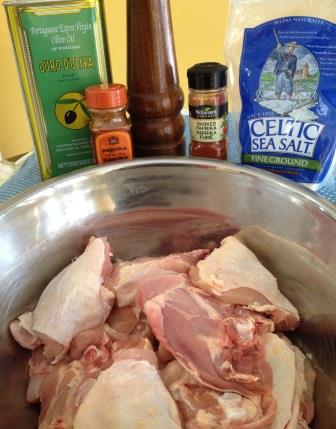
IMG_1047

  • 8 chicken thighs with skin on and bone in (antibiotic & hormone-free would be good, organic would be better, pastured would be best!) – cut off excess fat and skin then wash thighs under cold running water and pat dry with paper towel
  • 1 TBSP olive oil
  • 1 tsp paprika
  • 1/4 heaping tsp smoked paprika
  • pinch of pepper (or hot chili if you like)
  • pinches of unrefined sea salt (eg. Celtic sea salt, Himalayan sea salt) – I like using a coarse salt for this recipe if I have it on hand.
  • a large mixing bowl
  • a baking sheet

Step 1 – Make The ‘Rub’

IMG_1058

Combine and mix olive oil, both of the paprikas, and pepper and/or hot chilis (suit your taste) in a large bowl until well blended (salt is for a bit later!)

Step 2: Coat Thighs With The ‘Rub’

IMG_1314

Put the thighs in the large bowl and mix and massage them well until they are nicely and evenly coated with the rub. I use vinyl gloves for this to keep my hands clean.

Step 3: Into The Oven

IMG_1315

Put the thighs on a baking sheet, spreading them out evenly. Sprinkle each thigh with sea salt and then put into preheated oven on the lowest rack. I have never bothered greasing or lining the baking sheet with anything. Quite a bit of rendered chicken fat will be on the baking sheet by the end of the cooking time. I’ll share a cleaning tip with you at the end of the recipe!

Step 4: Wait For 40 Minutes and Enjoy!

IMG_1316

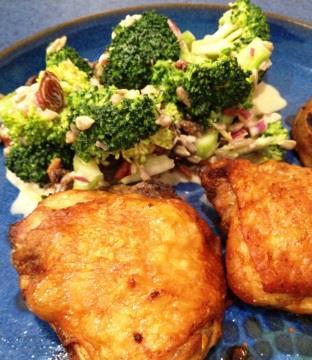
I have only ever made this recipe using the convection broil setting of my oven at 400F for 40 minutes and it has resulted in perfectly cooked, crispy chicken thighs every time. All ovens are different, so you may have to check on your chicken and adjust the cooking time – probably by a few minutes more or less. If you don’t have a convection broil setting, you will probably still get good results using a bake or roast setting – just check the chicken from time to time to make sure it’s crisping up without burning and that it’s thoroughly cooked. Serve with your favourite sides. I served this batch of thighs with my broccoli salad and baked sweet potato with some coconut oil and sea salt mashed into it. YUM!

Enjoy!

p.s. Here’s a cleaning tip for baking sheet! I have never greased or lined my baking sheet for this recipe. When you take the chicken out of the oven, let it sit on the pan for a few minutes. Use a spatula (aka a flippy thing) to lift cooked thighs from the baking to serve them. Once you’ve got all the chicken thighs off the baking sheet, put it on a flat heat-resistant surface (I use my cooktop) and pour boiling water into it and let it soak while you enjoy your meal. Once the water has cooled, you should be able to easily scrape any stuck bits and pieces off the baking sheet with the flat end of a spatula, then wash/scour the baking sheet and it should be nice and clean again!

p.p.s. In my house, the cook usually doesn’t wash the dishes! :o)

Growing Your Own Pea Shoots is Easy Peas-y!

Have you tried pea shoots yet? They’re a delicious microgreen and they are bursting with health-boosting nutrients.

It can get pretty expensive to buy them at the grocery store, so in this video, I’m showing you how easy it is to grow your own at any time of year! If you have young kids, they will love helping you to plant the peas and watch them grow.

Hope you’ll try it. Enjoy!

The Great Cholesterol Myth

Years ago, I read The Great Cholesterol Myth, a National Bestseller by Jonny Bowden PhD and cardiologist Dr. Stephen Sinatra – not really knowing anything about these two gentlemen or their position/thoughts regarding heart health.

I was captured by the subtitle of this book, which is “Why Lowering Your Cholesterol Won’t Prevent Heart Disease – And The Statin-Free Plan That Will”.

Fat (and/or cholesterol) is one of the most misunderstood topics in nutrition, and I have spent a lot of time educating my clients and workshop audiences that:

A – not all fat is evil

B- we need fat for good health, and

C – cholesterol in our foods is not to blame for ‘bad’ cholesterol numbers, high blood pressure, and heart attacks.

Heart disease is the #1 killer in North America, so it’s important that we separate fact from fiction and start focusing on the root cause of this disease – and it’s not the cholesterol in food.

Adding insult to injury, statin drugs (cholesterol lowering drugs), which are a multi-billion dollar industry and growing, have been associated with increasing the risk of two other serious health issues: diabetes and declining cognitive function (e.g. memory loss).

To quote the back cover of the book, the authors:

reveal the shody science, manipulated research, and corporate greed that has perpetuated the myth and reveal the true culprits of the disease …. Based on the latest studies and clinical findings, The Great Cholesterol Myth provides a statin-free plan for preventing, managing, and reversing heart disease and staying healthy for life.

If you or someone you know would like to prevent heart disease and/or learn about the factors that really do promote a healthy heart, I encourage you buy a copy of this book. You can do so now, by clicking here.

It is important to work with a healthcare practitioner when you are making changes to your diet, supplements, and potentially medications. I would be happy to help you with your diet/nutritional and supplement concerns. For an in person appointment, please contact the Marshall Health Clinic (Ottawa Ontario) at 613-820-0421. Phone or Skype consultations (available only to Canadian residents at the moment due to liability insurance issues … stay tuned for U.S. coverage soon!) can be arranged by sending an email to info@perfectresonance.com.

Take control of what you can!

No-Bake Yummy Snack Bars

These bars were inspired by one of my nutrition students. She wanted to replace store-bought granola bars with a healthier option, and one night she brought her creation to class to share with all of us. The bars reminded me a bit of my No-Bake Date/Nut/Coconut/Chocolate Balls, so I started playing around with various combinations of ingredients to create my own bar and came up with the recipe I am sharing with you now. These bars freeze well, and you can make substitutions to many of the ingredients to suit your taste. Not only are they easy to make, they are also soooo delicious and loaded with healthy, nutrient-rich ingredients. These bars are a GREAT alternative to the commercial, highly-processed and sugar-loaded granola bars that are packed into so many kids’ (and adults’) lunch bags. If there is a ‘nut-free’ policy at school or work, you can use seed butters instead of nut butters.Give them a try and enjoy!

What You’ll Need:

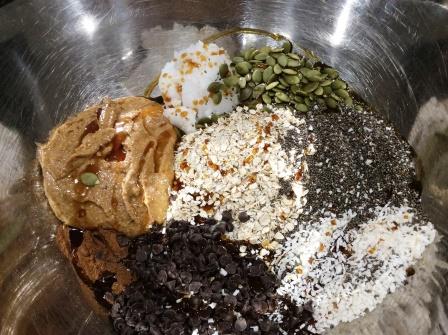
IMG_2286

  • 2 cups of certified gluten-free quick oats
  • 2/3 cup of your favourite nut or seed butter (I had almond butter on hand so used that)
  • 1/2 cup of small organic dark chocolate chips (you could also substitute some or all of these with raw cacao nibs)
  • 1/4 cup of extra virgin coconut oil
  • 1/4 cup of maple syrup or honey (I used maple syrup)
  • 1/4 cup of chia seeds
  • 1/4 cup of unsweetened shredded coconut
  • 1/4 cup of raw pepitas (pepitas are hulled pumpkin seeds … sunflower seeds would be good too … or a combo of both .. or any other seed you like!)
  • 1 tsp of ground cinnamon
  • 1/4 teaspoon of unrefined sea salt
  • a 9 x 13 inch baking pan (you can use a 9 x 9 too; however, the end product will be a lot thicker.  I’ve tried both and I prefer the thinner ones – see what you like!)
  • parchment paper or wax paper

Step 1: Mix It Up

IMG_2289

IMG_2290

Add all the ingredients into a large bowl and mix well. I used a pastry cutter to start things off, and then I got in there with my hands to really make sure all the ingredients were mixed together really, really, really well!

Step 2: Pack It Down

IMG_2291

Line the baking pan with a piece of parchment or wax paper that is large enough to cover the bottom of the pan and also go up the sides. Transfer the mixture into the pan, and evenly distribute it. Then the fun begins … you have to pack down the mixture REALLY well! If you don’t pack it down hard enough, the bars won’t hold together very well. I started with my hands, then switched to a potato masher. Use whatever tool you think will give you the most even pressing power and go for it, getting right to the edges and into the corners. Once you’ve done a good job of packing the mixture down into the baking pan, put the pan in the freezer for 60 minutes (it can be longer than 60 minutes if you can’t wait around for 60 minutes … but don’t take it out before 60 minutes!)

Step 3: Cut Into Bars


IMG_2295

Take the pan out of the freezer and by grabbing on to the parchment or wax paper, lift the frozen slab of yummy-ness out of the pan and onto a large cutting board or surface that you can cut on. Then, using a sharp knife (preferably one that is long enough to cut through the width or length of the slab), cut the slab into whatever sized pieces you want. I got 24 pieces out of my 9 x 13 inch slab. If you are having difficulty cutting through the slab, let it unfreeze for a few minutes and/or run some hot water over the blade of the knife before each cut (making sure to dry the water from the knife before each cut).

Step 4: Enjoy Now or Later

IMG_2300

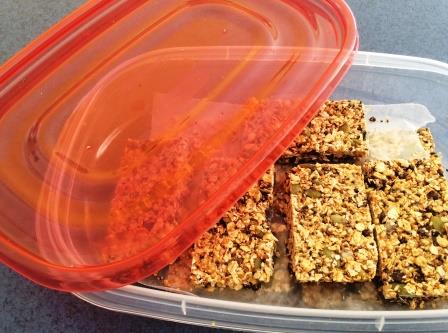
Place the cut bars into an air-tight container, separating the layers with parchment or wax paper. Keep them in the fridge to enjoy them over the next few weeks (if they last that long!), or freeze them and take them out whenever you want a healthy and satisfying snack!

Enjoy!

5 Tips for Heart Health

February is Heart Health Month, so what better time to share some tips for maintaining and/or improving cardiovascular health!

#1 – Avoid sugar.

keep calm no sugarNot just the white stuff you add to coffee, tea, and baking, but sugar in all its forms, including foods that can quickly raise blood sugar levels such as processed grains and products made with them (think pastas, breads, crackers, baked goods), white rice, potatoes, and corn … and products made with their high glycemic flours or starches, including many gluten-free products (BUYER BEWARE! gluten-free doesn’t mean ‘healthy’ – read the labels!). Soft drinks are the worst contributors to North America’s sugar-related health problems, and while diet soft drinks might sound like a healthier alternative, the artificial sweeteners that replace sugar carry a whole host of other health issues. Thirsty? Drink water! The bottom line: high blood sugar and insulin levels (the hormone that tries to bring down our blood sugar) irritate and inflame the lining of our blood vessels, which is a major risk factor for cardiovascular disease.

#2 – Eat more veggies.

veggie headSelect a variety of colours and strive to make your lunch and dinner plate at least 50% veggies. Beets, dark leafy greens, asparagus, carrots, broccoli, tomatoes, red bell peppers (eat the white pithy parts on the inside too!), garlic, leek, and onions are often associated with heart health.


#3 – Eat fat.

skinny-on-fatsYes, I said eat fat … healthy fat, like eggs (the yolk too!), coconut oil, butter (ditch the margarine!), extra virgin olive oil, and avocado oil to name a few. The topic of fats is one of the most misunderstood topics in nutrition, and being misinformed on this topic can be hazardous to your heart-health and overall health. Get the lowdown on fats by watching my pre-recorded Skinny on Fats webinar.

#4. Snack on raw nuts.

Many nuts, including almonds, walnuts, and pecans are a good source of hearty-healthy fibre, magnesium, and fats. Studies show that eating raw nuts reduces the risk of nutsheart disease. While almonds are popular, I encourage you to change it up and eat a variety of different raw nuts – pecans, cashews, macadamia nuts, Brazil nuts, hazelnuts … you get the picture! They all offer unique nutrients and health benefits. In general, an ounce of nuts per day (about a handful) is an acceptable serving.

#5. Take supplements.

biomega-3With busy lifestyles and often less-than-optimal food choices, heart health can benefit from some support. After all, the heart is the hardest working muscle in the body, beating constantly to keep us alive. While there are numerous supplements that support heart health (e.g. B12, Vitamin K, Vitamin D, magnesium), two very important ones are fish oil and Coenzyme Q10. It’s particularly important to supplement with CoQ10 if you are taking cholesterol-lowering statin drugs (which are often not necessary … you may want to read this blog about cholesterol).

I’ve written quite a few blogs on cardiovascular health over the years. You can find them by typing the word ‘heart’ in the search box on my website (See where the big red arrow is pointing in the image below? That’s what I’m talking about) Show your heart some love and give it a whirl! In fact, give it a whirl with any health or nutrition topic you’re interested in!

website search bar

Take control of what you can for a happy, healthy heart!

Privacy Policy

Website Maintenance and Services by Andrew Wardell