Wanna Know Why Cucumbers Are Cool?

I’m sure you’ve used and/or heard the expression “cool as a cucumber” at some point – but have you ever wondered about the origin of the expression?cucumber being cool

When you say that someone is ‘cool as a cucumber’, it means that they are calm and imperturbable – ‘that is, they are able to keep their cool’ – even when they are in a stressful or ‘heated’ situation.

This expression is probably based on the fact that even in hot weather, the inside of a cucumber stays cooler than the hot air around it. If you have the opportunity to pick a cucumber from a garden on a hot summer day, check it out!

Here are a few other cool facts about cucumbers that may be of interest to you:

  • In Ontario, cucumber season is from June to October. Eating local is a big part of healthy eating, so now is a great time to enjoy cucumbers! Check out Harvest Ontario to see when various fresh fruits and veggies are in season in Ontario
  • Cucumbers are a rich source of phytonutrients called lignans and  cucurbiticans. Research shows they are connected with a reduced risk of cardiovascular disease and numerous cancers. Cucumbers also have anti-inflammatory properties.

To Peel or Not to Peel?

cucumber peelMany people peel and remove the seeds from cucumbers; however, the skin and seeds are rich in nutrients (as is the case with most fruits and veggies). Unfortunately, conventionally grown cucumbers (that means they are not organic) are on the Environmental Working Group’s Shoppers Guide to Pesticides in Produce ‘Dirty 12’ list. This means that they were rated among the top 12 fruits and vegetables with the highest pesticide residues.

If the cucumbers you are eating are not organic, I suggest you wash and peel them before eating them. If they are organic, I still suggest you wash them (I wash all my store-bought produce with an organic biodegradable cleaner), but leave the peel on. Note that cucumbers might be waxed. If they’re organic, the wax should be food grade; if they’re not organic, the wax may not be food grade – and the pesticide residues will be ‘stuck’ under the wax.

Regarding the seeds, I see many people scooping the seeds out of cucumbers because they don’t like to eat them. If you have an aversion to cucumber seeds, an in interesting fact is that thin-skinned cucumbers generally have fewer seeds than thick-skinned ones. I will sometimes scoop the seeds out of cucumbers that I’ve cut in half length wise, and then fill these ‘cucumber boats’ with egg, tuna, or salmon salad. It’s a yummy way to avoid bread and get more veggies into our meals and snacks!

A Few Cucumber Recipe Ideas

Not sure how else to enjoy cucumbers other than eating cucumber slices or putting them in a salad? Here are a couple of recipes to try:

tzatzikiTsatziki is a delicious and refreshing dish that can be used as a veggie dip, a salad topping, or a condiment with grilled chicken. Check out my tzatziki recipe here.

I recently came across this delicious cold cucumber soup recipe on the Food & Wine website. While I haven’t tried this specific recipe, I’ve made similar ones and they are delicious. If you want a thinner soup or would rather avoid dairy, you can substitute the yogurt with vegetable broth.

Cucumbers as a Beauty Booster?

… and finally … a burning question I bet might be on your mind … do cucumbers really help with puffy eyes?

cucumbers on eyes

While you likely won’t find any clinical research that definitively answers the question, those who do this claims it helps (that includes me!). Here’s an interesting quote from a dermatologist who was interviewed for a Huffington Post article on the topic:

“If puffiness is accompanied by irritation, home remedies like cucumbers or chamomile tea can help reduce the inflammation and swelling,” says Dr. Nikolaidis. “Cucumbers have powerful antioxidants and flavonoids that are thought to reduce irritation. And they need to be chilled for a reason, as he points out that “cold cucumbers or tea bags also work in part by the cooling effects of evaporation, and are best applied for four to five minutes.”

Pretty cool huh? :o)

Grilled Salmon Burger Dinner

This dinner was soooo easy and so good!!! Homemade salmon burgers, grilled veggies with a red onion ‘chutney’ and fresh tomatoes…soon to be from the garden (hurray!) that I drizzled with olive oil and sprinkled with unrefined sea salt.

What You’ll Need

  • A bunch of asparagus
  • Half a large bulb of fennel
  • 1 or 2 yellow zucchini
  • A few TBSP olive oil
  • A few TBSP of your favourite herb blend
  • A couple of tomatoes
  • 1/4 cup diced red onion
  • 1 tablespoon whole grain mustard
  • 1 teaspoon balsamic vinegar
  • Splash of maple syrup
  • A squeeze of lemon/lemon juice
  • 1 pound of salmon fillets, skins removed, then cubed
  • 2 cups cilantro leaves
  • 1/4 cup minced red onion
  • 1/4 cup grated frozen ginger
  • 1 TBSP soy sauce
  • 1 teaspoon sriracha or your favourite hot sauce
  • A splash any vegetable oil

Step 1: Prepping the vegetables

376641_452327984788997_1852440504_n[2]Snap the ends off of the asparagus, cut the zucchini lengthwise into thin slices, and slice the fennel into wedges (slice through the core so the ‘layers’ hold together). Put the veggies in a bowl and toss with a couple tablespoons of olive oil and a couple tablespoons of your favourite herb blend (e.g. minced garlic, parsley, oregano…whatever you enjoy) until well coated. Grill them on the barbeque for a few minutes. The tomatoes were added as a garnish to the finished platter.

Step 2: Cooking the salmon burgers

425001_452328061455656_739413894_n[1]These salmon burgers were amazing! First time I tried them! Thanks to Chef Michael Smith. Here is the recipe: http://chefmichaelsmith.com/Recipe/grilled-salmon-burgers-with-pickled-red-onions/ I didn’t make the pickled red onions suggested in the recipe, but they inspired me to make a quick red onion chutney.

Step 3: Chutney

I winged the ‘chutney’ you see on the veggies (and it was equally yummy on the burger by the way). I didn’t really measure the ingredients, but it was about 1/4 cup of diced red onion, 1 to 2 TBSP of olive oil, 1 TBSP of whole grain mustard, 1 TSP of balsamic vinegar and a splash of maple syrup. Whisk it all together and enjoy on the veggies and burger! A squeeze of fresh lemon juice over everything was delicious too! Look forward to making these burgers again! Enjoy!


5 Easy & Delicious Ways to Reap the Health Benefits of Coconut Oil

The Crazy Coconut Oil Lady is at it again!

I’ve been talking about the health benefits of coconut oil for years and years – before it was so widely available.

Coconut oil offers loads of health benefits; however, it’s important to remember that not all coconut oil is created equal – and to reap the health benefits that it offers, you have to use enough of it on a regular basis.

In this month’s video, I’ll be showing you 5 easy and delicious ways that I get my favourite brand of coconut oil into my meals and snacks just about every day.

To learn more about coconut oil and to find delicious recipes that use it, simply type ‘coconut oil’ in the the Search box located in the green banner across the top of every page of my website!

Enjoy!


Honey Nut Cheerios: Full of Bee.S.?

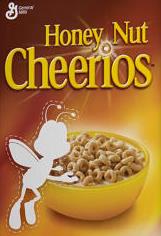
While waiting at the Barrhaven train station with my daughter for her train back to Toronto this past Sunday, a commercial came on the TV that was mounted on the wall in the waiting area. It was a very heart- warming commercial, showing humans saving adorable animals from a variety of life-threatening situations. The commercial, by Honey Nut Cheerios, had a very endearing message: “helping is in our nature”.

cheeriosThe commercial was part of Honey Nut Cheerios’ Bring Back the Bees campaign. During this campaign, Cheerios’ mascot, Buzz the Bee went ‘missing in action’ from Honey Nut Cheerios’ packaging, and consumers could request free bags of wildflowers from General Mills (the cereal manufacturer) which they could plant to ‘bring-back-the-bees’. The campaign goal was to give away 35 million wildflower seeds. By the end of the campaign, 115 million seeds were given away and consumers were encouraged to ‘please keep planting and creating a bee friendly word’.

Sounds great right? Well not to me. To me it sounds like a bunch of honey-nut-coated Bee.S, especially since I just recently read three reports published by the Canadian Biotechnology Action Network (CBAN) regarding the impact of genetically modified crops on the environment and our health. Here are a few excerpts from CBAN’s report “Are GM Crops Better For The Environment?” that the Honey Nut Cheerios campaign fails to address:

CBANGM (Genetically Modified) CROPS AND BIODIVERSITY
It is virtually impossible to predict the impact that GM crops and/or organisms can have on biodiversity by studying this issue in a lab. The only experiment that will reveal true impacts of GMOs is open-air release.

For example, herbicide-tolerant crops have encouraged the use of herbicides that reduce overall plant diversity in agricultural systems, and in doing so, can limit habitat and food sources for other important and beneficial organisms such as bee and butterfly species.

Studies show that some agriculture systems support more biodiversity than others. When researchers at Simon Fraser University in BC compared GM herbicide-tolerant canola, conventional canola and organic canola fields in Alberta, for instance, they found that wild bee populations were largest in organic systems and least abundant in GM systems. Furthermore, the pollination deficit (the difference between potential and actual pollination) was greatest in the GM fields, while there was no pollination deficit at all in organic fields. The lower bee abundance in those GM fields studied may be explained, in part, by the fact that fields of herbicide-tolerant crops often have lower weed and other plant diversity, which in turn reduces food sources for a number of species, including important pollinators.

What does this have to do with Honey Nut Cheerios? Lots!!! Let’s start by taking a look at the ingredients:

cheerios ingredients


While oats and oat bran are not from genetically modified crops, the second and third ingredients are: sugar (from sugar beets) and corn starch (from corn). I’m guessing that a heck of a lot of GM sugar and corn starch are used to make Honey Nut Cheerios, given that over 6 million people start their day off by tempting their tummy with a taste of nuts and honey….

See the irony? A cereal that is using GM crops that science shows is having a negative impact on bee populations is now using the slogan “helping is in our nature’. They’re going to make it all better by sending consumers packs of wildflower seeds that may or may not ever get planted. Sounds like a pretty lame band-aid solution to me. Why not remove GMOs from Honey Nut Cheerios to really make a stand and address the cause of the problem?

gmo cheerio petition

Rather than support Honey Nut Cheerios’ Bring Back the Bees campaign, I encourage you to support GMOinside.org’s “Say Cheerio to Honey Nut GMO’s” campaign by signing this petition encouraging General Mills to remove GMOs from the cereal.

How To Find GMO-Free Foods

nongmoverifiedIn the meantime, check out the Non-GMO shopping guide (check out the app too!) for a list of non-GMO cereal and other products, and remember to look for the non-GMO Verified label on food packaging when you’re grocery shopping. The Non-GMO Project verifies products as non-GM. The Project standard requires testing of all ingredients that could be at risk of GM contamination with a maximum contamination level at 0.9%, aiming to reach zero. The Project also requires traceability and segregation practices from farm to table. While these foods are not produced with the use of GMOs, unless they are also certified organic, they can be (and likely will be) produced with the use of synthetic pesticides.

Take control of what you can.

References

http://gmoinside.org/cheerios/

Clinically Proven Natural Allergy Relief – Product News from Perfect Resonance Natural Health Counselling

Last fall I attended the Canadian Health Food Association’s annual trade show in Toronto. I was looking forward to learning about some great new products that could back up their claims with clinically proven results. I found one in Allergy-FX.

Allergy-FX is a 100% drug-free, licensed health product. It is the ONLY licensed natural health product that has been clinically proven in a double-blind placebo-controlled human study (the gold standard as far as research studies go) to provide effective, fast-acting (within 15 minutes!), multi-functional (eyes, nose, ears, throat) relief from allergies.

The active ingredient comes from the eggs of organically raised quails, and unlike most over-the-counter products which simply mask allergy symptoms, Allergy-FX works by inhibiting the release of histamine – a substance released by our immune system in an attempt to fight off invading allergins. Histamine causes allergy-related symptoms such as an itchy and/or runny nose and watery eyes. Allergy FX is a natural histamine blocker, which translates in to fewer symptoms.

The feedback that I have received from my clients who are taking this product is phenomenal, and is something along the lines of “this product works better than anything else I have ever tried”.

If you or someone you know suffers from seasonal allergies, and would like to try Allergy-FX, I am happy to say that you can now order it from Perfect Resonance Natural Health Counselling. For a limited time, it will be available for a special introductory price of $19.99 + HST.

To order, please email info@perfectresonance.com and put ‘ALLERGY-FX’ in the subject line. You will receive a confirmation email with payment instructions when your order is ready for pick up through Perfect Resonance Natural Health Counselling, located in the Marshall Health Clinic at 2605 Carling Avenue, Ottawa ON.

Take control of what you can!

Beware of Antacids & Heartburn Meds

If you or someone you know suffers from acid-reflux (heartburn) – and especially if antacids or heartburn meds called proton pump inhibitors are taken for relief – then this is an important article for you to read.

Heartburn – Your Stomach’s Cry For Help

Regular heartburn should not be ignored. It is a message that your stomach is struggling, and if left unaddressed, more serious issues could develop. If your solution to heartburn is popping an antacid, you may unknowingly be doing more harm than good. While these products can offer short-term relief, in the long-term they can make your symptoms worse and possibly have negative effects on your overall health as they are not addressing the root of the problem. As for heartburn medications, a recent study suggests that those that are classified as proton pump inhibitors (e.g. Nexium and Prevacid) are linked to chronic kidney disease. While the study stated that it couldn’t prove cause-and-effect, it did observe increasing kidney damage as the dose of these meds increased.

High Stomach Acid … or Low Stomach Acid?

Many people think that acid-reflux or heartburn or GERD (gastroesophageal reflux disease) is caused because their stomach is producing too much hydrochloric acid (HCl); however, in most cases, it is caused because their stomach is not producing enough HCl. This typically means that food will sit in their stomach and start to ferment (basically it will start to rot) – and fermentation causes gas.

GERD

This can put upward pressure on a valve known as the ‘lower esophageal sphincter’ or ‘cardiac sphincter’ located just under the heart (hence the term ‘heartburn’). This sphincter is a tiny donut shaped muscle that is located between the top of the stomach and the esophagus (the tube that connects your throat to your stomach).  Gas build up in the stomach creates pressure on the valve that may cause it to open when it should be shut. If the valve gives to the pressure, the contents of your stomach can then ‘reflux’ into your esophagus, causing an unpleasant burning sensation. While it’s more common to have low HCl production in the stomach than it is to have high HCl production, the symptoms of low HCl production are often treated as if there is a high HCl production problem. This causes a vicious cycle that continually suppresses HCl production.

We Need Stomach Acid

We need proper levels of HCl for a number of important reasons, including the fact that HCl activates other enzymes and hormones that play critical roles in the proper digestion of proteins and fats. HCl also has the ability to destroy potential problem-causing bacteria that we might ingest with our food, thus protecting us from gastrointestinal issues (think vomiting and diarrhea) that we would otherwise experience if the bacteria weren’t destroyed.

The truth about stomach acid-suppressing drugs is that they are only supposed to be used as a ‘short-term’ treatment to offer some relief – they were never meant to be the life-long therapies that many people have adopted them for.

Antacids change the pH (acid-alkaline balance) of our stomach, which can lead to a host of ill-side effects, including a proliferation of the bacteria H. pylori, which has been associated with ulcers and stomach cancer.

So, if you or someone you know suffers from chronic indigestion, constipation or diarrhea, gas, bloating, or even chronic bad breath, chances are the stomach isn’t making enough HCl.

Getting to the Root of the Problem

Biotics-Research-Betaine-Plus-HP-780053000232A product that will get to the root of the problem rather than just suppress the symptoms, is Betaine Plus HP by Biotics Research Canada. One capsule contains 700mg of high potency hydrochloric acid and 10 mg of pepsin (an enzyme that helps to digest protein). The suggested dose is 1 capsule per meal to start. Dosage may need to be increased following a specific protocol that should be under the direction of a health care practitioner (like me), until you are symptom-free (I also have some food-combining tricks up my sleeve that can help improve your digestion).


Now you can order a 90 capsule bottle of Betaine Plus HP through Perfect Resonance Natural Health Counselling for just $32 + HST ($36.15).

To order, please email info@perfectresonance.com and put ‘BETAINE PLUS HP’ in the subject line. You will receive a confirmation email with payment instructions when your order is ready for pick up through Perfect Resonance Natural Health Counselling, located in the Marshall Health Clinic at 2605 Carling Avenue, Ottawa ON.

Get to the root of your heartburn and take control of what you can!

Carrot Ginger Soup

I love soup at any time of year, and this is one of my favourites. It is so so so delicious, you might not believe how quick and easy it is to make! Every single ingredient offers loads of health benefits too! It freezes beautifully, so feel free to double or triple or quadruple (etc, etc!) the recipe. As written below, it makes about 8 cups of soup.

What You’ll Need

IMG_1148

  • 4 cups of organic chicken or vegetable stock. Check out how to make your own chicken stock
  • A bunch or two of carrots depending on how big the bunches are (you want to end up with about 4 cups of coarsely chopped carrots). I had just picked up a winter CSA basket from Bluegrass Farms that had a lovely assortment of carrots in it
  • 1 large onion
  • 1 chunk of fresh ginger root (enough to end up with 1 TBSP when finely chopped)
  • 2 TBSP coconut oil, or butter, or a combination of both
  • 1 tsp of unrefined salt (I used Celtic sea salt). More or less to your taste
  • A sprig or two of a green herb to use as a garnish (optional). I had some dill on hand

Step 1: Prepping the Onion & Ginger

IMG_1149

  • Peel the onion and peel or wash ginger root
  • Coarsely chop up the onion, and finely chop up the fresh ginger root. You want to end up with about  1 TBSP of chopped ginger
  • Put the onion and ginger aside while you work on Step 2. Did you know that if you let onions sit for 5-10 minutes after you cut them up you boost their health-promoting properties? Many of the health-boosting nutrients are ‘trapped’ in the cell walls of the onion. Chopping the onion breaks through the cell walls, allowing the nutrients to be released and to react with each other to become even more powerful. They need some time to do this!

Step 2: Prepping the Carrots

IMG_1152

  • Peel or wash the carrots. I just washed mine because they were organic and from a local farm. Lots of goodness in those organic peels!

IMG_1153

  • Coarsely chop so you have about 4 cups

Step 3: Sauteeing the Onion & Ginger & Carrots

IMG_1154

  • Put a pot on the stove, add the 2 TBSP of coconut oil, and turn to medium heat
  • Add the onion and ginger and cook for about 5 minutes, or until onions are soft, stirring several times
  • Add the carrots and cook for another 5 minutes, stirring several times

Step 4: Simmering

IMG_1155

  • Add the 4 cups of chicken broth and the salt
  • Increase heat and bring to a boil
  • Reduce heat to low, cover and simmer for 15-20 minutes or until carrots are soft
  • Remove from heat & turn off the stove!

Step 5: Blender Time

IMG_1164

  • Before pureeing the soup, make sure you let it cool so that you don’t have a blender explosion
  • Puree to desired texture

Step 6: Garnish and Serve

IMG_1163 web

  • Top with your favourite herb (dill or cilantro go well with this soup), a dollop of organic sour cream … or both … or neither. Suit your taste!

Enjoy!


Privacy Policy

Website Maintenance and Services by Andrew Wardell