How To Make Nutrient-Packed Grapefruit Juice

In my most recent Tip of the Month, I shared the CHFA’s Top Five Natural Health Trends for 2016. One of those was vitamin C.

I often start my morning off with a fresh glass of homemade grapefruit juice, which is a great source of vitamin C and another powerful antioxidant that I talk about in this month’s video.

This morning, I did just that, and thought I may as well record an impromptu (hence face-less) video to demonstrate how to get the most bang-for-your-grapefruit juice!

When you drink this grapefruit juice, you’ll get all the health benefits that the flesh, fibre, pith, AND seeds have to offer!

Check it out and cheers to you!

Top 5 Natural Health Trends

March is National Nutrition month, so I thought it would be interesting to share what the Canadian Health Food Association has identified as the top five natural health trends for 2016, and of course, to add my two cents worth.

1 – Sea Greens

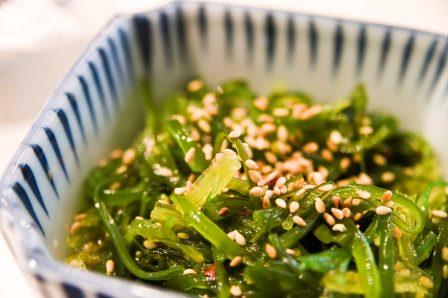
seaweed saladSea greens (aka sea vegetables) include things like kelp, dulse, nori, wakame, sea asparagus, and a variety of algae. Sea greens are rich in numerous vitamins and minerals – including a wide variety of trace minerals that many of us don’t get enough of through other foods. Sea greens are famous for being an excellent source if iodine – a mineral that is critical to thyroid health, in particular the production of thyroid hormones, which many people have issues with. Thyroid hormones help to regulate our metabolism (which is associated with energy levels and weight management), as well as blood calcium levels (which affect our bone health and hundreds of other processes in the body).

Try dulse and kelp flakes as a substitite to table salt.  Seaweed salads are also now available at many restaurants and grocery stores. There are also a number of dried and roasted seaweed snacks on the market; however, many of them use unhealthy oils, including corn and soy oil. Make sure you read the ingredients on all sea green products! It doesn’t take much to turn a healthy food into a junk food!

2 – Vitamins C and D

I’ve been promoting the benefits of vitamin D for years, so I won’t spend any time discussing them in this post. A search of vitamin D on my website will give you plenty of reading to do on the topic.

As for vitamin C, most people associate it with boosting the immune  system to prevent colds and flus, which is definitely one of the benefits that it offers. What many people don’t know is that thecitrus fruits smiley face body needs sufficient levels of vitamin C to support the production of collagen.
Collagen is the most abundant protein in the body and basically acts as a strong yet flexible ‘glue’ to hold us together. It is an important part of our bones, muscles, tendons, and skin.  Good food sources of vitamin C include red, yellow, and orange bell peppers, papaya, broccoli, Brussels sprouts, berries, citrus fruit, and kiwi.  A great food source of collagen is stock or broth made from bones with some meat and lots of connective tissue surrounding them (e.g. joints, shanks, chicken feet, etc). Instead of putting vitamin C and collagen-containing beauty products on your skin, nourish your skin from the inside out by eating vitamin C and collagen rich foods!

3 – Sweet and Savoury Treats with a Health Kick

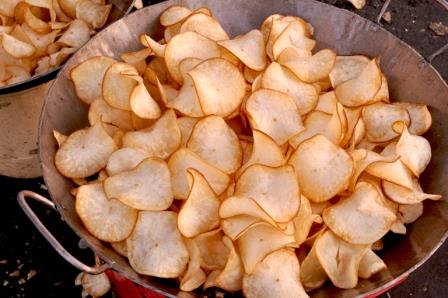
root veggie chipsThe savoury treats in this category include snacks like chips made from foods such as beans, lentils, beets and other root veggies. My issue with these snacks is that many of them are no better than more common junk foods once you’ve baked or fried them at high temperatures with inflammation-promoting omega-6 oils such as safflower, sunflower, corn, or soy. Be aware that eating a bag of beet chips is not going to give you the same nutritional benefits of eating a raw or steamed beet! In my opinion, many of these snacks are more-or-less junk foods marketed as health foods.

Chocolate tops the list for the sweet treats. I’ve shared information on chocolate in previous blog posts. The greatest benefits are derived from the anti-oxidants contained in raw, unprocessed cacao nibs . One of the greatest benefits associated to these anti-oxidants is cardiovascular health, including improved blood flow and a decrease in blood pressure. The important thing to remember here is that not all chocolate is created equal!

4 – Hemp

Hemp has received so much hype over the years … hemp oil, hemp seeds, hemp protein powder – it seems more and more health food items are using it as an ingredient, and yet, I am stillhemp leaf hesitant about it and don’t buy it myself. My understanding is that while many sources claim it is a good source of protein and essential fatty acids (EFAs), hemp’s EFAs are mostly in the form of omega-6 and not in the form of omega-3. Unfortunately, most people get way too many omega-6s in their diet and not nearly enough omega-3s, and this sets the stage for inflammation, which is at the root of most diseases. I feel that most people really need to significantly boost their omega-3 EFAs, so for the time being, I’m sticking with chia seeds and flax seeds – and I’ll get my protein from one of the most bioavailable sources – eggs.

5 – Fibre

chia seedsGetting enough fibre isn’t a new nutrition concept, so I’m not sure why it was identified as a ‘new’ trend for 2016. The health benefits of fibre are associated to the fact that it promotes regular bowel movements. Stool (aka poop) is the body’s major vehicle for getting rid of stuff the body doesn’t want, including toxins and excess cholesterol and hormones. A diet lacking in fibre will lead to constipation, and if poop starts sitting around in your colon, you’ll start reabsorbing the substances your body was trying to get rid of. Natural health practitioners refer to this as ‘auto-intoxication’.
The recommended daily fibre intake is 25-35 grams; however, most people don’t even get a third of that, which is unfortunate when you think of some of the health benefits associated with dietary fibre, including: blood sugar control, cardiovascular health, and weight management. While fibre is important for digestive health, individuals with certain gut imbalances may not be able to tolerate many forms of fibre.

So many foods are good sources of fibre, with some notable ones being chia seeds, cruciferous vegetables (e.g. broccoli, Brussels sprouts), squash, sweet potatoes, root vegetables, beans, lentils, apples, and oats (avoid the little flavoured packets of oatmeal loaded with sugar and go for steel cut oats instead).

So there you have it. Which of the above trends for 2016 will you embrace?

References:

https://www.chfa.ca/en/natural-health-trends-2016.html

5 Grain-Free Appetizer & Party Foods

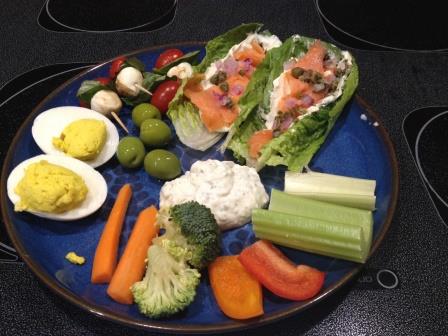
Every year, I host a ‘February Blah-Buster’ Party. I love everything about this party – the planning, the food prepping, the music I listen (and dance!) to while I’m food prepping, the wonderful company, the stories that are shared throughout the evening, the connections that people who have never met before end up discovering they have in common (it was decided that there are only 3 degrees of separation in Ottawa!), and the leftovers … in fact, I am snacking on some as I write this post…don’t they look good? :o)

IMG_8240 WEB

This year, for the very first time, a few guests told me they really appreciated the fact that all of my appetizers were grain-free/gluten-free/wheat-free as they have been trying their best to avoid these items for a number of health reasons. I’ve been putting on more-or-less the same spread for years, so it is interesting that (a) no one ever noticed the absence of grain/wheat/gluten before; and (b) no one ever felt like something was ‘missing’.

Here are the items that I served and some ‘tricks’ to their preparation:

Devilled Eggs

IMG_8227 WEB

This was the first plate of food to get eaten up! So easy to  make: hard boil the eggs, cut in half, plop the yolks into a bowl and mix with just enough mayo (organic is best) so that they are creamy. I added some curry powder, turmeric, and unrefined sea salt to the yolk mixture, then piped it back in. The hardest part was peeling these eggs because they were so fresh, but a tip I learned from Martha Stewart at some point along the way helped with that. Gotta love Martha!

Smoked Salmon Lettuce Wraps

IMG_8228 WEB

Everything was provided for guests to make their own wraps. The cream cheese was organic, and I had a frozen gel pack under the marble slab to keep it (and by association, the salmon and the cream cheese) cold all night. Lettuce leaves make a great alternative to pita, wraps, breads, and/or crackers that would typically be served here.

Bocconcini, Tomato, and Basil Skewers

IMG_8235 WEB

Grab a bunch of toothpicks and skewer each one with a cherry or grape tomato, some fresh basil, and a mini-bocconcini (I cut them in half). If you want to avoid dairy, replace the bocconcini with a pitted olive. Drizzle the skewers with extra virgin olive oil and balsamic vinegar (I used a fig infused balsamic) and sprinkle with a touch of unrefined sea salt.

Roasted Asparagus Wrapped in Prosciutto

IMG_8239 WEB

Snap off the ends of fresh asparagus, rinse the asparagus, put them in a big bowl and toss them with a bit of olive oil, unrefined sea salt, and fresh cracked pepper. Then spread them out on a parchment paper lined baking sheet, and roast in a 350F oven for 6-7 minutes (you still want them to have a bit of crunch). Remove from the oven, let cool completely, then wrap in prosciutto. I cut each slice of prosciutto cross-wise into three pieces, i.e. I used 1/3 of a slice to wrap each asparagus spear.

Something Sweet

IMG_8221 WEB

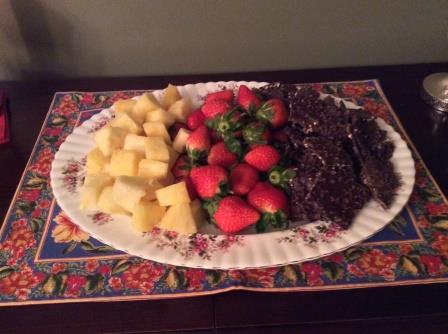
Fresh fruit and a Dark Chocolate, Almond & Sea Salt Bark was enough to satisfy the sweet tooths. Funny how there was some fruit left over at the end of the night, but not a morsel of Chocolate Bark!

I also had a veggie & dip platter, hummus, tabouleh, a cheese platter, and a couple of shrimp bowls. A few notable things here:

  • dip for veggies was made by adding Epicure’s 3 Onion Dip Mix to organic sour cream and yogurt. No MSG, GMO ingredients, or other weird fillers in this mix. If you’re looking for an Epicure rep, email me and I’ll connect you with one. Epicure offers great alternatives to many of the unhealthy spice mixes sold in the grocery store
  • here’s my recipe for hummus
  • to make wheat-free tabbouleh, substitute the bulgar with cooked quinoa, I should really post my recipe for this, but in the meantime, here’s one that sounds similar. I usually don’t add cucumber or mint to mine and go a bit heavier on the parsley
  • I put a bowl of cut up red, orange, and yellow bell peppers between the hummus and tabbouleh to use as ‘dippee thingies’ instead of the typical pita wedges
  • organic cheese … and I did have some gluten-free crackers out here; however, they were barely touched given the other options available
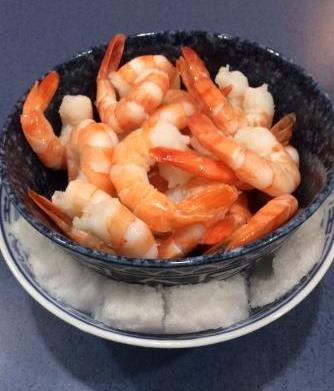
  • I usually avoid shell-fish, but there are some serious shrimp lovers among my guests. Too keep the shrimp fresh all night, I put them in a bowl and then pushed that bowl into a larger bowl filled with snow as pictured below. If you eat shrimp, check out this guide to help you make the best choice possible for your health and the environment.

IMG_8217

Hope you’ll try some of these and enjoy! Have an appetizer idea you’d like to share with me? Email it to me and I’ll share it on my Facebook page – or in a future blog – with your permission of course!

Bon Appetit!


One-Pot Winner-Winner Coconutty Chicken Curry Dinner

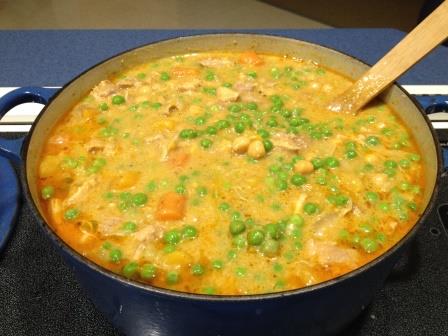
This is one of my favourite dinners – especially for feeding a crowd. I’ve had this recipe for years. It’s from a very old Canadian Living Magazine (Jan 2001). I’ve made it a ton of times, but I don’t think I’ve ever made it the same way twice – and I swap out the wheat flour in the original recipe for almond or coconut flour. Curry dishes are pretty ‘accepting and forgiving’. so you can change them up according to what you have available in your fridge or pantry and they typically still turn out great.  I usually serve this dish straight up; however, last time I made it, I served it over a bed of cooked quinoa as pictured above. Enjoy!


What You’ll Need:

Please note that the amounts of the ingredients listed below are what you’ll need to make enough to feed 6 to 8 people. FYI though, I usually double this recipe so that I have extra to freeze and have some meals ready to go for those occasions when I don’t have time to cook – or when I don’t feel like cooking (the latter is rare, but it does occasionally happen!). It’s a bit of extra prep work, but I always thank myself later! Winner-winner! :o)

what you'll need WEB

  • 3/4 cup of almond or coconut flour
  • unrefined sea salt and fresh ground pepper (about 1/2 tsp each – you can use less …. or add more at the end to suit your taste)
  • 12 chicken thighs or the equivalent amount (1 kg) of big chunks of chicken breast, drumsticks, cut up whole chicken (organic if you can!)
  • 4+ TBSP of coconut oil
  • 2-3 medium-sized onions, coarsely diced (any kind you have on hand will do)
  • 4 cloves of garlic, minced
  • 2 TBSP of red curry paste (I use a mild blend – suit your taste!)
  • 1 cup of chicken stock (homemade or store bought – organic if you can!)
  • 1 can of coconut milk (the thick creamy stuff that is in a can on grocery store shelves… not the coconut milk in cartons in the refrigerated dairy department)
  • 2 or 3 cups of some type of chopped up orange vegetable – or a combination of them. I’ve used carrots, squash, sweet potato, and pumpkin.
  • 1 can of chickpeas, rinsed and drained
  • 2 cups of some kind of green vegetable. I’ve used fresh string beans, cut up broccoli, cut up sugar snap peas, or frozen or fresh peas
  • All of the following ‘toppings’ are optional; however, I use them every time as they make the dish even more delicious in my opinion!
    • chopped up cashews
    • shredded coconut
    • whole fat yogurt
    • mango chutney
    • chopped up fresh cilantro

Step 1: Prep the Chicken

IMG_8762 WEB

  • in a large bowl or baking dish, mix together 1/2 tsp of salt, 1/2 tsp of pepper, and the flour
  • take each piece of chicken and coat it with the mixture

Step 2: Brown the Chicken

IMG_8763 WEB

  • in a large pot, heat 2 TBSP of coconut oil over medium heat on the stove. I always use my Le Creuset French Oven. I love it for prepping – and serving – big one pot meals!
  • add the chicken and brown on both sides, adding more coconut oil as needed. Do this in batches if necessary – you don’t want the chicken pieces to be piled on top of each other for this step
  • as the pieces of chicken get browned on both sides, remove them and put them aside in a bowl or baking dish to add back to the pot in a few more steps…
  • keep the pot on the heat

Step 3: Cooking the Onions and Spices

IMG_8764 WEB

  • if there is a lot of browned almond flour ‘residue’ sitting in the bottom of the pot, scoop it out, or wipe it out with paper towel
  • add 2 TBSP of coconut oil to the pot, along with the curry paste. Stir it together for a minute or two, then add the diced onion and garlic and cook for a few more minutes

Step 4: Adding Everything ElseIMG_8770 WEB


  • add the chicken stock and coconut milk and bring the mixture to a boil, then add the orange veggies, chickpeas, and the chicken (including any juices that have accumulated as the cooked chicken was hanging out on the side)
  • Turn down the stove to a simmering heat and cover the pot. Simmer for 45 minutes, then add whatever green veggies you are using and simmer for another 10 to 15 minutes. The chicken should be cooked through by now depending on how big the pieces are (and how well you browned it earlier). Make sure you check that it is before serving!

Step 5: Serving and Sprinkles

IMG_8785 WEB

  • Serve straight up or over a bed of cooked quinoa (follow instructions on package)
  • Use any or all of the ‘optional’ toppings listed in the “What You’ll Need” section of this recipe
  • Remember, if you have any extra, it freezes beautifully!

Enjoy!

4 Big Fat Lies That Are Sabotaging Your Health

Although a lot of valid research has emerged over the past several years that has busted many of the long-term myths we’ve held about fats, I’m often surprised by the amount of confusion that many people still seem to have on this topic.

Given that February is Heart Month, and many people associate eating fats with cardiovascular health, I thought I would share the 4 big fat mistakes that many people are still making when it comes to certain foods due to all the big fat lies that still surround these foods.

Mistake # 1: Choosing margarine over butter.

Here’s an interesting diagram that I first saw at a presentation I attended during a Weston A Price Foundation conference years ago.

margarine flow chart
So, when someone asks me if margarine is healthier than butter, I ask them two questions: #1 – Can you make margarine in your kitchen? It’s not likely, unless you have a chemistry lab in your kitchen. #2 – Can you make butter in your kitchen? Absolutely! Just shake, and shake, and shake, and shake some cream in a jar, and voila! I don’t know about you, but I’ll choose can-be-made-at-home vs can-be-made-in-a-lab any day of the week!

While most health associations and government food agencies continue to promote polyunsaturated fats such as margarine, and demonize saturated fats such as butter, a 2013 meta-analysis published in the British Medical Journal made a startling conclusion. It was as follows, and I quote [note my inserted comments are in the square brackets]:

“Substituting dietary linoleic acid [for example, margarine] in place of saturated fats [for example, butter] increased the rates of death from all causes, coronary heart disease, and cardiovascular disease. An updated meta-analysis of linoleic acid intervention trials showed no evidence of cardiovascular benefit. These findings could have important implications for worldwide dietary advice to substitute omega-6 linoleic acid, or polyunsaturated fats [like the ones commonly used to make margarine] in general for saturated fats [like the ones naturally found in butter].”

[Bottom line: butter is better!]

Mistake #2: Avoiding eggs/egg yolks.

For years we’ve been told that eggs are full of cholesterol and that we should only eat them once a week, or better yet, use the liquid egg whites that you can buy by the carton in the grocery store. no eggsThe truth is that eggs are Mother Nature’s perfect food, loaded with nutrients, and offering the perfect balance of healthy fats, proteins, and carbohydrates. In terms of cholesterol, the truth is that cholesterol is essential to good health – including heart health! In fact, cholesterol is so critical to our overall health, our body will produce it if we don’t get enough from the foods we eat! Research has shown that the average healthy person makes about 85% of their blood cholesterol and only 15% comes from food. If we restrict our intake of dietary cholesterol, the liver will compensates by making more of it. If we increase our intake of dietary cholesterol, our liver will produce less. Research has shown over and over again that there is no correlation between heart attacks and dietary cholesterol.
Mistake #3: Avoiding fats and eating low-fat foods to lose weight.

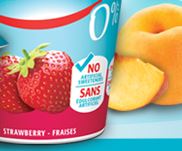
fat free yogurtNorth Americans have been avoiding fat and eating low-fat foods for decades, yet obesity rates climb every year. The truth is that the fat we eat is very different from the fat we store in our body – and that we need to eat fat (healthy fat) to lose fat. Eat foods the way Mother Nature gave them to us, for example full-fat dairy (and dairy products) and whole eggs. Some examples of healthy fats include coconut oil, cold-water fish, meat/dairy/eggs from pastured animals, avocados, and raw nuts and seeds.

Mistake #4: Thinking olive oil is the healthiest fat there is and using it almost exclusively for cooking and food prepping.

ALL_cooc_2014_cmykWhile olive oil is a healthy oil, the problem is that not all olive oils are created equal – including the gold standard, extra virgin olive oil (EVOO). Some time ago, a news story broke informing us that most EVOO sold is ‘fake’, as it is cut with cheaper oils. This is a problem because the cheaper oils are usually ones that are easily denatured by heat; that is, they get oxidized – and oxidized fats cause havoc to our health. So how can you tell if your olive oil is ‘the real stuff’? Many sources say you can tell by doing a ‘fridge’ test (e.g. put 2-4 TBSP of EVOO in a sealed glass jar, then refrigerate it for 24 hours. If it solidifies, it passes the test); however, olive oil experts say this test is not conclusive and suggest that consumers look for quality seals on the bottles, such as the one from the California Olive Oil Council. In addition, a big part of healthy eating is VARIETY. While olive oil does offer numerous health benefits, many other oils offer equally important health benefits that olive oil doesn’t! The take away here is to know where your olive oil comes from and how it’s made – a good guideline to follow with all food! (FYI, Terra Foods is a locally run Ottawa-based business that imports and sells olive oil from Greece. The oil is single sourced from the first extraction of cold-pressed olives. It is not refined, filtered or mixed with other oils. Nothing is added and nothing is taken away.)
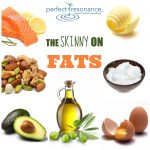
 

PR 2These 4 Big Fat Lies are just the tip of the iceberg, and that is something to be concerned about because being misinformed on the topic of fats is one of the biggest hazards to your health, potentially increasing your risk of weight gain, heart disease, and numerous other health issues. The good news is that right now, for just $20, you can own my “Skinny on Fats” webinar, so you can protect yourself from other big fat lies that may be sabotaging your health. Click here for a full description of the webinar. It is one of the best investments you can make towards a healthier you.

Take control of what you can.

25% off BioEnergetic Evaluations

Have you ever heard of someone having an electrocardiogram to check the electrical activity of their heart? What about an electroencephalogram to check the electrical activity of their brain?

These tests are made possible by the fact that cells in the heart and brain are constantly communicating via electrical impulses generated by our nervous system. The tests can detect any changes or imbalances related to the electrical activity of the brain and heart, which are often indicators of potential health problems related to these organs.

It’s important to note that the brain and heart are not the only organs of the body that rely on receiving balanced electrical activity or ‘energy’ for proper functioning; in fact, every part of the body does. This is the foundation of Traditional Chinese Medicine, including acupuncture, which focuses on stimulating the smooth and cyclical flow of an energy referred to as ‘Qi’ (pronounced “chee”). Qi travels in numerous pathways or energy channels of the body called ‘meridians’. Qi is basically the energy of life, or our ‘bio-energy’, and balanced bio-energy is central to improving or maintaining our overall health.

At Perfect Resonance, I use BioMeridian’s MSAS Professional system to conduct BioEnergetic Evaluations.  MSAS stands for Meridian Stress Assessment System – a unique tool that measures the bioenergy of various meridians that correspond to the body’s, organs, glands, and systems. Imbalanced bio-energy may lead to low energy levels and numerous health issues. The main purpose of the evaluation is to provide feedback that can be used to develop a customized health program for restoring or maintaining balance.

Until the end of February 2016, I am offering 25% off the regular price of $130 + HST for a first time BioEnergetic Evaluation. Call 613-820-0421 to book your appointment today. Simply ask for an MSAS test with Anna.

Get your bioenergy tested and remember that an ounce of prevention is worth a pound of cure! To learn more about the benefits, click here and start taking control of what you can.

Sweet-and-Savoury Braised Red Cabbage

I love the look and taste of red cabbage – and its more than just a pretty face…I mean more than just a pretty head! Its beautiful rich colour is due to a high concentration of powerful antioxidants called anthocyanin polyphenols. Research shows that these antioxidants boost immune system function and deliver protection against inflammation and numerous diseases, including cancer and cardiovascular disease. Red cabbage is also loaded with vitamins and minerals and contains up to 8 times more vitamin C compared to green cabbage. In fact, a cup of cooked red cabbage provides 85% percent of the recommended daily intake of vitamin C! No wonder Mother Nature provides us with this veggie just as cold and flu season arrives.

Shredded raw red cabbage is a great addition to any salad. It can also be added to soups and stews. This recipe turns it into a delicious sweet-and-savoury side dish that goes particularly well with red meat mains. Enjoy!

What You’ll Need:

you will need WEB

  • 1 medium-sized head of red cabbage
  • 1 medium onion
  • 2 TBSP butter (organic is best)
  • 1/4 tsp unrefined sea salt (a bit more or less to your taste)
  • 1 TBSP honey (local and unpasteurized is best)
  • 1/4 cup Bragg apple cider vinegar (or any organic, raw, unfiltered brand)
  • 2 tart apples

Prepping & Cooking – Step 1:

prepping 1 WEB

Slice up the onion and add it to a pan with 2 TBSP of butter. Sautee over medium heat for about 5 minutes or until onion is soft, stirring from time to time. While the onion cooks, coarsely chop up the cabbage.

Prepping & Cooking –  Step 2:

prepping 2 WEB

Add the cabbage to the pan, mix well and sautee for about 5 minutes or until cabbage is soft/wilted. While the cabbage is cooking, grate the apples.

Cooking Continued…

cooking WEB

Add the apples, apple cider vinegar, honey, and salt to the pan. Mix well, turn the heat down to low, cover and cook for 30-40 minutes, stirring ever 10 minutes or so.

Serving:

serving WEB

Viola! A delicious savoury-and-and sweet side! Served here with a grass-fed beef stew – a wonderful combination! Feel free to garnish with freshly chopped parsley to add a bit more colour (wish I would have done that before taking this picture!).

Enjoy!

Privacy Policy

Website Maintenance and Services by Andrew Wardell