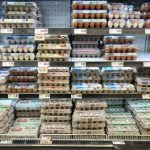
An Egg is an Egg is an Egg …

An egg is an egg is an egg.

That was the short answer I received when I emailed a large commercial egg producer some time ago to ask why their eggs looked so much different than eggs from pastured hens. The pastured eggs have dark orange coloured yolks and firmer whites compared with commercial eggs. I knew the answer, but I wanted to hear what the egg producer’s take on it was.

Here’s the photo I emailed them along with my question:

The egg on the left is an egg from the commercial producer. The egg on the right is an egg from a pastured hen from a local farm. Can you notice a difference?

The full answer I received was as follows:

An egg is an egg is an egg. In the east, we feed our chickens more corn. In the west, we feed them more wheat. That impacts the colour of the yolk a little bit, but all eggs basically have the same nutritional value regardless of what the hens eat.

I emailed back asking, why then, if their position is that what a hen is fed has no impact on the nutritional value of an egg, do  they market an ‘omega-3 egg’ that comes from hens that are fed flax seeds AND charge a premium for those eggs? That was the end of the email exchange. I never heard back from them. Busted!

A few years ago, CBC Marketplace aired a report called “Egg Crackdown”, where they investigated the marketing of grocery store eggs and visited egg producers to figure out what the labels on eggs mean. This episode was mentioned in an article I recently read about eggs, so I thought I’d watch it again. You can watch the episode in its entirety by clicking here, but I’ve summarized some of the key points for you below to save you some time.

CBC Marketplace had a panel of ‘tasters’ who were fed four different types of eggs:

  1. Conventional eggs from battery-caged hens
  2. Free-run eggs
  3. Organic free-range eggs
  4. Pastured eggs

Testers found that the cooked pastured eggs had a deeper coloured yolk and a stronger aroma, as well as a more robust flavour compared with the other eggs, although some testers preferred what was described as the ‘bland’ flavour of the conventional eggs from battery-caged birds.

Of course, taste is only one factor that we might consider when buying eggs. Others are how the chickens are raised, the cost of the eggs, and nutritional value. Let’s take a look at these factors.

How the Chickens are Raised

There are so many descriptions for eggs now: battery-caged, organic, free-run, cage-free, free-range, nest laid, pastured … what’s the difference? Here’s my understanding.

Battery-caged eggs

These are the cheapest and most popular eggs; in fact, 90% of consumers buy these eggs. These eggs come from concentrated animal feeding operations (CAFO). A CAFO can have 20,000 hens per farm with typically 6 hens per cage. Animal welfare groups say battery cages are so cramped that the hens can’t walk, spread their wings or engage in other natural behaviours. Each hen has less floor space than the size of a sheet of notebook paper. The EU banned this type of egg farm in 1999 and other countries have followed suit. Canada has until 2036 to get rid of them.

Nest laid eggs

These eggs come from chickens who live in ‘enriched’ cages. Their living conditions are similar to battery-caged hens, although they have slightly bigger cages, the floors include scratching pads, and there are ‘privacy’ areas for the hens to lay their eggs in (behind the red flaps in the photo above).

Free-run/Cage-free eggs

These eggs come from hens that are kept in a barn and are not caged; however, living conditions are still crowded.

Free-range eggs

Image by ramboldheiner from Pixabay

These eggs come from hens that live in similar conditions to free-run or cage-free hens. The difference is that the hens have access to the outdoors; however, pictures of these operations shown on the Marketplace documentary revealed a “conspicuous absence of chickens in their outdoor areas.” So … maybe not TRUE free-range conditions …

Organic TRUE free-range/pastured eggs

These hens get unlimited access to large outdoor runs during the day, and are kept in spacious barns overnight. No cages, no antibiotics. While organic feed is provided, weather permitting, the hens spend most of their time foraging outdoors for their natural diet which includes seeds, plants, insects, and worms. Note that an organic label is the only way to ensure chickens aren’t fed antibiotics for growth purposes.

Cost

Conventional eggs from battery-caged hens can be priced as low as $1.99/dozen, while organic pastured eggs can be priced as high as $7.99/dozen.

Nutritional Value

Contrary to what I was told through the limited email exchange I had with a large commercial egg producer, an egg is not an egg is not an egg! There is a difference in the nutritional value of an egg depending on how the hens are raised/fed.

CBC Marketplace had lab testing done on the four types of eggs they included in their report and it revealed a significant nutritional difference. The nutritional winner? The organic pastured eggs, which compared with the other eggs had:

  • 3 to 5 times more vitamin E
  • 2 times more omega-3 fatty acids
  • significantly higher amounts of other nutrients, including vitamins A and D

This doesn’t mean that conventional battery-caged eggs offer no nutritional value, but it does mean that organic pastured eggs offer superior nutrition – and if you care about how the hens are raised, then eggs from pastured hens win again.

The bottom line of the Marketplace investigation? For the best quality eggs, from the most humanely-raised hens, look for eggs labelled as organic and pastured. You can find these eggs at health food stores, grocery stores with organic food sections, at Farmers Markets, or maybe you’re lucky enough to know someone who has pastured hens. I’ve always wanted to have some backyard chickens … one day!

Aside from the info from the Marketplace documentary, here are a few other considerations when it comes to eggs:

  • Pastured eggs are less likely to be contaminated with disease-causing bacteria such as Salmonella
  • Do not fear the cholesterol contained in egg yolks! We need it! It is heart-healthy and brain-healthy. Egg yolks also contain many nutrients that reduce inflammation and boost our overall health.
  • Cooking can reduce certain nutrients, so eat your cooked eggs with runny yolks (eg soft poached, soft sunny-side up, over-easy) to get the most nutritional benefit.

Noodle/Grain-Free Roasted Veggie Lasagna

I love this recipe because you don’t really need to follow the recipe! You can use any veggie that will hold up to being cut in slices and roasted, any kind of sauce you like, and any kind of cheese (including vegan cheese) you like. It’s easy to make and it’s a great way to get even picky eaters to eat more veggies. This lasagna can be served as a main course (about 4 servings) with a side salad, or it can be served as a veggie side (about 8 servings).

You Will Need:

  • An assortment of veggies that you like and where most would lend themselves to being sliced and roasted! This time, I used portobello mushroom, onion, eggplant, zucchini, and orange bell pepper.
  • A pasta sauce, either home made or ready-made. This time, it was a 700ml store bought sauce.
  • 1/2 cup or so of grated cheese (not pictured above) – grated mozzarella and Parmesan would be a good combo. You can also use vegan cheese (which we did this time as one of our guests was vegan).
  • Olive oil
  • Salt and pepper
  • Any other herbs you’d like to add

Step 1: Slice and Season the Veggies

  • Cut up veggies into 1/4 inch slices. This job is best done with a mandolin. My favourite one is the Ricardo Handheld Mandolin. It’s super easy to use and clean (dishwasher safe).
  • Drizzle veggies with olive oil (about 2 TBSP – just enough to lightly coat them) and season with salt and pepper. You could also add a sprinkle of dried oregano or an Italian dried herb blend if you have any on hand.
  • Toss the veggies together until they are all evenly coated with the oil and seasoning.

Step 2: Roast/Cook Veggies

  • Using the Roast setting, pre-heat oven to 375F.
  • Line 2 or 3 baking sheets with parchment paper, then spread the veggies over them. It’s OK if the veggies overlap a bit (they will shrink quite a bit as they roast), but you don’t want them in layers as they won’t roast very nicely. You may have to do several batches.
  • Roast for 20 minutes, flipping the vegetables halfway through. Don’t worry if some of them fall apart – just do as best you can to flip them all over and spread them out again halfway through the cooking time.
  • As batches of roasted veggies are done, put them into a big glass bowl or baking dish. When you’ve roasted all the veggies, you’ll have something that looks like this:

While the veggies were roasting, I steamed my spinach, just until it got wilted. You don’t have to add spinach – I just had a ton of it from my garden, so thought this would be a good way to use it! Once it was steamed, I cooled it off and squeezed it to remove the excess water (nothing worse than a watery lasagna!).


Step 3: Assemble

Time to start assembling your lasagna! I started with a layer of sauce, then a layer of veggies, then another layer of sauce, then some cheese, then some spinach, then another layer of veggies, then sauce, then cheese, then …. you get the picture! Just layer away! Once all layering is done, finish the top off with some sauce and a generous sprinkle of cheese.

I used a 7″ x 11″ Pyrex baking dish. Eyeball the amount of roasted/cooked veggies you have to pick the right sized baking dish. Below are some photos of my layering … as well as a picture of the brand of vegan cheese I used (my daughter has tried so many and this is her favourite)!


Step 4: Heat and Serve

Place the assembled lasagna in a 350F oven and bake until warmed through and the cheese is melted (about 15-20 minutes). You can broil it for a few minutes to get the cheese bubbly and golden. Results vary with vegan cheese as you can see from the above photo – left side is vegan cheese, right side is mozzerella and parmesan.


Enjoy!

Smoked Salmon, Red Onion, Fennel & Caper Gluten-Free Pasta

This dish is easy, delicious, and can be prepared in 20 minutes. If you like the classic combo of salmon, onions, and capers, you’ll love this dish! I first made this dish to use up way too much leftover smoked salmon, sliced onions, and capers from a platter I had prepared for a big party I had hosted the night before! Since then, I don’t wait to have leftover smoked salmon to make it! You can also use fresh salmon, or left over baked/grilled salmon. This recipe makes 2 to 3 servings.

To have this dish come together in 20 minutes, check the cook time on the pasta you are going to use and plan the rest accordingly. The pasta I used took about 8 minutes to to cook, so I got it into boiling water as soon as I started the sauteing part of ‘Step 1’ below!

You Will Need

  • 2 cups of uncooked/dry pasta. I used GoGo Quinoa Cauliflower Fusilli that I bought at Costco. Note that organic brown rice flour and organic quinoa flour are the first two ingredients of this pasta.
  • 120 grams of smoked salmon pulled/cut into bite-size(ish) pieces
  • 1/2 cup of diced or thinly sliced red onion
  • 1/2 cup diced or thinly sliced fennel bulb (if you don’t have or don’t like fennel, this dish is still yummy without it.
  • 2 to 3 TBSP of capers (suit your taste)
  • 2 TBSP of olive oil (or 1 TBSP each olive oil and butter – suit your taste)
  • fresh parsley, or dill, or fennel fronds as optional garnish

Step 1: Prepping

  • Get pasta water boiling in a large pot
  • Get all other ingredients together
  • Once you have chopped/diced/prepped onions, fennel, and salmon, add pasta to boiling water and set a timer for desired pasta cooking time. Meanwhile ….
  • In a skillet, heat oil/butter over medium heat
  • Add onions, fennel, and capers
  • Sautee for 5 to 7 minutes, or until onions and fennel become translucent/softened

Step 3: Add Salmon

  • Add salmon to skillet and toss with other ingredients
  • If you are using smoked salmon, you barely need a minute to have it warmed/cooked through. If you are using raw salmon, cook it to your desired level of done-ness. Take skillet off heat when salmon is done. If you timed things properly, your pasta should be cooked! If it’s not, no biggie – you can warm everything up again in the next step.

Step 4: Putting It All Together

  • Drain and rinse pasta.
  • Toss into skillet with salmon, onions, fennel, and capers until well mixed. Return to heat if necessary to warm everything up!
  • To serve, spoon into pasta bowls, drizzle with olive oil and garnish with fresh parsley, and/or fennel fronds (they look and taste similar to dill!), and/or whatever you’d like to suit your taste!

Enjoy!

Canada-Wide Nutrition Consults Now Available!

I have received a growing number of requests for nutrition consults via phone or Skype calls (or other methods of video calling) from folks who do not live in Ottawa, as well as from folks who do live in Ottawa, but face challenges getting to my office to see me in person.

In response to this growing demand, I am now setting one day per week – Tuesdays – aside for conducting these ‘long-distance’ consults. If you or someone you know is interested in this service, keep reading to find out how it will work! It’s as easy as 1, 2, 3 … and 4!

Step 1: Set Appointment

Email info@perfectresonance.com or call 613-299-4022 to set up an appointment time for a phone or video call. First appointments are 60 minutes long; follow-ups are 45 minutes long.

Step 2: Fill Out Forms

Once you have confirmed an appointment time, you will be sent two forms to fill out. One is a standard waiver and one is a confidential health history form. These forms must be filled out and returned to me at least 24 hours prior to your first appointment.

Step 3: Payment

First appointments are $80 + HST. Follow-up appointments are $60 + HST. Payment can be made via e-transfer or by providing credit card information. Payments must be received at least 24 hours prior to your appointment. If you have health insurance that covers nutrition counselling, I will provide you with an insurance receipt upon completion of the consult.

Step 4: Your Consultation

Provided you have forwarded the required two forms and your payment, I will contact you at the time of your appointment. Have a paper and pen/pencil ready or have your computer ready so that you can take notes during the consult.

That’s it!

I look forward to educating, empowering, and energizing many more people from coast, to coast, to coast, to live healthier and more vibrant lives, one phone call or video call at a time!

Is Nutrition Counselling Covered by Insurance?

From time-to-time I get asked if my nutrition counselling services are covered by insurance. The answer is: “It depends”.

I am a member of The Canadian Association of Natural Nutritional Practitioners (CANNP). This professional organization provides their members with numerous benefits and support services. Over the years that I have been a member, I have seen CANNP working diligently with insurers to get nutrition counselling services covered with great success.

Here is some information regarding insurance coverage for nutrition counselling from CANNP’s website:

We are pleased to announce that Manulife, iA Financial Group, GreenShield Canada, ClaimSecure Inc. and Blue Cross Alberta have done their due diligence and have chosen to recognize the services of NNCPs and RNTs, who remain in good standing with the CANNP. As well, Sunlife now offers some employers a Personal Spending Account within which Nutrition Counseling is covered. Be advised, that in order to consider nutritional claims for reimbursement, the provider must be in good standing with the professional association. CANNP is such a recognized association.

So, if you have extended health care coverage with Manulife, iA Financial Group, GreenShield Canada, ClaimSecure Inc. or Blue Cross Alberta, check with them to find out if your coverage includes the services of a Natural Nutrition – Clinical Practitioner (NNCP) or a Registered Nutritional Therapist (RNT). This should apply if your coverage includes nutrition or nutritional counselling services.

The rest of this blog explains what to do if:

  1. You have extended health insurance coverage that includes nutrition counselling services.
  2. You have extended health insurance coverage, but it doesn’t include nutrition counselling services.
  3. You don’t have any extended health insurance coverage.

1. You have extended health insurance coverage that includes nutrition counselling services.

What are you waiting for? Book a consultation with an NNCP or RNT (like me!) today. To book a consultation with me, call or text me at 613-299-4022 or email me at avarriano@rogers.com

2. You have extended health insurance coverage, but it doesn’t include nutrition counselling services.

Talk to your employer and/or HR Department and/or insurance provider about the benefits of nutrition counselling. The research proves that wellness initiatives lead to healthier employees and a healthier bottom line for business. Click here to download a letter template which you can customize and use to communicate your wishes to have nutrition counselling services included in your plan to your employer/HR department and/or insurance provider.

3. You don’t have any extended health insurance coverage.

The cost of nutrition counselling services typically ranges from $60 to $90. This is extremely affordable compared with most other private health care services, not to mention its value in the role of preventing illnesses and diseases that could cost hundreds or thousands of dollars in medications and missed work … a perfect example of the saying: “An ounce of prevention is worth a pound of cure.” You may be able to claim the expense on your income tax return, so ask for a receipt.

Some personal/individual and small group health care plans are quite affordable. If you would like more information on these plans, I can refer you to a couple of wonderful insurance professionals who will give you a no-strings-attached free consultation on what options might make sense for you, your family, and/or your business. Call or text me at 613-299-4022 if you’d like to be put in touch with one of them.

Take control of what you can.

3 Reasons I Avoid Tofu and Other Soy-based Foods

Tofu and other soy-based products have been promoted for years as healthy, plant-based sources of protein. In this blog, I’m going to share three of the main reasons why I avoid them, as well as the types of soy products I may eat from time to time, and what to look for if you simply can’t do without soy-based products.

1 – Most Soy is Genetically Modified

At least 60% of the soybeans grown in Canada are genetically modified (GM). Why does this matter? Because GM soy (as well as other GM crops like canola and corn) are sprayed with glyphosate (aka Roundup). Unless you’ve been living under a rock for the past year or so, I’m guessing you’ve heard about the environmental and health concerns linked to this widely used herbicide.

A recent report by the Environmental Working Group stated that more than half of the 61 different oat-based cereals, granola bars, and snack bars tested contained levels higher than what the EWG considers ‘protective of children’s health’. In 2015, the International Agency for Research on Cancer classified glyphosate as a potential cancer-causing substance to humans. Closer to home, in 2017, the Canadian Food Inspection Agency found traces of glyphosate in approximately one-third of  3,200 food samples it tested, with some levels higher than what is considered acceptable in Canada.

Not convinced that any of this is a big deal? Then consider the fact that Monsanto was recently ordered to pay US$289 million in damages in a lawsuit that linked Roundup to cancer, and that big retailers are starting to pull glyphosate from their shelves in response to consumer pressure.

While there is still much debate on whether glyphosate is a health risk (there was a lot of similar debate on cigarette smoking not that long ago), I’ll error on the side of my health and I hope you will too. So what about non-GM soy.-based products? Are they healthy? Read on…

2 – Soy Can Disrupt Hormone Balance

GM or not, soy contains substances called phytoestrogens that can cause imbalances to the effects of the natural estrogen production of the body. Soy also contains substances, commonly referred to as goitrogens, that can interfere with thyroid function. Why does this matter?

Phytoestrogens have been linked to breast cancer – enough said on that. Goitrogens interfere with the thyroid gland’s ability to make enough of its hormones, T3 and T4, leading to hypothyroidism. These hormones are critical regulators of our body’s metabolism. Hypothyroidism is on the rise in America and contributes to numerous health issues, including hormonal imbalances, weight gain and obesity.

The Weston A Price Foundation (WAPF) has been warning about the health issues associated with soy for decades; in particular, the harmful effects of soy formula on infants. Here is a shocking excerpt from WAPF’s Soy Alert Brochure.

Babies fed soy-based formula have 13,000 to 22,000 times more estrogen compounds in their blood than babies fed milk-based formula. Infants exclusively fed soy formula receive the estrogenic equivalent (based on body weight) of at least five birth control pills per day.

That doesn’t sound good or natural to me.

If soy-based products are a part of your life, I would strongly encourage you to read the entire Soy Alert Brochure.

Another great resource to learn about myths and facts about soy is the book The Whole Soy Story: The Dark Side of America’s Favorite Health Food. This book delves into the epidemiological, clinical and laboratory studies link soy to malnutrition, digestive problems, thyroid dysfunction, cognitive decline, reproductive disorders, even heart disease and cancer. You can purchase a copy by clicking here.

3 – Soy Prevents the Absorption of Nutrients

Soy contains numerous substances that interfere with the absorption of vitamins, minerals, and other nutrients – including protein … which is ironic as the reason most people consume soy-based products is because they are marketed as a good source of protein. Some of these substances have been linked to gastrointestinal issues (including leaky gut), as well as various vitamin and mineral deficiencies including iron, vitamin B12, and vitamin D, which can negatively affect energy levels, cognitive function, and mood/mental health.

What Soy-based Foods I Will Eat?

From time to time, I will eat two types of whole soybean-based foods, providing they are organic and naturally fermented. They are natto and tempeh.

The fermentation process increases the nutritional value of the nutrients of the soybean. In addition, natto is high in a substance called nattokinase which has been shown to promote cardiovascular health (e.g. promotes healthy cholesterol levels, lowers blood pressure, keeps our blood vessels clean). I like to call natto ‘Draino for your cardiovascular system’.

Natto is a part of a traditional Japanese breakfast (Japan has one of the lowest rates of cardiovascular disease in the world). It looks a bit gooey and is an acquired taste. It is traditionally served with a bit of tamari sauce and hot mustard. A serving size is just a few teaspoons, which by the way, is the average consumption of soy foods per day in a traditional Japanese or Chinese diet.

Think about all the soy-based milk, cheese, ice cream, yogurt, protein powders, and fake-meat products currently available to us at grocery stores and/or restaurants … or even soy-based ingredients which are now in more than 60% of all foods on the grocery store shelf. These ingredients are disguised by names that don’t even give a hint of their soy-based origins; for example – vitamin E, vegetable oil, monoglycerides, diglycerides, natural and artificial flavour, vegetable solid proteins, hydrolyzed or texturized vegetable protein.

If you just can’t see yourself avoiding or limiting soy-based products, then at the very least, keep these 3 things in mind:

1 – Make sure they are organic/avoid GM soy

2 – Try fermented soy products like tempeh instead of unfermented tofu

3 – Eat them in moderation

Take control of what you can!

Stuffed Vegetarian/Vegan Bell Peppers

These stuffed peppers make a delicious main or side dish and you can use just about anything in the stuffing – a great way to use up bits and pieces of veggies and herbs in your fridge! You can also give them a unique international flair by adding spices to the filling while you are making it. Add cumin and chili powder for a Mexican flavour, dried basil and oregano for a Mediterranean flavor, or curry powder for an Indian flavour, or …. whatever your taste buds are desiring! This recipe is vegetarian, but you can easily make it vegan (alternate vegan suggestions included in the ingredient list). Enjoy!

You Will Need:

  • 4 bell peppers (any colour, but I like using orange, red, and yellow)
  • 2 medium onions, finely diced
  • 2 cloves of garlic, minced
  • 2 cups of cooked wild rice or quinoa
  • 1 cup of diced tomatoes
  • 1 cup of diced mushrooms (I used shiitake)
  • 1 cup of canned chickpeas or lentils (I used chickpeas and roughly chopped them up a bit into smaller pieces)
  • 1 cup of chopped up cooked spinach
  • 4 TBSP of butter, or olive oil, or coconut oil, or a combo of these (I used 2 TBSP butter and 2 TBSP olive oil)
  • 1/2 cup of grated Parmesan cheese (or vegan cheese) to put into stuffing, and a bit extra to melt on top
  • 1 egg (or reserve 2 TBSP of the chick pea water and whisk it as a vegan egg substitute)
  • salt and pepper to taste
  • any spices or herbs you want to add (optional)

Step 1: Saute Onions & Mushrooms

Heat butter/oil in a skillet over medium heat. Add diced onions and mushrooms, salt, pepper, and any other spices or herbs you desire and cook until soft, about 3 to 4 minutes.

Step 2: Add Everything Else Except …

Add all the other ingredients to the skillet except for the eggs and cheese. Mix well and saute for 2 to 3 minutes. Taste mixture and season to your satisfaction. Turn off heat, remove skillet from heat, and set aside to cool. Just as an aside, this filling is so good, you could serve it as is as a side dish!

Step 3: Prepare Peppers

While the filling mixture is cooling in the skillet, cut around the top of the peppers – just enough so you can pull the stem and the attached seeds out. I cut up the flesh around the pulled off top and saved the pieces to add to a green salad I prepare to go with this dish. Arrange the peppers in a casserole that is just tall and wide enough to hold the peppers in an upright position. If you have any bell peppers that won’t ‘stand up’, you can always cut a tiny sliver off the bottom to level them out, but be careful not to cut a hole into the bottom as the stuffing will fall out! You can also cut the peppers open lengthwise if you’d rather serve them as ‘half-shells’. This is a great option if the peppers are on the large side and/or you want to serve them as a side dish rather than a main dish.

Step 4: Add Eggs and Cheese

Once the filling mixture is cooled, add the egg and 1/4 cup of the cheese into a bowl. Whisk together and stir into the filling. It is important that the filling is cooled before you do this step, otherwise you will get hunks of ‘scrambled eggs’ in your filling instead of having it evenly mixed in to act as a binder for the other ingredients in the filling.

Step 5: Fill ‘Em Up!

Spoon the filling into each pepper, pressing down gently to ensure they are well packed, and slightly mound the filling on top. Add a few ounces of water to the casserole dish, cover (with the casserole dish lid if it fits without squishing down on the peppers – or you can put a tented piece of aluminum foil instead), and cook at 375F for 50 to 60 minutes or until peppers are cooked to your desired texture. If you want to have some melted cheese on the top, add the extra cheese during the last 5 minutes of cooking time, then broil for a minute or two for a golden, bubbly finish!

Step 6: Serve and Enjoy!

When I serve these stuffed peppers as a main dish, I typically serve them whole and with a side salad. One stuffed pepper per person is typically enough.

Enjoy!

Privacy Policy

Website Maintenance and Services by Andrew Wardell