The Fabulous Five

All good programs start by covering the basics, and this article does just that. The five tips you’re going to read about are what I consider to be foundations of good health.

Tip #1: Drink plenty of pure, filtered water.

Our bodies are approximately 60% water.  Water is critical for the proper functioning of all our body systems, including our immune system. Water revs up our body’s metabolism and hydrates our cells so that they can process nutrients more efficiently.  It is so fundamental to our health, yet many of us don’t drink nearly enough! How much is enough? A popular general guideline is to take your body weight in pounds and divide it by 2. The result is the number of ounces you should drink per day. For example, if you weigh 150 pounds, divide that by 2 and you get 75 pounds…so you should strive to drink 75 ounces of water per day.

Many of us have very weak ‘thirst sensors’, that is, we rarely feel thirsty. If that is the case, we may have to make a very conscious effort to drink more water at first. In addition, some of us mistake thirst as hunger, and instead of reaching for a glass of water, we reach for something to eat.  Next time you feel a little hunger pang, try having a glass of water and wait a bit before you reach for something to snack on. Interestingly, in a study conducted at the University of Washington, one glass of water shut down late night hunger pangs in almost 100% of participants.

Your body is happiest when it gets water throughout the day. Try having several 4 ounce drinks of water throughout the day rather than guzzling several glasses at a time to meet your daily ‘water quota’. It’s also best to drink most of your water between meals, as having more than a glass or so of water (or other fluids for that matter), can dilute our digestive enzymes, compromising our digestion.

And one last thing – not all water is created equal. I recommend you look into system that will filter your tap water.

Your Body’s Many Cries For Water by F. Batmanghelidj MD, is an interesting book that covers how important drinking enough water is for so many aspects of our health.

Tip #2. Eat more veggies and fewer grain products.

Vegetables are an important source of vitamins, minerals, fibre, antioxidants, and special phytonutrients, many of which have been shown to reduce the risk of numerous diseases, including diabetes, cardiovascular diseases, obesity, and cancer.  While we know that eating more veggies is good for us, most of us aren’t eating anywhere near enough. Strive for the goal of making 75% of your lunch and dinner plate veggies, and go for lots of variety and colour, as different veggies (and colours!) offer different health benefits. Eat more salads, steamed veggies, vegetable soups/stews, vegetable stir fries, and raw veggies on their own or with dips, and drink veggie juices (try making your own!). Try more dark leafy greens and more orange veggies such as squash, pumpkin, and sweet potatoes.

Vegetables are alkaline-forming in the body, and a slightly more alkaline body is generally a healthier body. One of the very first concepts I cover with clients and students is how get more alkaline-forming foods into their meals and snacks. Cutting back on grains is a good idea, since most of them are acid-forming in the body, and an acid body is at greater risk for developing health issues, Another consideration related to grains is that most grains and grain products are highly refined, aren’t prepared or processed properly, and basically metabolize into glucose (sugar), regardless of whether they are refined grains or whole grains. In his popular book Wheat Belly, cardiologist Dr. Williams Davis states that eating two slices of whole wheat bread can increase blood sugar more than two tablespoons of pure sugar can (and for you Dr. Oz fans, he even proved this in a mini-experiment during one of his shows)!

Tip #3. Buy more fresh, whole foods and fewer processed/packaged foods.

An easy way to do this is to avoid buying foods that have labels on them! If you buy packaged foods, read the labels carefully. Beware of sugar in all its forms (anything that says ‘sugar’ or ‘syrup’, ends in ‘ol’, or ends in ‘ose’), and especially avoid fructose and high fructose corn syrup. Note that there are all kinds of loop holes in labelling laws that allow manufacturers to claim less than the ‘whole truth’. For example, a product boasting ‘Zero Trans Fat!’ on the front of its package may still contain trans fats as long as there is less than 0.2 grams of trans fats per serving. Make the serving size small enough (usually unrealistically so), and BINGO! …manufacturers can make the claim. I challenge you to avoid packaged foods for the next month, or at least avoid those with labels that list more than 5 ingredients or ingredients that you wouldn’t have on hand in your own kitchen to make the food yourself. On top of that, try buying local and organic when you can. A list of resources for healthy shopping can be found in the Tool Box section of the website.

Tip #4. Eat healthy fats.

I offer a very popular 2-hour workshop on this topic called “The Skinny on Fats: The Good, The Bad, and The Ugly’. It’s a real eye-opener and attendees love it! Over the past many decades, thanks to misguided marketing by an industry that capitalizes on using cheap, highly refined fats and oils to increase packaged food shelf-life (and more importantly, profits), we’ve moved away from healthy fats such as those from naturally raised and pastured animals, coconut oil, and butter, and moved towards way too many highly refined liquid oils and processed spreads including numerous vegetable oils margarine. A recent study published in the British Medical Journal, a well-respected peer-reviewed medical journal, concluded that substituting dietary polyunsaturated omega-6 linoleic acid (the prominent essential fatty acid in most liquid oils and margarines) for saturated fat  increased the rates of death from all causes, coronary heart disease, and cardiovascular disease. http://www.bmj.com/content/346/bmj.e8707 Unfortunately, when it comes to fats, many individuals have it all wrong. We need to eat plenty of healthy fats. Fats are critical to our health, including the proper functioning of our nervous system (our brain and nerves), our immune system, and our endocrine (hormonal) system.

Tip #5. Take some supplements.

In my opinion, there are three supplements from which just about everyone would benefit from: a bio-emulsified vitamin D, a potent, high quality omega-3 fish or Neptune Krill oil, and a clinically proven probiotic. These three supplements offer incredible benefits (they are covered in detail in my free e-guide) and unfortunately, most of us are deficient in all three. I supplement with all three daily. I also take a high potency multi-vitamin and mineral supplement just as insurance that I’m covering all of my nutritional requirements. I like the position that Dr. Hyman (Chairman of the Institute for Functional Medicine) takes regarding the need to supplement:

 “If people eat wild, fresh, organic, local, non-genetically modified food grown in virgin mineral and nutrient-rich soils that has not been transported across vast distances and stored for months before being eaten…and work and live outside, breathe only fresh unpolluted air, drink only pure, clean water, sleep nine hours a night, move their bodies every day, and are free from chronic stressors and exposure to environmental toxins, then, perhaps, they might not need supplements.”

One more thing about supplements – you get what you pay for. Quality and bioavailability (how well the supplement is utilized by the body) are extremely important. Self-treatment with the least expensive brands isn’t the best option…and when some brands are tested, they are found to not contain ingredients in the amounts listed on the label. Some also contain unnecessary (and sometimes unhealthy) ‘non-medicinal’ ingredients and fillers. This issue of quality alone makes it important to get professional help when choosing supplements.

There are so many more things we can do to improve our health through nutrition, and everyone has unique needs, but the above five tips are a great start – and you don’t have to start doing all of them at the same time. I suggest you start by picking the one you feel you are most likely to be successful with. Once you feel like you’ve done a pretty good job making it part of your daily routine, move on to another one, and so on. Remember…even the most challenging journey is accomplished one step at a time!

A Stress-Busting Treat for the Feet

Stress is not all bad. Back in the day, Mother Nature designed it to be a short-term state that was meant to kick in to save our butts from potentially dangerous situations where the only way we could survive was to fight our way out of it or run away as fast as humanly possible! When we were out of danger, our stress response shut down. That’s how it was meant to work; but unfortunately, with our 21st century lifestyle, many of us are under chronic stress these days in so many areas of our lives:  jobs, families, relationships, finances – you name it.  Even if we’re just lying in bed or sitting on the couch worrying about all of these things (as opposed to fighting off or outrunning a sabre-toothed tiger), our stress response is still turned on.

When our body is under stress of any kind, our health can be compromised and there is a very fundamental, physiological reason for this. In this article, I present a simplified explanation of why stress can affect our health. I’ll also tell you about a wonderfully relaxing and rejuvenating therapy that you can treat yourself or a loved one to, that will help to alleviate the effects of stress.

The impact that stress has on our health has to do with two parts of our nervous system: the Sympathetic Nervous System,  responsible for our ‘fight or flight’ response which is related to stressful situations, and the Parasympathetic Nervous System, responsible for allowing our body to repair, rest, rejuvenate and properly digest.

Chronic stress has numerous negative effects on our body, with some of the more common ones being:

  • Excessive fatigue/exhaustion/low or no stamina (despite plenty of sleep)
  • Poor sleep
  • Feeling overwhelmed or unable to cope
  • Difficulty concentrating
  • Feeling sad or depressed
  • Getting sick often
  • Increased allergy symptoms
  • Blood sugar imbalance
  • Unhealthy food cravings
  • Nutrient deficiencies (stress not only robs our body of many vitamins and minerals, but it also compromises our digestion, limiting the nutrients we absorb from healthy foods we eat)
  • Digestive issues (burping, flatulence, acid reflux, constipation, diarrhea, etc)

In order for our body to be able to properly repair, rest, rejuvenate and digest, our Parasympathetic Nervous System needs to be stimulated and supported – and that isn’t going to happen unless we do something to either eliminate all the stress in our lives (sounds ideal, but likely not possible), or to help us deal with/relieve some of the stress (also sounds ideal…and is possible).

There are many ways to boost the Parasympathetic Nervous System, but I’m just going to tell you about one of them right now that has offered many of my clients significant benefits, and that is foot reflexology.

Foot reflexology is a hands-on therapy that involves applying various stretching, kneading and pressure techniques to the feet using the fingers, thumbs and hands. Some people refer to it as a ‘foot massage’ and while it is similar, it has a more focused approach as it is based on the premise that there are reflex areas (specific ‘mapped’ areas) on the feet that correspond with various parts of the body. This is made possible via nerve pathways and/or meridians. Meridians are energy pathways in the body and form the foundation of many complementary health practices such as acupuncture. In fact, reflexology is sort of like an acupuncture treatment, but without the needles (which is very appealing if you aren’t fond of needles!) and like acupuncture, many sources claim that the history of reflexology can be traced back thousands of years to Asia.

By stimulating the reflex points on the feet, reflexology can positively impact many areas of our body and our health.  There are numerous studies that discuss the benefits of reflexology, which include:

  • improves circulation
  • reduces edema/swelling
  • Improves sleep
  • reduces stress and anxiety
  • promotes relaxation, rejuvenation and repair by stimulating the Parasympathetic Nervous System
  • increases energy
  • boosts the immune system
  • reduces pain
  • improves digestion

Reflexology can be effective for both sudden on-set (acute) conditions and long-standing chronic conditions, and is safe for any age.

A reflexology session lasts approximately 45 to 50 minutes.  In addition to providing numerous health benefits, it is simply one of the most wonderfully relaxing experiences that anyone can enjoy on a regular basis – and a real treat for our hard working, tired feet.

Ten Steps to Building Immunity Naturally

Every time flu season comes around, I get lots of questions about how to build up our immune systems. This article shares 10 simple things that you can do (not necessarily in order from most to least important) to build your immunity naturally and to prevent illness.

1) Vitamin D

Recent research indicates that vitamin D deficiency is likely the reason for the seasonality of the flu – not the flu virus itself.

Taking vitamin D is likely the single most important and inexpensive thing you can do to decrease your risk of getting the flu. Many sources state that children can take up to 2,000 IU/day, adults up to 5,000 IU/day. Some researchers suggest doubling this dose for a week if you feel you are coming down with something or if you do get sick.

When purchasing vitamin D, look for brands that are bio-emulsified for maximum absorption and efficacy.

2) Probiotics

Healthy gut flora plays a big part in protecting the body from illness. To promote healthy gut flora, consume naturally lacto-fermented foods and drinks whenever you can and take a good probiotic supplement (multiple strains, heat and acid resistant) daily. I’ve written several blogs about probiotics. Check them out by typing PROBIOTICS in the search box of this website.

3) Get Enough Sleep

Your body can only repair and rejuvenate when it is resting. When it comes to sleep (and most everything else) your body craves routine. Have a bedtime routine and try to stick to it every night of the week. Whenever possible, get to bed by 10pm and wake up at 6am. The hours of sleep you get before midnight are very important. Your body cannot ‘make-up’ for sleep deprivation. If you’d like to read more about what you can do to promote better sleep, click here.

4) Exercise and Releasing Stress

Exercise has many benefits. It boosts the circulation of your blood and lymph, which helps to better circulate immune system cells. Stress suppresses the immune system, so it is important that you find ways that help you deal with, minimize and eliminate the stress in your life. Some suggestions include walking in nature, deep breathing, yoga, meditation, hobbies and anything that makes you laugh!

5) Omega-3 Fatty Acids

These fats offer numerous health benefits, one of which is keeping our immune system healthy. Food sources include fatty fish such as mackerel, lake trout, herring, sardines, salmon, ground flax seeds/flax seed oil and chia seeds. Most of us are seriously deficient in omega-3 fatty acids, so supplementation with a professional, high quality omega-3 supplement is critical.

6) Eat Healthy

Eat a healthy diet including plenty of fresh fruits and vegetables (local & organic is best). Drink plenty of pure (filtered) water and avoid sugar and processed foods as these nutrient-poor foods supress the immune system.

7) Coconut Oil

Coconut oil is a good source of lauric acid. Lauric acid is a medium chain fatty acid, which the human body can convert into monolaurin. Monolaurin is an antiviral, antibacterial, and antiprotozoal monoglyceride which can destroy lipid coated viruses, such as the swine flu virus. Interestingly, breast milk contains lauric acid and a study published in 1998, in the American Journal of Clinical Nutrition, revealed that lactating mothers who eat coconut oil and coconut products, increased lauric acid levels in their breast milk significantly – up to three times the original level. I eat coconut oil every day. My clients and students lovingly refer to me as the ‘crazy coconut lady’!

8) Hygiene

Wash your hands often and keep them away from your mouth, nose and eyes. Health Canada explains proper hand washing techniques and other tips for minimizing the spread of germs at http://www.hc-sc.gc.ca/hl-vs/iyh-vsv/diseases-maladies/hands-mains-eng.php. Avoid using anti-bacterial soaps; they kill good bacteria along with the bad, which can contribute to the problem of antibiotic resistance. Also, sneeze into the crook of your elbow, not into your hands, so you avoid spreading germs when touching objects and other people (e.g. shaking hands).

9) Eat Garlic & Olive Oil

Both have anti-microbial properties. Garlic is a natural broad-spectrum antibiotic that won’t cause antibiotic resistance. Raw is best. For olive oil, organic, extra-virgin, cold-pressed is best. Look for brands that are unfiltered (they will look cloudy and really green). When tasting the olive oil on its own, you should notice a peppery, slightly ‘stinging’ sensation in the back of your throat.

10) OscillococcinumTM

This homeopathic remedy is a safe and very effective way to prevent and decrease the duration of the flu. Prevention protocol depends on your risk:

  • Low risk cases – take one tube per month from October to the end of March
  • Moderate risk cases – take one tube every 2 weeks from October to the end of March
  • High risk cases – take one tube weekly from October to the end of March

As a treatment, as soon as you suspect you may be getting the flu, follow the instructions on the packaging. Oscillococcinum is available at virtually all health food stores and the supplement or natural food section of many pharmacies and grocery stores.

If you would like some assistance with choosing supplements that are best for you, feel free to contact me at info@perfectresonance.com

The Scoop on Poop

I’m taking a bit of a different approach with this month’s tip. Rather than writing it all myself, I’m going to cut-and-paste, and comment on (my comments will be in italics), parts of a newsletter I read recently that perfectly resonated with me for several reasons:

  1. It was entitled ‘Good Health Starts in the Gut’, and I am a strong believer of this statement. That is why I take a probiotic supplement, and do my best to eat naturally fermented foods on a regular basis.
  2. It discussed various scenarios that put our gut health – and therefore our overall health – at risk. Two of these scenarios are extended hospital stays, and living in nursing homes and/or long-term care facilities. This struck a chord with me, as I had numerous close friends experience one or the other of these two scenarios over the past month or so.
  3.  It offered practical advice on how to promote gut health.
  4.  It was able to sprinkle some humour throughout the topic of ‘Fecal Transplants’, including making this statement: “Leave it to the FDA to classify sh*t as a drug.”

Here’s why good health start in the gut. Our gut contains 100 trillion microorganisms, which is 10 times more cells than the total number of cells in our entire body. Put another way, we are 10 percent human and 90 percent microorganism. If you count the number of microorganisms that live on our skin, then we’re even less than 10 percent human.

Given their vast numbers, it’s no surprise that these little ‘creatures’ can have a huge impact on our health! We need to create an environment in, and on (there are lots on our skin too!), our bodies that will nurture them, and keep them happily working with us, and not against us.

There are more ‘visitors’ in your hospital room than you can see! A fascinating study has shown that when people check into a hospital, the microbial communities that inhabit their skin quickly begin to colonize their rooms and treatment areas. Long-term patients who had more time to settle into their rooms left their personalized microbial ‘fingerprint’ long after leaving, and even after the rooms were cleaned…After years of harboring sick patients, it’s a strong possibility that harmful pathogens can gain a dominant position in a hospital, nursing home, or other care facility. This explains why 1 in every 20 hospital patients develops an infection related to hospital care.

This is why there is a saying that goes something like this: “A hospital is no place to be sick!” If you don’t have an infection when you arrive, there seems to be a chance that you’ll have one when you leave.

Keep good company. It’s probably not a surprise at this point, but researchers discovered that those in the same residence could be identified simply by the composition of their microbiota. Those living together in long-term care facilities had far less diverse types of microorganisms than community dwellers. As the variety of microorganisms decreases, you begin to see a long and ever-growing list of problems associated with accelerated aging, including increased inflammation, metabolic disorders, IBS, obesity, diabetes, cardiovascular disease, frailty, a weakened immune system, and high blood pressure.

While I don’t have any research to back this up, my experience is that many people who go into long-term care facilities experience decreasing, rather than increasing,  health and vitality. Sounds like it’s possible that an imbalance in their microbiota could have something to do with this.

You (and your microorganisms) are what you eat. …the researchers also found that as the diet became more ‘institutionalized’, the diversity in microorganisms decreased and health deteriorated. All of the signs and symptoms we associate with aging were accelerated. On the flip side, with a better diet, the numbers and variety of microorganisms increased and health improved. … The microbiota of sick or weakened individuals become more and more similar.

Can you guess what Dr. Williams’ advice was to those who have a loved one in a nursing home or long-term care facility? It was that at the very least, you should get them started on a good probiotic and try to include some fermented foods in their diet. I would also do my best to ensure they are eating (and being offered) a wide variety of foods.

‘Poop smoothie’ anyone? One of the most interesting parts of the newsletter, for me anyway, was a section on fecal transplants and how they are performed. Other than the part that described making what I’ll call a ‘poop smoothie’ in a kitchen blender (that I trust you’ll never want to use again), I feel it would be best to consult with a qualified healthcare professional to do this procedure properly and safely.

You may be asking why anyone would want to have a fecal transplant! According to the newsletter it’s because…fecal transplants have been shown to almost instantly and universally cure Crohn’s disease, ulcerative colitis, and life-threatening C.difficileinfections, without the use of antibiotics, steroids, and immune suppressant drugs. Fecal transplants have been shown to have up to a 93 percent success rate in C. difficile infections, which kill an estimated 14,000 individuals each year in this country [USA] alone. C. difficile infections affect over 3 million people in the US each year, and treatment costs exceed $1 billion. (N Engl J Med 13;368:407–415)

Now there’s a great reason to use the exclamation “No sh*t!”  Fecal transplants are not a cure-all; however they do seem to offer incredible benefits for many individuals. I bet that’s why the FDA is getting involved in an attempt to regulate poop as a drug. Gotta make it profitable!

Those are all the highlights I wanted to share with you, and rest assured that while the part of the newsletter I found most interesting was the part about fecal transplants, for now, the closest I’ll come to making anything resembling a poop smoothie are the smoothies I make that turn out  brown as a result of mixing red berries and green powders together!  Seriously though, after reading this article, I am so grateful that I take a great probiotic supplement. If you’re not doing so, I hope reading this Tip has motivated and inspired you to do so.

Take control of what you can!

Five Minutes of Wellness: Be Prepared For Flu Season

In this video, you’ll learn how spending five minutes to prepare yourself for flu season can save you a week or more fighting sickness over the winter months.

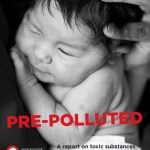
Pre-Polluted: Canadian Babies are Getting a Toxic Start

I recently watched a segment on CTV News that highlighted the major findings of a new report released by Environmental Defence Canada, an environmental action organization that states its mission as follows:  “We challenge, and inspire change in government, business and people to ensure a greener, healthier and prosperous life for all.”

The report is called ‘Pre-Polluted: A Report on Toxic Substances in the Umbilical Cord Blood of Canadian Newborns.’  It contains first of its kind evidence that Canadian babies are getting a toxic start, with 137 toxic chemicals found in their umbilical cord blood.

The report was based on tests conducted on the umbilical cord blood of three anonymous newborns whose mothers lived in the Greater Toronto and Hamilton Areas. I want to share with you the concerning results of this report, as well as some suggestions regarding what we can do to protect our health and the health of our future generations when it comes to toxin exposure.

Out of the 310 chemicals tested, 137 were found, in total, in the three babies. Of these 137 chemicals:

  • 132 are reported to cause cancer in humans or animals
  • 110 are considered toxic to the brain and nervous system
  • 133 cause developmental and reproductive problems in mammals

The CTV news report described these toxins as things that “shouldn’t be there”; however, if they are in the environment, why would it be a surprise to find them in anything and anyone who lives in that same environment?

The chemicals that were tested for fell into seven groups. These are:

  1. Dioxins and Furans. These are by-products of waste incineration and manufacturing processes such as pulp and paper bleaching.
  2. Polybrominated diphenyl ethers (PBDEs). These are flame retardants used in upholstered furniture, mattresses, electronics, clothing and other products (thankfully they’re being phased out in Canada)
  3. Perfluorocarbons (PFCs). These are used to make non-stick coatings used in cooking utensils, food packaging, and water-resistant clothing.
  4. Organochlorine Pesticides (OCs). Many of these are being phased out; however, residues from long banned ones like DDT are still in the environment
  5. Methylmercury. This is produced when mercury from things like coal burning power plants, mining and manufacturing, compact fluorescent light bulbs, thermometers, and electrical switches, enters the environment.
  6. Lead. Sources of lead include emissions from metal smelters, old leaded gasoline and paint, and impurities in products such as lipstick!
  7. Polychlorinated biphenyls (PCBs). Even though these were banned in Canada decades ago, they are highly persistent in the environment and in the body; in fact, 96 different kinds were found in the umbilical cord samples.

Note: For details on the health risks associated with these chemicals, you can read the full report here.

Although this was a very small test, the results are consistent with larger tests around the world that all found a ‘surprising array of industrial chemicals in the human body’.

The CTV news report included a short interview with Douglas Haines, from the Health Canada Chemical Surveillance Bureau. What did he have to say about the results of this study? He made comments to the effect that the results were ‘not cause for panic’, that the levels found are ‘relatively low’, and that the potential impacts are‘very, very, small and subtle’. That didn’t sit right with me for a couple of reasons. First, it’s my understanding that toxicity assessments are usually based on what an adult can ‘handle’, and secondly, toxicity assessments usually relate to a single substance. The Pre-Polluted report relates to tiny, vulnerable babies, with immature immune and detoxification functions, whose cells, tissues, organs, and systems (in particular the nervous system, which includes the brain), can be easily overburdened by low level exposure to just a few toxins, let alone a cocktail of any combination of 137 of them! Thank goodness research is underway at the University of Montreal that will test 2,000 babies for chemical exposures in order to more fully understand the effects of these chemicals on infant health and development.

The other thing that didn’t sit right with me was a comment made by a parent who was asked how they felt about the findings of the report. They said something to the effect that “you can make yourself crazy worrying about everything all the time”.Well, there is some truth to that, but in this particular situation, I don’t feel that ignorance is bliss.

The thing that unsettled me the most wasn’t the findings of this study, but rather the news correspondent’s closing remarks, which were that until government and industries remove risky chemicals from consumer products, “mothers and babies have no way of avoiding them”.  I feel that is somewhat of a defeatist attitude.

While I absolutely agree that government and industry need to take action, it could take years for them to do so. Until then, do we all just throw our hands up in the air and say “Whatever! There’s not much we can do about it!”. Well, I don’t know about you, but I’m not a “whatever” type of gal, especially when it comes to issues that impact my health, the health of my family, and the health of others – especially when those others are our most helpless and vulnerable citizens – newborn babies – the only individuals involved in this situation who really can’t do anything about what they are exposed to. Poor little boos!

Yes, environmental pollutants are ‘everywhere’ – in the air we breathe, in the water we drink, in the food we eat, and even in the dust in our homes. While we can’t 100% avoid them (unless we want to live like Seinfeld’s ‘Bubble Boy’), there are certainly things we can do to reduce our exposure to them and/or to do our part to avoid introducing more of them into the environment while we wait for government and industries to do the right thing. There are loads of things we can do, and I thought I’d share 10 things that I do to be proactive in an attempt to reduce my family’s exposure to toxins. I hope you will find at least a few, if not all of them reasonable and simple enough to start introducing into your day-to-day routine.

  1. Drink, and bathe and shower, in filtered/purified water. We have a reverse osmosis system installed under our kitchen sink that removes all chemicals and impurities from the water that we drink and cook with. We have another system installed where the main water line comes into the house to remove chlorine and other contaminants from the water, so that we are not bathing or showering in them. Remember that your skin is a super-sponge and can absorb toxins very easily (and then they will be absorbed directly into the bloodstream). We purchased our systems at Water Mart, in Bells Corners (Ottawa ON).
  2. When buying fruits and vegetables, I do my best to buy organic varieties of those that have the highest pesticide residues, especially if they are ones that we eat often. For an updated list, check out the Environmental Working Group’s 2013 Shopper’s Guide to Pesticides in Produce. It’s U.S. based, but since Canada imports a lot of produce from the U.S., I feel it’s still a relevant source of information.
  3. If you eat meat and animal products, whenever possible, buy them from local farmers who raise naturally pastured animals. There are so many farms and farmers’ markets in the Ottawa area to explore!
  4. Ditch your non-stick cooking pots, pans, skillets, baking sheets, etc, and use alternatives such as stainless steel, ceramic, glass, and cast iron.
  5. Get rid of all toxic household cleaning products. You can do most cleaning jobs with vinegar, baking soda, essential oils, and some elbow grease. There are also some great environmentally responsible, biodegradable cleaners out there. Do your research!
  6. Get rid of all toxic personal care products. Our skin absorbs things directly into our blood stream. My motto is that I wouldn’t put anything on my skin that I wouldn’t put in my mouth. I use coconut oil as a skin lotion and make-up remover. I often make my own toothpaste with equal amounts of coconut oil, baking soda, and a few drops of tea tree oil. Oh, and if available, buy unbleached toilet paper and other personal care products!
  7. Check out Health Canada’s consumption advice to avoid those types of fish that contain higher levels of toxic chemicals and metals such as mercury.
  8. If you have mercury amalgams or other metals in your mouth due to dental work, go and consult with a biological dentist. One that I know personally and can highly recommend in the Ottawa area is Dr. Farid Shodjaee.
  9. Eat more whole foods and avoid packaged foods with lots of ingredients you can’t pronounce or wouldn’t find in your own kitchen cupboards. This will minimize the burden on the liver, our major organ of detoxification, so that it is better able to deal with those toxins that we honestly can’t avoid.
  10. Regularly eat foods that will help to detoxify the body. There are loads of them. Here are a just a few:
    • Greens, green drinks, and sprouts. The chlorophyll they contain is a gentle and effective detoxifier.
    • Beets and beet juice. Beets support liver function and help it to process and flush out toxins.
    • Artichokes. Artichokes support liver function and help it to process and flush out toxins.
    • Parsley and cilantro. These herbs are known to detox heavy metals out of the body.
    • Mucilagenous (gooey/sticky/gel-like) foods such as aloe vera gel and juice, chia seeds, ground flax seeds, and okra. They will ‘trap’ toxins and promote regular bowel movements, which are an important part of detoxification.
    • Fresh squeezed lemon juice. It supports liver function and helps it to process and flush out toxins.

For more tips on how to avoid other common sources of toxins in and around your home, check out this 2-page guide from Environmental Defence Canada.

Ideally, I feel that moms-to-be AND dads-to-be should take steps to ‘clean up’ their homes and bodies at least six months prior to conception, but it’s never too late to start!

One more thing. If this issue is of concern to you, I encourage you to take a minute right now to read and sign this petition which asks our government to improve the regulation of toxic chemicals to protect the health of Canadians. I just did.

Take control of what you can!

Aloe Vera: Healing the Body Inside & Out!

The aloe vera plant is often referred to as the ‘First Aid Plant’, the  ‘Magical Medicinal Plant’, or a ‘superfood’, due to its numerous healing and health-boosting properties.

Most people associate aloe vera with skin creams and lotions, especially those that are used as ‘after sun’ products, since aloe vera gel is wonderfully hydrating, nourishing and soothing for the skin. It has also been shown to promote the growth of new skin cells.

While it is commonly known that aloe vera offers numerous benefits for the outside of the body, fewer people know that it also offers benefits for the inside of the body. These include balancing blood cholesterol and triglycerides, soothing pain associated with inflammation, soothing and healing the digestive system, helping to balance blood sugar, boosting the immune system, increasing energy and stamina, and promoting regular bowel movements. Sounds too good to be true…but it is

Aloe vera is classified as a ‘succulent’ plant. These plants are desert plants, and they have an amazing ability to capture and store water inside a gel-like substance that is found in their leaves, or blades. This gel-like substance offers self-repairing abilities to the body, and is loaded with vitamins, minerals, amino acids, and phytochemicals that offer powerful health benefits to those who consume them.

So how does one go about consuming aloe vera gel? You can buy aloe vera juice at just about any health food store. It is commonly recommended for digestive issues such asheartburn/reflux, ulcers, IBS, colitis, Crohn’s and Celiac disease. One of my favourite ways to get aloe vera gel into my body is simply to eat it raw and fresh…right out of the leaf! Here’s a video I made to show you how to ‘fillet’ an aloe vera leaf.

http://www.youtube.com/watch?v=91a_C5SbfQM

To get the health benefits of aloe vera, you need to consume it regularly. You can do this by drinking aloe vera juice, putting an aloe ‘fillet’ into a smoothie or your favourite juicing recipe, or by chopping it up and adding it to a fruit salad or yogurt…use your imagination! On its own, fresh aloe doesn’t have much of a taste, so when you add it to another food, it takes on the flavour of whatever you add it to. If you’re going to add it to a smoothie, I’ve read it’s best to add it towards the end so as not to completely break down the structure of the gel.

You can find aloe leaves at most good produce stores and they are relatively inexpensive. If you’ve never had fresh aloe vera or aloe vera juice before, it’s a good idea to start with a small amount and increase it over time. A safe, commonly recommended daily dose is 4 to 6 ounces. It’s a good idea to start slowly whenever you add something new to your diet in order to see how your body responds to it…especially when it is something like aloe vera that will ‘get things moving’…if you know what I mean. Aloe is great for cleansing and detoxing the body – as are most things with a mucilaginous (sticky, gooey) texture, including chia seeds, flax seeds, and okra.

Some sources state that women who are pregnant or breastfeeding should consult their healthcare practitioner before consuming aloe vera, as is sometimes the case with certain herbs; however, according to the recently released “Botanical Safety Handbook, 2nd Edition”, no information on the safety of consuming aloe vera inner leaf during pregnancy or lactation is identified. The substance that is of concern is called ‘aloin’. It is in the aloe latex (the yellow sap) of the leaf, which is primarily found between the rind and the inner gel, so if you are filleting fresh aloe vera, make sure you get all the rind off (and cut a bit below it when you are removing it). Rinsing the gel fillet with water will also help to wash away the aloin. As for commercially prepared products, most are tested to ensure that they are safe, as described in this video from the International Aloe Science Council: http://www.iasc.org/index.html

Enjoy!

Anna

Resources:

  1. The International Aloe Science Council http://www.iasc.org/articles.html
Privacy Policy

Website Maintenance and Services by Andrew Wardell