The Keys to Your Heart Health

February is heart month, so in this month’s Tip I’ll be sharing some facts about cardiovascular disease as well as some widely circulated nutritional recommendations for heart health that in my opinion, are pretty ineffective, and may actually be contributing to cardiovascular disease (not to mention other health issues). I’ll also be sharing 5 nutritional tips you can use to support your heart health, including reserving yourself one of the limited spots for a presentation I’ll be giving on Thursday, February 27th at 7:00pm entitled: A Change of Heart – Nutrition and Lifestyle Tips for the Prevention and Care of Cardiovascular Disease. If you or someone you know is struggling with heart health-related issues, including high cholesterol and/or high blood pressure, or wants to maintain heart health, this presentation could be a life-changer.

The Stats

Rising profitsDespite all of the medical advances made in the area of cardiovascular health, heart disease and stroke are two of the three leading causes of death in Canada. According to the Heart and Stroke Foundation of Canada, a Canadian dies from heart disease or stroke every 7 minutes. While early intervention including CPR and portable defibrillators have decreased the rate of death from heart attacks over the past several decades, the number of people with some form of cardiovascular disease is still growing. Why is this happening?

Sadly, 90% of Canadians have at least one risk factor for heart disease and stroke. These include: smoking, alcohol consumption, physical inactivity, obesity, high blood pressure, high blood cholesterol, diabetes, and stress. If I asked you how many of the above risk factors we have some level of control over, what would your answer be? My answer is all of them – and the amount of control we have over them is greater than we might think, especially when it comes to what we’re eating.

Time for a Change of Heart?

Oops! Road SignI recently did a bit of Googling and wrote down the 10 most common nutritional recommendations I came across related to heart health. In my opinion, 7 out of 10 of these recommendations won’t help much – in fact, they may actually increase your risk of heart disease, including these three common ones:

1. Avoid saturated fats and cholesterol
2. Replace items listed in #1 with liquid vegetable oils and margarines
3. Choose low and no fat/cholesterol versions of everything

Despite the fact that this type of nutritional advice has been around for decades, the impact that it has had on reducing the prevalence of cardiovascular disease has been virtually zero. In fact, the conclusion of a recent meta-analysis of research on this topic was published in the British Medical Journal – one of the world’s most prestigious peer-reviewed journals – stated the following:

“Advice to substitute polyunsaturated fats for saturated fats is a key component of worldwide dietary guidelines for coronary heart disease risk reduction. However, clinical benefits of the most abundant polyunsaturated fatty acid, omega 6 linoleic acid, have not been established. In this cohort, substituting dietary linoleic acid in place of saturated fats increased the rates of death from all causes, coronary heart disease, and cardiovascular disease. An updated meta-analysis of linoleic acid intervention trials showed no evidence of cardiovascular benefit. These findings could have important implications for worldwide dietary advice to substitute omega 6 linoleic acid, or polyunsaturated fats in general, for saturated fats”.


What does that mean in plain English please? Basically that avoiding saturated fats like butter, coconut oil, and animal fats and replacing them with things like margarine, and sunflower and canola oils, increased the rates of death from all causes (including coronary heart disease and cardiovascular disease)…oh, and that maybe this advice (that’s been given around the world for decades) might have to be revisited and likely reversed. Oops. Sorry.

Cholesterol – Friend or Foe?

friend or foeIn my opinion, these findings give undeniable support to an emerging theory that is causing quite a bit of controversy within the medical community right now. That theory is that saturated fat and cholesterol are not the cause of cardiovascular disease. In fact, this emerging theory indicates that:

  1. Neither cholesterol or saturated fat causes heart disease
  2. Saturated fat and cholesterol are essential to good health
  3. There is no correlation between heart attacks and cholesterol levels
  4. Low cholesterol levels have been linked to numerous health issues

Hopefully, this emerging theory will soon get more attention than the $30 billion dollar cholesterol-lowering drug industry. Yup. $30 billion dollars…and that’s despite mounting reviews of clinical trials that show no reduction in deaths due to cardiovascular disease despite their effectiveness in lowering cholesterol.

The Way to A Man’s (or Woman’s) Heart Health

veggie heartWe can wait for the emerging theories to break the myths surrounding heart health, or we can start taking some practical steps right now. Let’s start with these 5 nutritional tips that have been shown to support heart health:


  1. Eat more veggies. Select a variety of colours and strive to make your lunch and dinner plate at least 50% veggies. Beets, dark leafy greens, asparagus, carrots, broccoli, tomatoes, red bell peppers (eat the white pithy parts on the inside too!), garlic, and onions are often associated with heart health.
  2. If you eat chocolate, switch to dark chocolate that is at least 70% cocoa mass. Dark chocolate contains reservatrol and cocoa phenols that have been shown to promote heart health.
  3. Snack on raw nuts. Many nuts, including almonds, walnuts, and pecans are a good source of fibre, magnesium, and healthy fats. Studies show that eating raw nuts reduces the rate of heart disease.
  4. Replace a few of those cups of coffee with green tea. The catechins in green tea have been shown to lower the risk of heart disease.
  5. Reserve a spot for my A Change of Heart presentation, Thursday  February 27th, 7:00pm,  to learn more about what you can do to boost heart health….and find out who the real ‘trouble makers’ are! Click here for more details. I look forward to seeing you there!

Take control of what you can.

Yours in health,
Anna

References

  1. Heart and Stroke Foundation of Canada
  2. http://www.bmj.com/content/346/bmj.e8707
  3. The Great Cholesterol Myth (book)

Do You Have Cart Smarts?
Busting 5 Nutritional Myths

I shared many of my nutritional philosophies in my Get Cart Smart! presentation which I held for the first time this past summer. Since healthy eating starts with what you put in your grocery cart, this presentation walks participants through grocery store aisles, and educates them about what to put in their grocery cart and what to leave on the shelf. It was by far the most popular presentation I have ever offered; in fact, I had to turn some folks away as spaces were limited. I’ve had many requests to offer it again, and late January is the perfect time to do so. (Details re: time and place are at the end of this tip!)

Why late January you ask? Well, according to the Journal of Clinical Psychology, that’s the time (January 24th to be precise) when about 75% of us give up on our New Year’s resolutions – and as usual, losing weight was the number one resolution for 2014, with getting fit and healthy close behind, among the top 5.

So, why do so many of us give up? Is it because we have no willpower? Is it because we’re too lazy to do what it takes? Is it because in the back of our head there’s a little voice that says “you failed last time you said you were going to do that, so you’re going to fail again”.

There are loads of theories; however, I feel a big part of it has to do with not having the right information to act on, which ultimately leads to unsatisfactory results, no results, or results that don’t last.  Without results, how can we have continued motivation?

where to goIt’s especially hard to have the right information when it comes to health and nutrition; in fact, it can be downright frustrating given the overwhelming amount of information that is available. To complicate matters, much of the information is contradictory and seems to change by the hour. I do a ton of research and reading to try and keep on top of it all so that I can separate fact from fiction for the sake of my clients, students, and my own family! I’ll save you some time by sharing what I believe are the top 5 nutritional myths (in no particular order) that are sabotaging our health. These are based on not only on my research and readings, but on years of experience with clients.

MYTH #1 – Eat low-fat and no-fat foods

low fatWhen the naturally occurring fat in certain foods is removed to make a low-fat or no-fat processed food, something has to be added in its place to  make up for the lack of taste and texture that fat provides. Usually, what’s added is sugar, salt, and cheap fillers which can actually make our body better at storing fat. We need fat – in fact, every single cell of our body needs fat (including cholesterol).  When we avoid fat, we are also increasing the risk of becoming deficient in critical fat-soluble vitamins, such as A, D, E, and K. The problem isn’t fat, but rather that we have replaced healthy fats like butter, lard, beef tallow, and coconut oil, with highly processed, highly refined, often rancid, and often genetically modified oils like margarine, corn, soy, and canola. You’ll learn more about the skinny on fats in my Get Cart Smart! presentation, including why you have to eat fat to lose fat.

MYTH #2 – Exercise more, eat less

exercisePeople have been doing this for years, so why are more and more people overweight? It’s because it just plain doesn’t work! Don’t get me wrong, exercise is an important component of overall health and well-being, but research is showing it doesn’t play much of a role in losing weight. I have a lot of clients who have come to see me after years of exercising more and eating less and not getting any results in terms of weight loss. Weight loss is not about calorie-counting. In fact, when we significantly reduce our calorie intake, our brain thinks we’re in starvation mode, so it tells our body to slow down our metabolism and hang on to our fat. When these frustrated clients start following my nutritional recommendations, they get results. Weight loss can be a complex process as it can have so many causes, including hormonal imbalances, inflammation, and food sensitivities, all of which can be affected by the food we eat.

MYTH #3 – Foods labelled ‘organic’ or ‘natural’ are healthier for you

organicWhile more and more research is proving there are health benefits to eating organically grown foods, especially animal product, fruits, and vegetables, there are some cases where it makes little or no difference, especially when we are talking about packaged and processed food. For instance, some organic cereals (including gluten-free ones) have more sugar and unhealthy ‘fillers’ in them than their non-organic counter-parts.

MYTH #4 – Eating red meat and eggs will give you a heart attack

broken heartThere’s a mounting pile of research indicating that cholesterol and saturated fats are not the cause of heart disease. In addition, scientific studies have conclusively demonstrated that cholesterol from food has no effect whatsoever on the level of our blood cholesterol.  Cholesterol is such an essential part of health – so much so that the body has a very efficient mechanism to keep blood cholesterol at a certain level. When we eat more cholesterol, the body produces less; when we eat less cholesterol, the body produces more. So even if you follow a completely cholesterol-free diet, you will still have a lot of cholesterol in your body. In my opinion, many people are unnecessarily being put on statin drugs (cholesterol-lowering drugs), including young children. For more on this topic, check out my February 2013 Tip of the Month, ‘Cracking the Cholesterol Caper’.

MYTH #5 – Replace sugar with artificial sweeteners to lose weight

diet cokeArtificial sweeteners such as aspartame and sucralose have been shown to interfere with hormones that control appetite, and lead to food urges and overeating. One of the reasons this happens is that while artificial sweeteners trick your taste buds’ craving for sugar, they don’t trick your body and brain’s craving for it. Studies have shown that consuming foods and drinks containing artificial sweeteners promotes overeating and weight gain. In addition, artificial sweeteners break down in to toxic substances that can cross the blood-brain barrier and literally over-excite and ‘burn-out’ brain cells. By the way, one of the best things you can do for your health is avoid soft drinks, whether they be regular or ‘diet’ ones.

These are just a few of the myriad of myths that can sabotage our health and well-being.  If you’re ready to be educated, empowered, and energized so that you can take control of what you can for a healthier, more vibrant you, then I invite you to register for my Get Cart Smart! presentation. You’ll get great handouts, a loot bag, and a chance to win some very interesting edible door prizes! Details are as follows:

When:              Thursday January 30th 2014, 7:00pm – 9:30pm

Where:            International Academy Health Education, 380 Forest St, Ottawa

Cost:                $20 payable at the door (cash, VISA, or MasterCard)

Email info@perfectresonance.com to reserve your spot today!

I look forward to seeing you there. It will be a fun evening!

To your health!

Anna

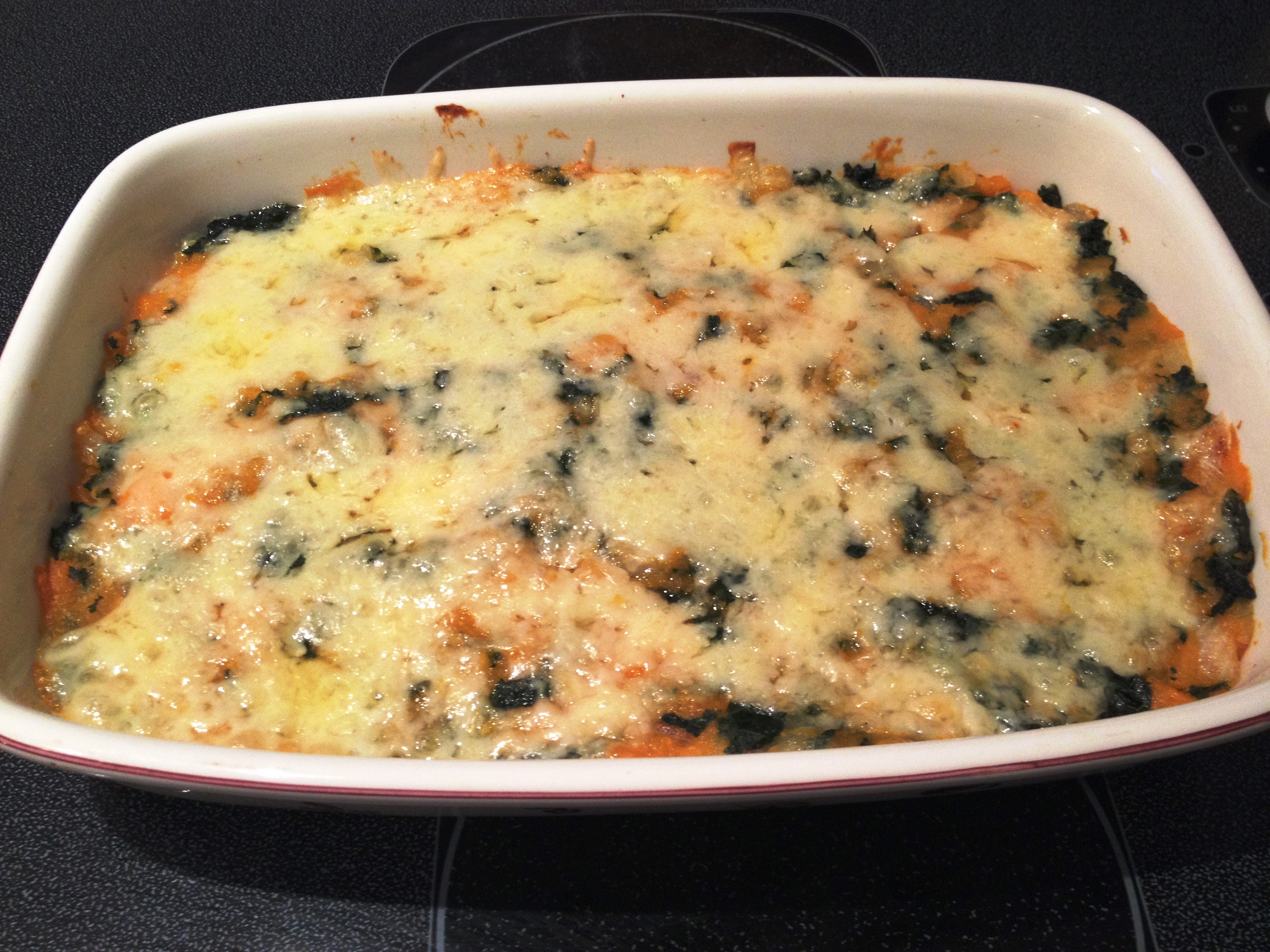
Butternut Squash and Goat Cheese Sprouted Grain Pasta

IMG_3418This is a great idea for Meatless Mondays. The recipe idea came from the Food Network Giada’s Penne with Butternut Squash and Goat Cheese, with a few changes. This recipe makes 4 servings.

What You’ll Need

  • 1 small butternut or acorn squash
  • 1 onion
  • 1 TBSP olive oil
  • Herbamare or an unrefined/unprocessed sea salt
  • Sprouted grain penne pasta (enough for 4 servings)
  • 1 package of fresh basil, chopped
  • 1/2 cup raw halved walnuts
  • 1/2 to 3/4 package of goat cheese
  • 1/2 cup reserved pasta water

Step 1: Cooking squash and onion

408003_340164286005368_928020522_n[1]Dice up squash and onion. Toss with olive oil and whatever seasoning you like. Recipe calls for salt and pepper. I used Herbamare.

409359_340164506005346_1011443849_n[1]Roast for about 30 minutes, or until soft, in a 350-degre oven. When they’re done, you can set them aside to cool a bit.

Step 2: Cooking pasta

395462_340164339338696_46065565_n[1]Next, put a pot of water on to boil to cook pasta. While you wait for it to come to a boil, get other ingredients ready. First, chop up the fresh basil.

397882_340164416005355_960906373_n[1]When the water has come to a boil, add pasta. Break up some raw walnut halves (I used about 1/2 a cup) and crumble up 1/2 to 3/4 of a small package of goat cheese. When pasta is cooked, drain it and reserve some of the water – about one cup.

Step 3: Serving

395969_340164632672000_1177445363_n[1]Pour about 1/2 cup of the reserved water into a large bowl (or you can use the pot you cooked the pasta in), add the goat cheese and pasta and stir until the goat cheese has melted into a nice creamy sauce. Add more of the reserved water if necessary. Then add the cooked pasta and roasted squash and onions. Toss to coat everything.

400299_340164696005327_301236167_n[1]To serve, top with walnuts and fresh basil. Looks so beautiful and it’s so delicious! Enjoy!


Asparagus Frittata

If you are in need of a quick, healthy dinner try this frittata. I made this  asparagus dinner in 10 minutes.

What You’ll Need

  • 1/2 bunch of asparagus
  • Coconut oil
  • Olive oil
  • 2 organic, free-range eggs
  • Sprinkle turmeric

Step 1: Prep

421321_364606560227807_404731287_n[1]I warmed up some left over asparagus in a bit of coconut and olive oil (you can use whatever left over veggies you have – or cook up some fresh ones).


Step 2: Cooking

426659_364606660227797_117509526_n[1]Next, I beat the eggs and poured them over the veggies. Then I ‘shook’ the pan around to evenly distribute the egg and flipped it when the bottom was cooked.


Step 3: Serving

420450_364606716894458_1179870195_n[1]Sprinkle the omelet with turmeric and serve with a side salad (this one was made with organic baby greens, cucumbers, tomatoes, sprinkled with olive oil, fresh squeezed lemon juice and dried oregano), and one small slice of toasted buckwheat, oat, and flax bread spread with 1 tbsp of coconut oil. So fast and so good!

Portobello Mushroom Cap Burgers

This is a great burger with delicious toppings. It’s a great meal for a Meatless Monday!

What You’ll Need

  • 2 tablespoon butter
  • 4 tablespoon olive oil
  • 2 sweet onions
  • Sprinkle sea salt
  • 4 Portobello mushrooms
  • 2 cloves garlic
  • 1 avocado
  • 1 package soft goat feta
  • Tomato
  • Sprouted grain bun

Step 1: Cook onion

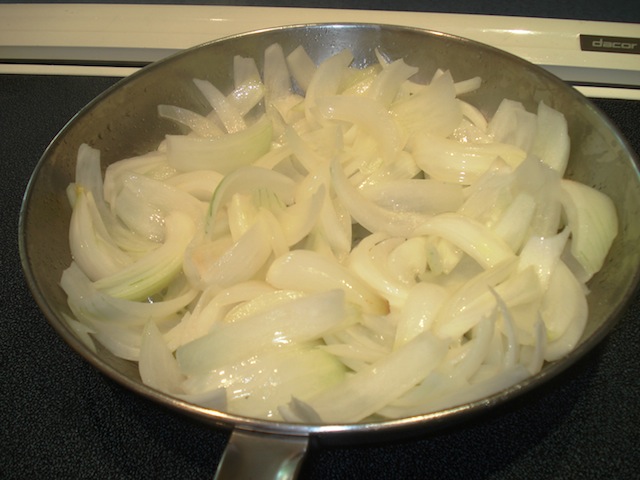
DSC00024Heat 2 tbsp each of butter and olive oil over medium-low heat and add 2 sliced sweet onions. Cook for about 10 minutes, sprinkle with a bit of unrefined sea salt, turn temperature down and cook slowly, stirring often, until caramelized. Will take about 30 to 40 minutes. In the mean time…

Step 2: Prep

DSC00030Remove the stalk from the Portobello mushrooms (you can save them for an omelet or anything else you’d like to add them to) and give the topside of the caps a very quick rinse under the tap (or brush them clean, or peel them – whatever you wish). In a small bowl, mix finely chopped garlic with 3-4 tablespoons of olive oil and let sit for 10 minutes or so to let flavours blend. Brush the tops and undersides of the mushroom caps with the garlicky olive oil (do the tops first so the oil sinks in between the gills of the underside of the caps).

DSC00034Remember to check on your onions and stir from time to time. Looking good!


Step 3: Cutting an avocado

Step 3.1:

DSC00038One of my friends had no idea how to open and slice an avocado, so these next few pics are for others like that! Run a knife all around the center of an avocado.


Step 3.2:

DSC00039Twist the two halves apart.


Step 3.3:

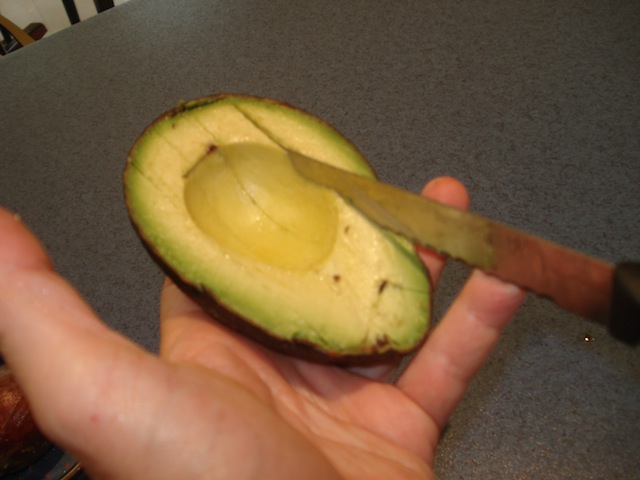
DSC00043Gently ‘whack’ the knife into the center of the pit and give it a twist. The pit will come lose.


Step 3.4:

DSC00045Cut slices into each half but do not cut beyond the skin.


Step 3.5:

DSC00049You will end up with something that looks like this.


Step 3.6:

DSC00050Run a tablespoon around the flesh of the avocado, just inside the skin.


Step 3.7:

DSC00051Then you should be able to lift all the nicely sliced flesh right out of the skin. You can also get a pretty cool gadget to do the job for you in apparently one fell swoop once you have the avocado halved and pitted. Anyone tried one of those?


Step 3.8:

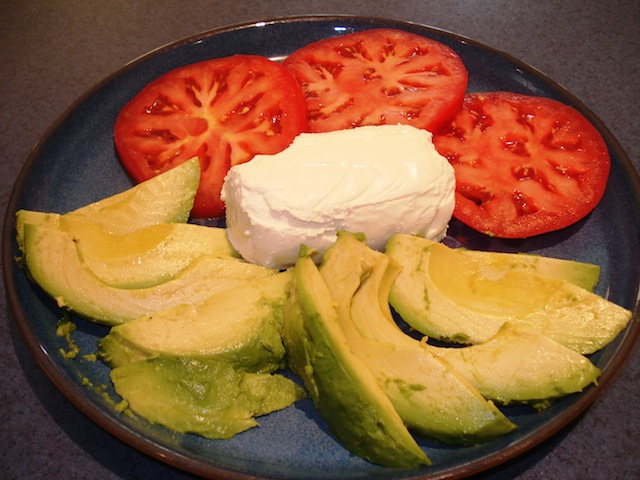
DSC00054Fan the avocado slices out, slice up some tomatoes and open up a package of soft goat feta.


Step 4: Grilling

DSC00056Put the brushed caps on a medium grill. Depending on the size, they’ll take about 7 to 10 minutes to cook nicely, so you can get them going before you slice up the avocados and tomatoes. We had a few ‘runts’ that cooked up faster.


Step 5: Serving

IMG_1018Once the caps are cooked, serve on a sprouted grain bun and top with a tomato slice, avocado slices, caramelized onions and soft goat feta. They are absolutely delicious! I ate mine without the bun – just put the feta right on top of everything. If you try them, I’d love to hear your comments! Enjoy!


Lina’s Noodles

I used to make this all the time because my girls LOVED it when they were little. Forgot all about it until a few days ago, when I ran into the lovely lady who showed me how to make it so many years ago! Thank you Lina! It’s a delicious Asian spin on Pasta Primavera made with rice vermicelli noodles (no wheat!) that will only take about 30 minutes to prepare. Makes 4 servings.

What You’ll Need

  • 2 folds of rice vermicelli noodles
  • 4 of 5 spring onions
  • 1 clove of garlic
  • 1 to 2 tablespoon of coconut oil
  • 1 cup of green beans (cut into 1-inch pieces – cut on the diagonal for visual appeal!)
  • 2 tablespoon of organic tamari sauce
  • 1 cup organic vegetable or chicken broth
  • 1 cup sliced carrots
  • 1 cup diced or thinly sliced red bell peppers
  • Sprinkle black sesame seeds

Step 1: Prep

IMG_0173Take noodles (enough to feed 4 people) and soak them in lukewarm water for about 20 to 30 minutes – until softened. In the mean time, prep the veggies.

IMG_0175Chop up onions and garlic (you can use a garlic press) and sautee for a few minutes with coconut oil (you can also use grape seed oil if you don’t have any coconut oil on hand). Add the cut up green beans.

IMG_0176Add tamari sauce and broth. I usually make my own, but this time I was in a pinch so used store bought.

Step 2: Cooking

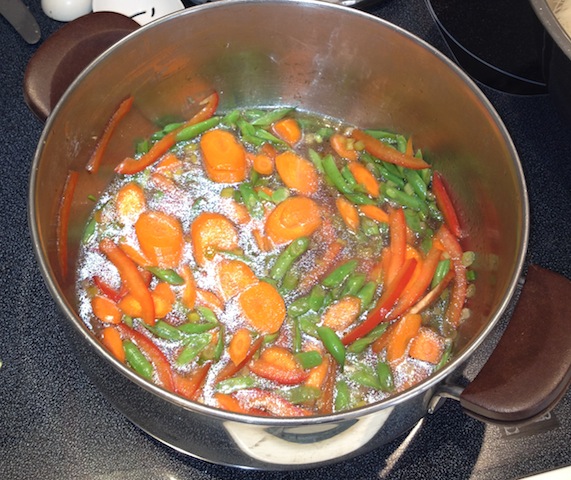
IMG_0177Add in carrots and red bell peppers. You can use whatever veggies you like. I like the colour combo of the beans, carrots and red peppers. I’ve also used asparagus or broccoli instead of the beans. Bring to a boil and then lower heat and simmer for about 5 minutes – just until the veggies start to get a bit soft.

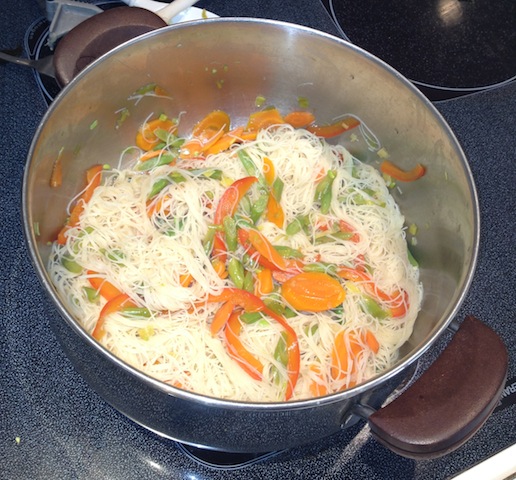
IMG_0178Drain the soaked rice vermicelli and add them to the pot. Using tongs or a couple of spoons, toss them with the veggies and broth until almost all of the broth is absorbed. If you want it more ‘soupy’, you can add more broth. If you want it drier, just keep tossing it until all the broth is absorbed by the noodles and/or let it sit for a bit longer.

Step 3: Serving

IMG_0179Dish out and sprinkle with black sesame seeds. We sometimes add a bit more tamari sauce to taste. Enjoy!

Puttanesca Sauce

A naughty name for a nutritious and delicious multipurpose sauce! Puttanesca is an Italian term for “whore-style”. There are lots of funny theories why this sauce got such a naughty name. One is that it was a quick and easy pasta sauce for puttanas to make in between customers. Another is that other than a few ‘standard’ ingredients, such as tomatoes, capers, black olives, and anchovies, you can be free & easy with the rest! Puttanesca is my favourite tomato-based sauce. It is amazing on pasta and also yummy on white fish and chicken. Here’s my recipe!

What You’ll Need

  • 1/2 to 3/4 cup of diced onion
  • 2 tablespoon olive oil
  • 3 tablespoon butter
  • 1/4 to 1/2 cups of sliced/chopped pitted black olives
  • 2 to 3 tablespoon capers
  • 6 to 8 anchovy fillets
  • 4 cups of whole tomatoes (canned)
  • 2 tablespoon tomato paste
  • 2 ounces red wine
  • 2 tablespoon fresh basil
  • 2 tablespoon fresh parsley

Step 1: Prep

IMG_1445Sautee onion in olive oil and 1TBSP of the butter until soft. This time I used a saucepan, but you can also use a big skillet.

IMG_1446Next, add black olives, capers and anchovy fillets. You can play around with the amounts to suit your taste! Stir it all up. It smells amazing already, and in fact, if you stopped right here, you’d have a delicious ‘sauce’/topping for many dishes! Take it off the heat for a minute while you do the next step.

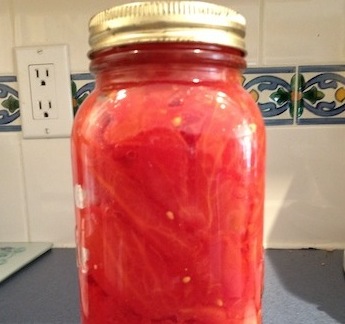
IMG_1449Puree the tomatoes. These are homemade canned tomatoes courtesy of my mom! Packed with fresh parsley, basil, and her love! You can use pre-pureed or diced ones too. Remember you want to end up with about 4 cups.

Step 2: Cooking

IMG_1451The anchovies should be more or less ‘dissolved’ by now, so it’s time to add the tomatoes. Stir in tomatoes and return to heat.

IMG_1455Stir in tomato paste and wine. Bring to a boil and then simmer for 15 or 20 minutes.

Step 3: Serving

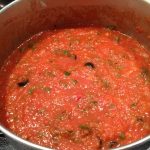
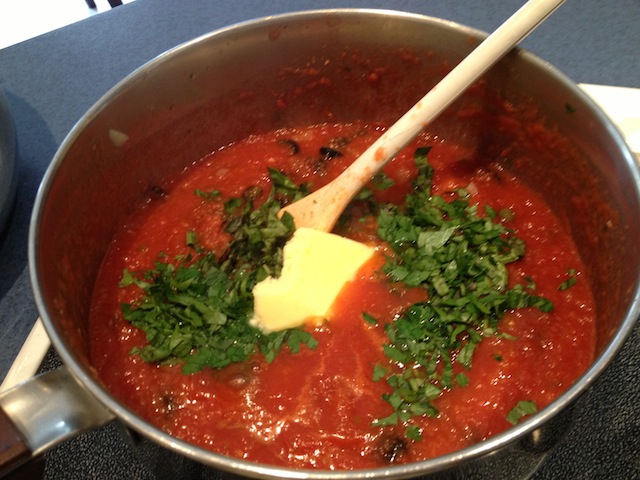
IMG_1453Just before serving, grab some fresh basil and parsley. I LOVE fresh basil and have been known to snack on the leaves straight from the garden! Chop both up nice and fine and add about 2 TBSP of each to the sauce. At this point you can also add 1 to 2 TBSP of butter. Mix together until butter melts. Sauce is ready to go! Give it a taste and add sea salt if needed. It freezes really well, so I love having left over sauce…and/or making a double batch. Enjoy!

Step 4: Leftover ingredients

IMG_1456Not sure what to do with the left over tomato paste in the can? You can do this while the sauce simmers. Scoop it out in 1 TBSP blobs and plop them on a piece of parchment paper.

IMG_1458Then put it on something flat that will easily fit into the freezer. Leave it overnight or until the blobs are frozen solid, then transfer the blobs into a freezer bag or freezable container and keep in the freezer, to use as you needed. It’s great to do this with all kinds of ‘left over’ ingredients! You can use an ice cube tray for more liquidy ingredients (like cooking wine, coconut milk, stocks, etc).


Privacy Policy

Website Maintenance and Services by Andrew Wardell