
Learn how to integrate belgian endives in your diet and reap its health benefits. Endives are versatile and offer antioxidant and anti-inflammatory properties.
V.H.P for Stress Relief

Stress isn’t all bad; however prolonged exposure to stress, even the everyday stress from work, finances, and family, can have ill-effects on numerous areas of our health. These include sleep issues, low energy, frequent colds and flues, and even weight issues.
Valerian, hops, and passion flower are known to have calming effects, and have been traditionally used, and are still used today, for stress, anxiety, and insomnia. These herbal remedies are available in many forms, including tinctures, capsules, and teas, either as single varieties or as blends.
A product that I have seen deliver good results is V.H.P. by Biotics Research Canada – a blend of the calming herbs valerian, hops, and passion flower.
To order, please email info@perfectresonance.com and put V.H.P. in the subject line. You will receive a confirmation email with payment instructions when your order is ready for pick up through Perfect Resonance Natural Health Counselling, located in the Marshall Health Clinic at 2605 Carling Avenue, Ottawa ON.
Pricing:
90 capsules: $29 + $3.77 HST
Suggested dose: 1 to 2 capsules three times daily with meals or as directed by a health care professional. For insomnia use 4 capsules 30 minutes before bedtime
As always, please consult a health care practitioner before taking any new supplement, especially if you have any allergies, sensitivities, or conditions that are currently being treated with medications.
Gingerbread Coconut Flour Cookies

Gingerbread cookies at Christmas time are a must in our house. We’ve always used a pretty traditional recipe. This year, I thought I’d experiment a bit and replace the wheat flour with coconut flour, and the white sugar with coconut sugar. The texture is a bit softer than our traditional gingerbread cookies, but the taste is all there! A great option for anyone avoiding wheat/gluten or grains in general.
Coconut flour is high in protein and fibre, and contains healthy fats including lauric acid, which promotes immune function. If you’ve never used coconut flour before, you should know that you cannot do a 1-to-1 substitution between coconut flour and wheat flour as coconut flour is quite dense and very absorbent. A general rule of thumb is to replace 1 cup of wheat flour with 1/4 to 1/3 cup of coconut flour. You’ll also have to add more eggs and/or liquid to your recipe. Some sources state that for every cup of coconut flour used in baking, you have to use six eggs and one cup of liquid – I didn’t do this for this recipe. Baking with coconut flour can be tricky, so it’s best to find recipes written specifically to use it rather than experimenting with your own.
Coconut sugar can be used as a direct replacement for sugar. Some sources state that it has more minerals than white sugar as well as a lower glycemic index. More research is being done to support these claims.
Please note that the dough for this recipe has to be refrigerated and makes about 2 dozen cookies, depending on how thin you roll the dough.
What You’ll Need
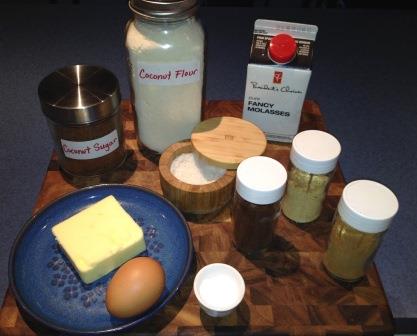
- 2 eggs (even though only one is pictured above)
- 1/2 cup of soft butter
- 1/2 cup of coconut sugar
- 1/4 cup molasses
- 1 cup of coconut flour
- 1/4 tsp salt
- 1/2 tsp of baking soda
- 1/2 tsp of ground cloves
- 1 tsp of ground ginger
- 1 tsp of ground cinnamon
Making the Dough

I use a food processor to make this dough. You can use a mixer too, just be aware that the dough gets quite thick, so make sure that whatever equipment you use has good power! Mix ingredients as follows:
- mix 1/2 cup of the coconut flour with the salt, baking soda, and spices and put aside
- put eggs, butter, and sugar in the food processor and cream together for 1 minute
- add molasses to the creamed mixture and blend for another minute
- add dry ingredients that were put aside (first bullet point!) and blend until smooth
- add remaining coconut flour and blend until smooth
- remove dough from processor/mixing bowl, roll into a ball, wrap in wax paper, and refrigerate for 2 hours.
Rolling, Cutting, and Baking

- set oven to 375F
- take the dough out of the fridge and cut it in half, working with one half at a time
- roll the dough out between two pieces of wax paper until it is about 1/8 of an inch thick
- cut out shapes with cookie cutters and carefully transfer them to a parchment paper lined cookie sheet (using a spatula to transfer the cookies from the wax paper to the cookie sheets is a useful tip!)
- roll dough scraps from between cut out shapes into a ball, roll it out between 2 sheets of wax paper, cut more cookies…repeat…repeat…until you’ve used all the dough
- Bake for 6 minutes, or until the bottom of the cookies just starts to brown
- LET COOL COMPLETELY before removing from baking sheet to avoid breakage
Decorate

Decorate with melted white chocolate or a simple icing. We usually use a Royal Icing Mix.
Enjoy!
GlucoBalance: Support for Blood Glucose Levels and Much More
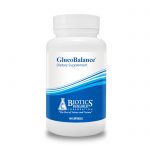
Supporting normal glucose levels is one of the most important things anyone can do for their overall health. Diabetes and hypoglycemia aren’t the only health issues associated with blood glucose imbalances; for example, blood glucose imbalances are associated with trouble losing weight, obesity, cardiovascular diseases, cancer, chronic inflammation, fatigue, frequent colds and flus, and more.
GlucoBalance is formulated to deliver nutrients that are particularly important for supporting normal blood glucose levels, and therefore, overall health.
If you are currently taking insulin or other medications to control your blood sugar levels, please consult with your doctor and/or health care practitioner before starting to take GlucoBalance and monitor your blood sugar levels regularly.
For detailed information on GlucoBalance click here.
To order, please email info@perfectresonance.com and put GLUCOBALANCE in the subject line, stating the number of bottles and size of product you are ordering in the body of your email. You will receive a confirmation email with payment instructions when your order is ready for pick up through Perfect Resonance Natural Health Counselling, located in the Marshall Health Clinic at 2605 Carling Avenue, Ottawa ON.
Pricing:
90 capsules: $52 + $3.25 HST
180 capsules: $86 + $11.18 HST
Suggested dose: 2-3 capsules two times daily with meals or as directed by a health care practitioner
If you’d like more information on the relationship between blood sugar balance and overall health, I invite you to read my November 2013 Tip of the Month entitled: Sweet Misery – Sugar Balance and Health.
Take control of what you can.
Easy-Peasy Healthy Eggnog

One of my treats during the holidays is eggnog, and thankfully I only drink a glass when we’re decorating the Christmas tree. For those of you who go crazy for eggnog over the holidays, did you know that there’s typically anywhere from 30 to 40 grams (that’s 8 to 10 teaspoons!) of sugar in a cup of eggnog? …and don’t be fooled by the “Light” (e.g. low fat) versions. In most cases, they have exactly the same amount of sugar, if not more, to make up for the lack of fat.
I’ve been experimenting with making a healthier version of eggnog, and I think I’ve come up with one that is pretty darn delicious and can be made in about 30 seconds. It’s egg-less; not because I avoid eggs, but because I wanted a ‘cooking-free’ recipe. I hope you enjoy it!
What You’ll Need:
- 1 cup of almond or cashew milk (you can even make your own if you like). I like using cashew milk for this recipe.
- 3 TBSP of plain, whole fat yogurt
- 1/2 a ripe banana
- 1/2 tsp of raw honey (I used buckwheat honey, but any raw honey will do)
- 1/4 tsp of vanilla extract
- 1/8 tsp ground cloves (more or less to suit your taste)
- 1/4 tsp each of nutmeg and cinnamon (more or less to suit your taste)
Instructions:
Put all the ingredients into your favourite blender appliance and blend until creamy and smooth. That’s it!
Serving:
Presentation is important! Pour the eggnog into a festive glass (I like to drink my eggnog out of a brandy snifter), sprinkle with nutmeg or cinnamon…and of course, you can always add a splash of rum or brandy.
Cheers and Happy Holidays!
Rice-free Cauliflower Fried Rice

I try to avoid starchy foods as much as possible, and rice is one of them. This recipe, Cauliflower Fried Rice, from the cookbook Internal Bliss, is just awesome. The recipes in this cookbook are designed for individuals following the GAPS diet (Gut and Psychology Syndrome) to ‘heal and seal’ the gut and promote digestive system health – something that most individuals would benefit from. It is absolutely delicious and will make a great non-starchy side dish to any protein-based or veggie-based meal. Other than using the cauliflower as the ‘rice’, you can substitute the veggies listed in the ingredients with whatever you have on hand that you think would be a good addition to a fried rice. Experiment and enjoy!
What You’ll Need:
- 3 TBSP coconut oil (I used 1/2 coconut oil and 1/2 butter)
- 1 medium head of cauliflower
- 1 small head of broccoli (I didn’t have any on hand, so I used a medium-sized zucchini instead)
- 1 red or yellow bell pepper (remember to leave in the white pithy parts!)
- 1 carrot
- 1 onion
- 2 TBSP apple cider vinegar
- 2 tsp sesame oil
- 2 eggs
- spring/green onions for garnish
Prepping:

- Grate the head of cauliflower. I used a food processor fitted with the grating blade. It should end up in small, crumbly, rice-sized pieces as pictured above. Steam it for 3 minutes and set aside.
- Dice the onion and set aside.
- Dice all the other veggies and set aside (separate from the onion).
- Scramble the eggs so that they’re about half cooked and set them aside.
- In a small bowl, mix the sesame oil and vinegar and set aside
- (That’s lots of ‘setting aside!!!)
Cooking:

- Heat the oil in a large skillet or wok on medium-high heat
- Add the grated cauliflower and stir constantly until it begins to brown (3-5 minutes)
- Add the onions and cook until the onions start to soften (3-5 minutes)
- Add all the other veggies and saute to your level of ‘doneness’ (you can add a bit of water to the skillet/wok and cover it for a few minutes to create more of a ‘steam’ cook)
- Turn the heat off, add the eggs, and stir until the eggs are fully cooked
- Stir in the sesame oil and vinegar mixture
Serve:

Garnish with chopped spring onions (optional) and enjoy! We love this side-dish with with baked salmon and asparagus!
Bon apetit!
Turn Zucchini into Spaghetti
Learn how to easily make zoodles or zucchini spaghetti instead of cooking with regular old pasta. Zucchini is a versatile vegetable that can be used in many different recipes. It’s easy to prepare, takes on great flavour and takes no time to cook!
