Greens and Feta Quiche with Almond Crust

This delicious recipe is great for breakfast, lunch or dinner. You will not believe how good this wheat-free crust is! My recipe is adapted from a ‘Heal Thyself’ recipe.

What You’ll Need

  • 1.5 cups almond flour
  • 1/2 teaspoon sea salt
  • 3 tablespoon butter
  • 4 eggs
  • 1 crushed clove of garlic
  • 1 bunch of kale
  • 1 small onion, diced
  • 1 tablespoon olive oil
  • 1/4 to 1/2 cup of crumbled goat feta

Step 1: Prep

To make the crust, mix together the almond flour, sea salt, 2 tbsp of cold butter cut into small pieces, 1 egg and garlic. Press into a pie plate and bake in a 325F oven until it starts to turn golden, about 10-15 minutes, then remove from oven.

Meanwhile, coarsely chop and steam a small bunch of kale (remove hard stems) until wilted. Set aside. In a separate pan, saute diced onion in a tbsp of butter and a tbsp of olive oil until soft. Chop up cooked kale and add to onions. Remove from heat (you can use any cooked greens or green veggies you like – spinach, kale, steamed broccoli or asparagus).

Step 2: Cooking

420937_346140148741115_1924314869_n[1]Put cooked greens and onions in a bowl and mix in 3 eggs and crumbled goat feta (to your taste). Mix well, pour into cooked pie-crust and return to oven until eggs are fully cooked, about 15-20 minutes. I sprinkled mine with turmeric, made a side salad, and dinner was served.


How to clean a pomegranate and reap its health benefits

I just love the refreshing taste of pomegranate seeds. Pomegranates are high in antioxidants and good for heart health. The crunch is so satisfying and well worth the work that goes into cleaning this fruit.

The good news is that I have come up with an ingenious way to pull out the seeds without making a huge red mess!

Crave Chocolate? Read This!

February is National Chocolate Month, boasting the second highest chocolate sales in any given month (March or April trump it depending on when Easter falls).

There’s a lot of talk (and controversy) about the health benefits of chocolate – especially dark chocolate. These health benefits include supporting cardiovascular health, lowering blood pressure, promoting weight loss, and improving memory. These health benefits are attributed to substances known as flavanols found in raw cacao beans which may or may not end up in the chocolaty products many of us enjoy.

Cacao vs Cocao vs Chocolate

A common message is that 70% (or higher) dark chocolate is the best choice to reap the benefits associated with chocolate. While dark chocolate is typically a better choice than milk chocolate or white chocolate (the latter is not really chocolate as it usually doesn’t contain any cocoa ingredients), if you really want to reap the most powerful health benefits of chocolate, you need to understand the difference between cacao, cocoa, and chocolate.

cacao tree  WEBWhile cacao, cocoa, and chocolate all originate from the fruit of a tree called Theobroma cacao, how the fruit is processed makes a big difference in the health benefits of the final product.  Interestingly, the name of the tree is derived from the Greek work ‘theos’, which  means gods, and ‘broma’ which means food – and I’m guessing many of you reading this would agree that chocolate is indeed food for the gods!

I just read an article entitled “Why You Should Go Crazy for Cacao” (Alternatives, Volume 17,No 12, Dec 2014 by Dr. David Williams), that supports many other articles I’ve read on the topic of chocolate, and I thought I would share some of what I’ve read with you.

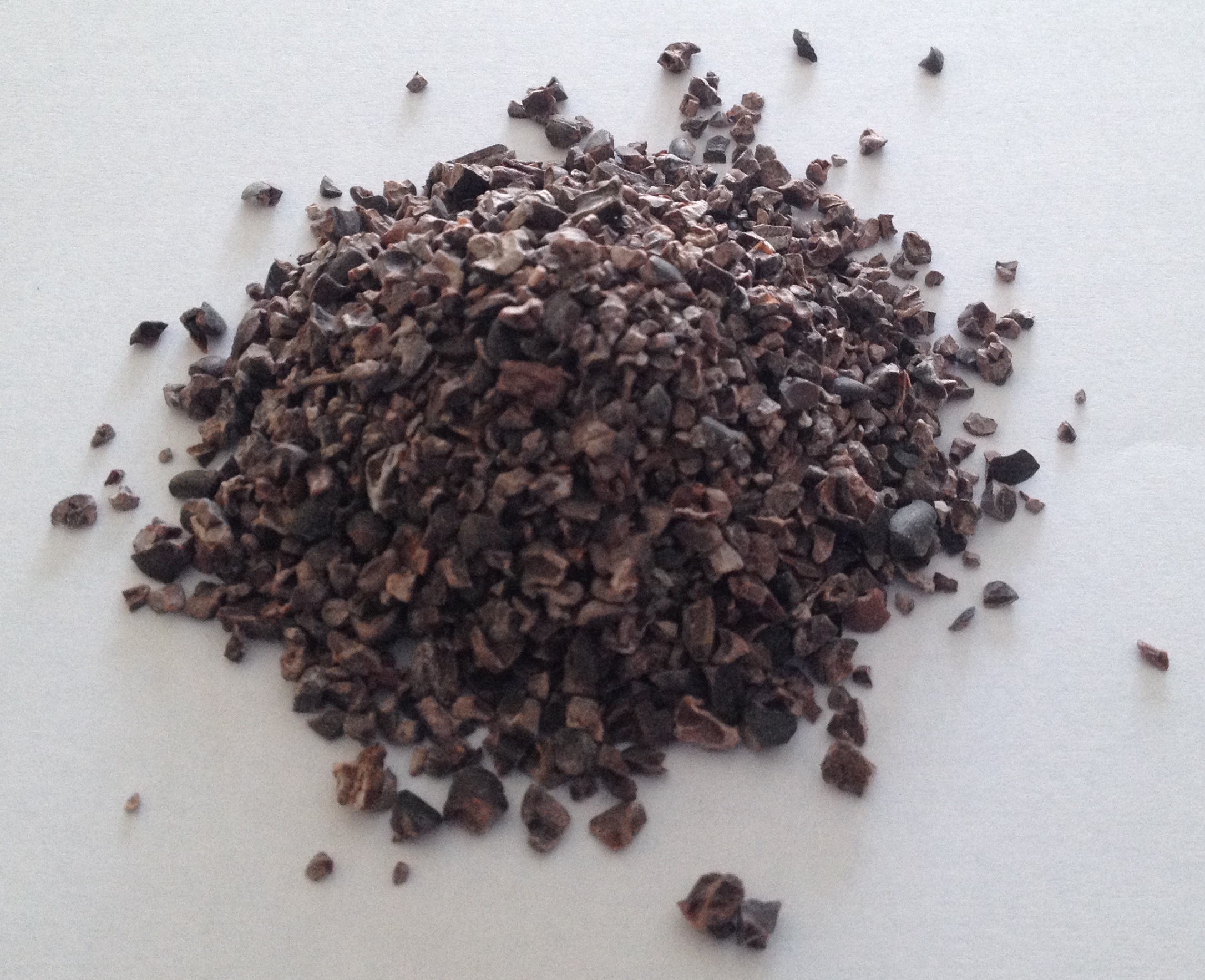
Cacao trees produce a pod that contains cacao beans.  The pods are picked and then split, allowing the beans to ferment naturally.  Inside the beans are small pieces called ‘nibs’ which contain cacao butter. These nibs are the starting point for future chocolate production and contain all of the natural fiber, fat, protein, minerals and nutrients of the cacao bean. You can buy cacao nibs at most health food stores. They have a slightly bitter taste and can be used in baking, or sprinkled on yogurt, fruit, or into a smoothie. I love them!

cacao nibs 1Cacao nibs can be processed to make raw cacao powder, which is often touted as a ‘superfood’. Raw cacao powder contains most of the flavanols of the cacao beans. Flavanols are strong antioxidants  that give chocolate, and other foods such as fruits and vegetables, their health-boosting reputation.  Studies show that eating more foods rich in flavanols is associated with a reduced risk of death from all causes.

Many of the health benefits of raw cacao seem to stem from the fact that a particular flavanol it contains promotes the production of nitric oxide, which in turn can boost immune function and improve circulation to all parts of the body – both very important factors in overall health.  Regular flavanol consumption has also been linked to improving memory, cognitive skills and insulin response, as well as lowering blood pressure.

Cacao powder and cocoa powder (which is what most people use) are not the same product. The processing of raw cacao powder into cocoa powder requires high temperature roasting which lowers the overall nutritional value and eliminates most of the health-boosting flavanols. In addition, sugars, milk fats, and oils are added to cocoa powder.

Chocolate production involves even more processing than cocoa powder production, so even more of the flavanols are eliminated. You’d have to eat a lot of dark chocolate to reap the same benefits delivered in a small amount of raw cacao nibs or raw cacao powder. Unfortunately, high percentages of cocao powder identified on many chocolate products (e.g. 70%, 80%, 90%) doesn’t always translate into a high level of flavanols.

What Chocolate Cravings May Be Trying to Tell You

greensThere seem to be an interesting connection between chocolate ‘addictions’ and a certain nutrient deficiency which is becoming very common and concerning – and that is magnesium. Cacao powder is a rich source of magnesium, so a constant craving for chocolate may be a sign that you need magnesium. Magnesium is known as the ‘anti-stress’ mineral, so it’s pretty ironic that many people binge on chocolate when they are feeling stressed. Magnesium is involved in hundreds of chemical reactions in all tissues of the body, and is critical for proper nerve and heart function. Additional good food sources of magnesium include pumpkin seeds, sesame seeds, almonds, quinoa, and dark leafy vegetables, especially spinach, Swiss chard, beet greens, and turnip greens. Eat your greens!

Bottom Line?

When you’re craving something chocolaty, to get the most bang for the buck (and for your health), try adding some organic, raw cacao powder and/or nibs to your snacks and smoothies.   You can mix a tablespoon of cacao powder into plain yogurt, or a cup of warm (not hot) almond milk or coconut milk. You can also sprinkle some raw cacao or raw cacao nibs over fruit.  Note that if you’re sensitive to caffeine, you’ll want to avoid consuming cacao later in the day as it may interfere with your sleep.

Unfortunately, not all the news about cacao and chocolate is good news. In her book, Bitter Chocolate: Investigating the Dark Side of the World’s Most Seductive Sweet, award-winning author and broadcaster Carol Off, exposes the unethical history of the cacao industry. Almost half of cacao comes from the Ivory Coast in West Africa. Some farmers have resorted to abusive labour practices (including child labour and trafficking) in order to “compensate” for the labor intensive harvesting and preparation of cacao beans, as well as the extremely low price of the beans brought about by economic and government forces. Fortunately, there are an increasing number of fair-trade cacao, cocoa, and chocolate products available.

Finally, remember that health promoting antioxidants are found in numerous other food sources – especially fruits and vegetables – and that these sources should not be replaced by cacao powder, cacao nibs, or any form of chocolate! In nutrition, moderation and variety are key!

What is fennel and how do you eat it?

A crunchy vegetable that looks like celery but tastes like licorice? You guessed it, it’s fennel. Learn all about fennel in this video, how to prepare it and all the different ways you can enjoy it. Not only is fennel delicious, it also offers lots of health benefits too.

Winter Vegetable Stew

This slow-cooked winter veggie stew is loaded with health-boosting and tummy-warming goodness. It looks gorgeous and tastes amazing. It’s one of my favourite winter meals!

What You’ll Need:

  •  A very large covered ‘roasting’ pot or pan that you can use on the stove and also put in the oven. I used a Creuset (enamel covered cast iron)
  • 4 TBSP of Coconut oil or butter (or a combo of both)
  • a really big white or yellow onion, chopped
  • 4 cloves of garlic
  • 2 or 3 bay leaves
  • 3 sprigs of fresh thyme
  • 1 sprig of fresh rosemary
  • 3 sprigs of parsley (plus extra as a serving garnish)
  • 2 TBSP organic tamari sauce
  • 3 cups of water
  • 4 cups of canned tomatoes
  • 1 cup of fresh shiitake mushrooms
  • 1/2 a cup of red wine
  • unrefined sea salt and pepper to taste
  • Approximately 12 cups of coarsely chopped up veggies. This recipe will work with a variety of fall/winter/root veggies. You can choose your favourites…and remember, the more colourful you make it, the more nutritious it will be! I used:
    • 4 parsnips
    • 1 large turnip
    • 6 carrots (I used heritage ones for some extra colour)
    • 1 sweet potato
    • 6 stalks of celery
    • 2 cups of Brussels sprouts

Step 1: The Stewing ‘Liquid’

IMG_2894 web


  • On the stove top, heat the coconut oil and/or butter in the pot at medium heat.
  • Chop up the sprigs of herbs and add them to the pot along with the chopped onion.
  • Cook until the onion starts to brown, about 15 minutes. Stir occasionally.
  • Add the wine, and bring to a boil, then reduce heat and simmer for a few minutes
  • Add the mushrooms, tamari, and water and bring to a boil, then lower heat and simmer for 20 to 25 minutes (it should reduce to about 2 cups). While this stewing ‘liquid’ is simmering, you can prepare the veggies.

Step 2:  Prep the Veggies

IMG_2900 web


  • Heat the oven to 350F
  • Coarsely chop up all the veggies
  • Once the stewing liquid in Step 1 has simmered for 20 to 25 minutes, add the veggies to into it. Add the canned tomatoes. Sprinkle with a bit of the salt and pepper, and toss well to coat.

Step 3: Cooking

IMG_2903 web


Cover the pot and put it in the 350F oven. Cook until veggies are tender, about 1.5 hours.

 Step 3: Serving

served up web


You can serve by simply ladeling in to a bowl. I fancied it up a bit by serving it in baked acorn squash halves and then garnished with a bit of chopped parsley. For directions on baking squash, you can check out this recipe…eliminating the cinnamon and maple syrup for this use though!

Enjoy!


5 Reasons To Give A Hoot About Roots

Apart from carrots, onions and garlic, root vegetables are among the most ignored and under-appreciated vegetables on the grocery store shelf, and that is unfortunate because they are also among the most nutrient-dense.  Examples include: beets, celeriac, sweet potatoes, yams, turnips, parsnips, daikon, kohlrabi, and yucca (to name just a few!).

Here are five reasons why you should start adding more root vegetables to your meals:

  1. Since they grow underground, root vegetables absorb a lot of nutrients from the soil they are grown in, including nutrients with powerful anti-oxidant, anti-inflammatory, and immune-boosting properties.
  2. Root vegetables are high in fibre, which will help you to feel full, regulate bowel movements, and help to keep your blood sugar balanced.
  3. They are relatively inexpensive, so they are a great way to stretch your grocery budget.
  4. They are extremely versatile and easy to add to your meals. They can be chopped up and added to soups and stews, baked or steamed or boiled and mashed to serve as a side.
  5. While the prime seasons for most root vegetables are fall and winter, their quality is pretty consistent all year long, and most can be kept fresh for a long time by storing them in a plastic bag in the crisper drawer of your fridge.

Some root vegetables are really strange looking and unfamiliar to most of us, such as celeriac or jicima. This week, I encourage you to pick up a root vegetable you’ve never tried before, and Google a recipe for it. Remember that variety is an important part of nutrition (different colours especially!), so expand your root veggie repertoire and reap the health benefits.

Next week, I’ll be sharing a delicious Winter Vegetable Stew loaded with root vegetables. Stay tuned!

Using Belgian Endives

Learn how to integrate belgian endives in your diet and reap its health benefits. Endives are versatile and offer antioxidant and anti-inflammatory properties.

Privacy Policy

Website Maintenance and Services by Andrew Wardell