In this video you’ll learn how to prepare fresh artichokes as well as the many health benefits they offer.

Nutrition & Healthy Living
In this video you’ll learn how to prepare fresh artichokes as well as the many health benefits they offer.
Most of us don’t drink enough water or eat enough vegetables – both of which are foundational to overall health and well-being.
In some cases, simply drinking more water can help to alleviate a wide variety of issues, including headaches, constipation, fatigue, and overeating.
Watch this video to get some tips that will motivate you to drink more water and boost your veggie power!
My daughter made these pancakes for me last summer and they quickly became one of my favourites. They’re so easy to make and a great way to use up those really, really ripe bananas that a lot of people don’t like to eat! This recipe will make a couple of decent sized pancakes – enough to feed one person, or two not so hungry people.

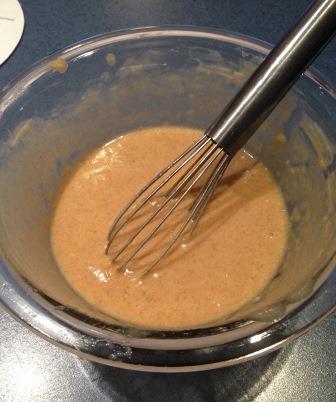
The easiest way to whip together this pancake batter is to put all the ingredients into a blender or Magic Bullet or small food processor and let it go until it’s nice and smooth. I did mine by hand, whisking the egg first until it was nice and fluffy. I mashed the banana, almond butter, and cinnamon together in another bowl until it was all nice and smooth, then I added the whisked egg into the banana mixture and whisked it all together until it was nice and smooth again!
To cook the pancakes, put a generous blob of coconut oil (I used a combo of coconut oil and butter) in the pan to ensure there is no chance the pancake will stick. Heat up the oil/pan on medium-low to medium heat (whatever temp your cooktop needs to be at for pancake cooking) and pour in half the batter (or as much as you want to make whatever sized pancakes you want). Wait until the pancake is cooked at least halfway through (maybe a bit more – bubbles should start to break through the batter) before you flip it.
Now for the creative part…get out your favourite toppings and enjoy!
Here are a couple of pancakes topped with berries, plain whole-fat organic kefir, and a drizzle of dark local maple syrup:

Here’s one with pecans, unsweetened shredded coconut, cinnamon, and a drizzle of dark local maple syrup:

Yum yum! Enjoy!
Learn how to easily make your own yogurt at home and add probiotics to your diet with this simple recipe.
May is Celiac Awareness Month so Celiac Disease would be an obvious topic choice to write about for my Tip of the Month. While I will mention it briefly, this article isn’t just for people with Celiac disease. If you or someone you know has skin problems, joint pain, digestive issues (gas, bloating, constipation, diarrhea), headaches, irritability, allergy-type symptoms, sinus problems, repetitive throat clearing, blood sugar issues, cardiovascular or cholesterol issues, water retention/edema, fatigue/lack of energy, and/or an inability to lose weight, then you may want to keep reading.
The Canadian Celiac Association defines Celiac Disease as a medical condition in which the internal surface of the small intestine is damaged by a substance called gluten. This results in the inability of the small intestine to digest food and absorb nutrients. Celiac Disease was once considered to be quite rare; however, today a growing number of studies indicate that it affects 1 in every 133 North Americans – a much higher figure than ever estimated.
Gluten is a general term for the proteins found in wheat and other grains, including barley, bulgar, kamut, oats (unless certified gluten-free), rye, and spelt (here is a full list of foods to avoid). This results in an inability of the small intestine (our main organ of digestion and absorption) to digest food and absorb nutrients.
 Wheat is often listed as one of the top 3 most common foods linked to food sensitivities (cow’s milk and soy are the other two) – and food sensitivities are one of the major sources of inflammation in the body. Inflammation is at the root of most health issues, and has been linked to serious diseases such as cancer and cardiovascular disease. Inflammation can also cause a whole host of daily aches, pains, and problems that many people sadly resign to accept as their ‘norm’, when it doesn’t have to be that way.
I have seen clients get relief from many of the health issues listed at the beginning of this article (and more!) when they eliminate or limit wheat and other grains from their meals and snacks. It’s not so much that all grains are evil and that none of us should ever eat them again; the crux of the matter is that most of us eat way too many of them, and usually in foods that come with other ingredients that aren’t good for us such as sugar, artificial sweeteners, colours, and/or flavours, preservatives, and unhealthy fats.
Furthermore, unless grains are traditionally prepared (that is, soaked/sprouted/fermented), they cause issues for most people because they are very difficult to digest. Grains also contain anti-nutrients that block the absorption of various minerals.
 Wheat wasn’t always such a prominent part of our food system. In the big picture of our time here on earth, it wasn’t that long ago that wheat and other cereal grains were a very small part of the human diet, if even a part of it at all, since the majority of grains came into popularity with modern agriculture. When you consider this, it isn’t hard to imagine that wheat is not a ‘necessary’ food.
Even in the absence of Celiac Disease, or a sensitivity to wheat, it is my experience that most us would benefit from avoiding wheat as well as cutting back on our grain servings. Many of my clients freak out a bit when I suggest they avoid wheat (and other grains)…until I share some tasty recipes and alternatives with them, such as:
– Zucchini spaghetti
– Pizza with a cauliflower crust
– Cauliflower rice
– Greens and feta quiche with an almond crust
I also love using various types of lettuces and veggies as wraps and ‘dippers’. Not only does this eliminate wheat and other grains, it’s also a great way to eat more veggies, which most of us could stand to do. Take a look at these yummy wheat-and-grain-free meals and snacks:
Instead of corn chips, serve red, orange, or yellow bell peppers with guacamole.
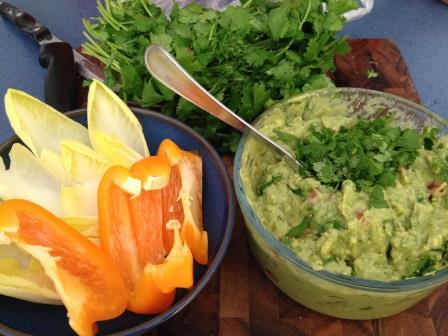
Instead of pita bread, serve Belgian endive leaves with hummus (or any other dip).

Instead of bread, buns, or tortillas, use Boston bib or leaf lettuce leaves to wrap up tacos, fajitas, burgers, and sandwich fillings.

Finally, I’d like to issue a ‘buyer beware’ alert when it comes to all those gluten-free packaged foods showing up on grocery store shelves everywhere. Gluten-free doesn’t mean healthy. The truth is that gluten-free versions of foods can be highly processed, full of sugar and artificial ingredients, and made from wheat flour alternatives such as potato and rice flour, which can raise blood glucose more than sugar does! Make sure you read the labels!
Take control of what you can!
Probiotics have received a lot of attention in the nutritional world, and rightly so. They have been associated with neutralizing toxins, reducing or eliminating digestive issues (including symptoms associated with Irritable Bowel Syndrome), improving digestion and the absorption of nutrients, enhancing immune function, promoting weight loss, lowering bad cholesterol, and much more.
Since all probiotics supplements do not offer the same health benefits, it’s important to choose one that contains well researched, clinically proven strains such as L. acidophilus DDS-1. Other considerations are whether or not the probiotic supplement is non-dairy, wheat-free, gluten-free, corn-free, soy-free, non-GMO, suitable for vegetarians and vegans, preservative-free, heat resistant, and acid resistant.
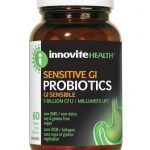
One supplement that meets all of the above criteria is Sensitive GI by Innovite Health. Each vegetarian capsule is guaranteed to contain a minimum of 5 billion colony forming units (CFU) as follows:
Lactobacillus acidophilus DDS®-1……………………………… 4.5 billion CFU
Bifidobacterium longum UABL-14……………..…………………0.5 billion CFU
With a standard dose of only 1 capsule per day, this powerful probiotic is economical and convenient.
Now you can order this health-boosting product through Perfect Resonance Natural Health Counselling for just $35 + HST = $39.55 (60 caps per bottle – a two month supply at a dose of one capsule/day). To order, please email info@perfectresonance.com and put ‘PROBIOTIC’ in the subject line. You will receive a confirmation email with payment instructions when your order is ready for pick up through Perfect Resonance Natural Health Counselling, located in the Marshall Health Clinic at 2605 Carling Avenue, Ottawa ON.
If you’d like more information on probiotics, check out my February 2012 Tip of the Month, “The Power of Probiotics”.
Take control of what you can!
This is one of my favourite ‘comfort foods’ from my childhood. I don’t remember anyone but my mom making this. This is a bit of a spin on one of my mom’s classics. She never uses recipes, so trying to duplicate her meals is impossible! If you blink, you’ll miss her throwing in a pinch of this or that. With some practice, this dish is pretty close to mom’s. I think the missing ingredient is a sprinkle of her love and unique energy! I made 2 stuffed artichokes with this recipe.
From a nutritional perspective, artichokes have been shown to offer numerous health benefits, including improving digestive health, lowering bad cholesterol, reducing the risk of heart disease, and supporting detoxification and liver function.
I hope you will enjoy this dish as much as I do!
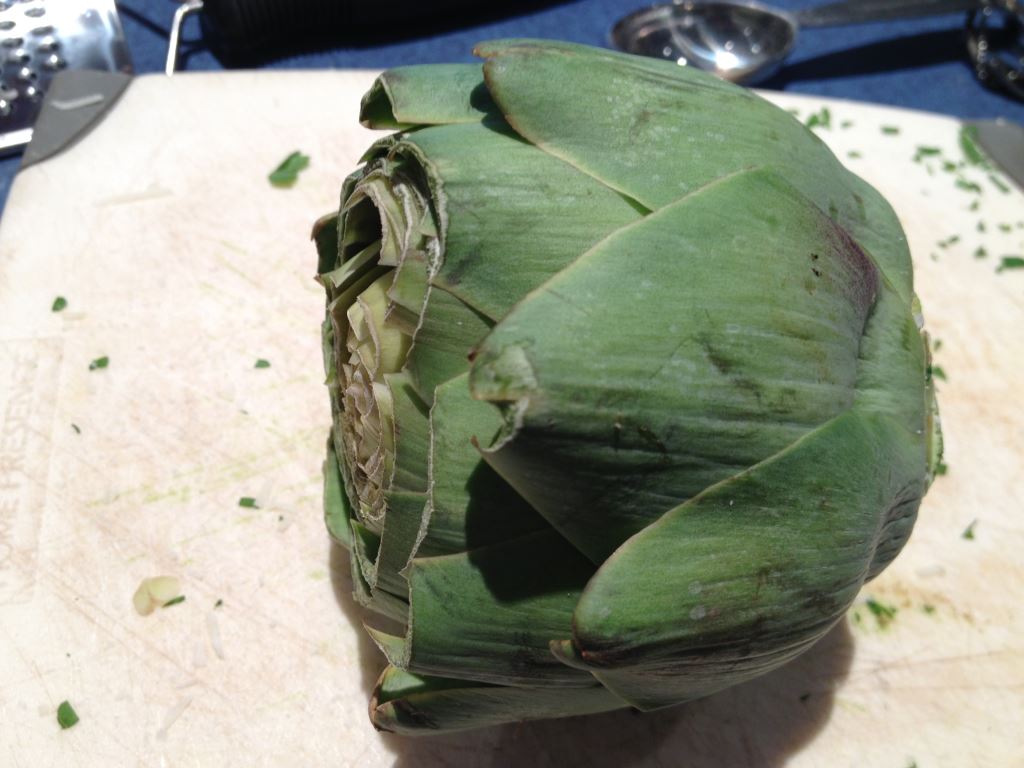
Cut off the stem and enough of the top part of the artichoke to get rid of the spikey leaf tips. Spread the leaves apart, starting from the outside layers and working your way in. Leave the lighter more delicate ones in the centre intact. They make up the artichoke ‘heart’
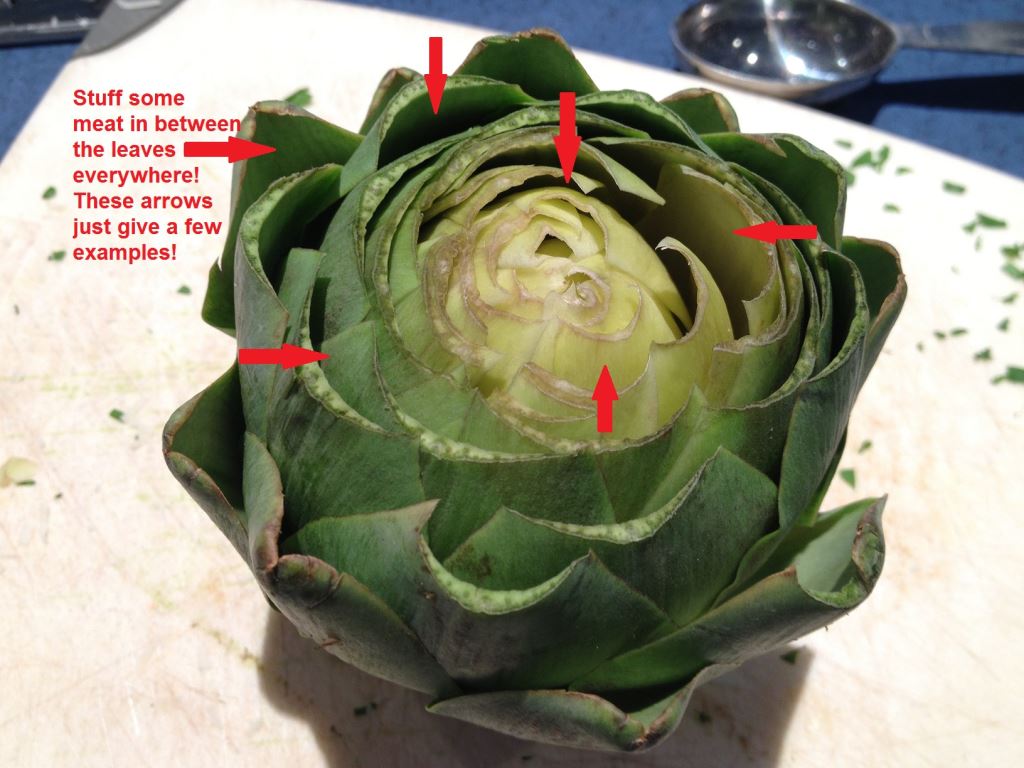 In a separate bowl, make a meatball-like mixture. I used about 1/2 kg of ground chicken (pastured is best) and mixed in: 1 TBSP freshly chopped parsley, 3 TBSP of oats, 1 egg, 2 TBSP freshly grated parmesan cheese, and whatever seasoning you like. I like Herbamare. Mix it all together. You’re now going to stuff a bit of the mixture in between as many of the spaces between the leaves as possible, still leaving the centre delicate leaves alone!
 You should end up with something that looks like this. I had extra meat, which I rolled into meatballs. Gently pat the meat down into the artichokes and also give them a very gentle squeeze to make sure everything’s all in place!
Put a couple of TBSP of extra virgin, cold pressed olive oil, one TBSP of butter, and a few (as many as you like!) slightly crushed cloves of garlic into a stove top casserole (or any pot you can cover and simmer something in) and turn the heat on low for a minute or two, just to gently warm the oil and butter up a bit and get some of that yummy garlic flavour infused into them.
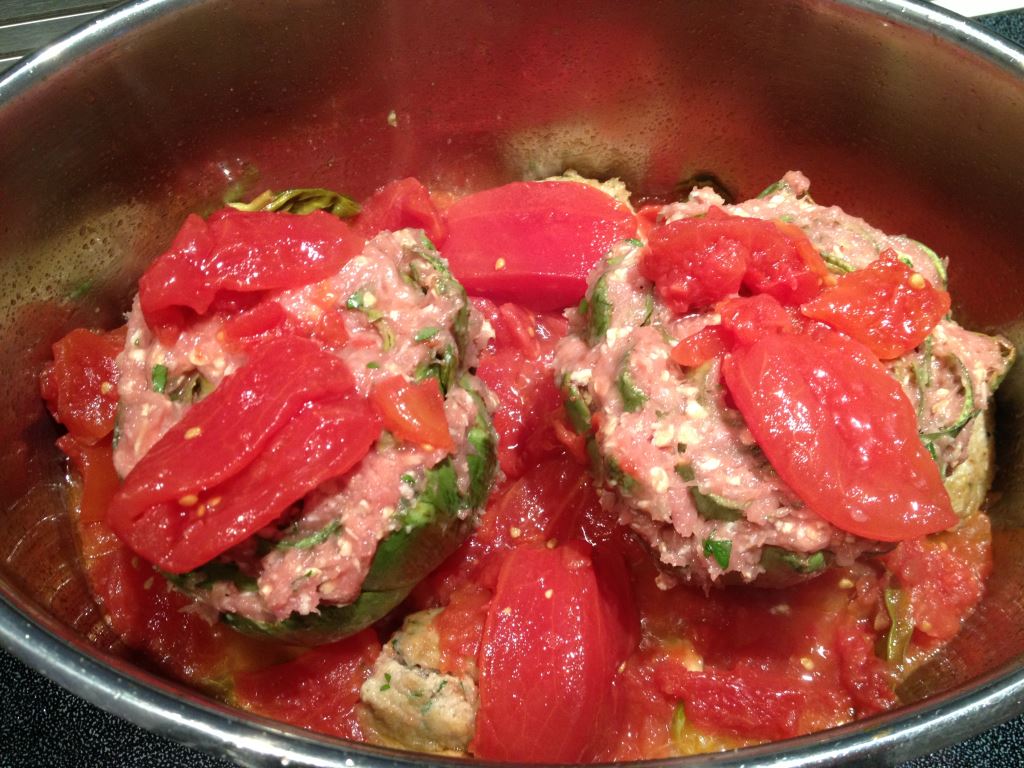 Put the artichokes in the casserole (stem side down) with the oil, butter, and garlic, and add about 1.5 cups of canned tomatoes. I am lucky to have a stash of homemade canned tomatoes from my mom and dad’s garden. Add about 1/4 cup of another liquid – water or chicken broth or even white wine. Add a few leaves of fresh basil, and a stem or two of fresh parsley. If you made meatballs with any left over meat, put them in the pot too. Season as you like. I used Herbamare again.
Bring to a boil, then reduce to low heat and simmer, covered, for about an hour. Check the artichokes a few times to make sure the liquid isn’t drying out – add more if it is. I also like to baste them with the tomatoey liquid developing in the pot when I check on them. To check for ‘done-ness’ I like to gently turn them so I can access and pierce the bottom of the heart (where the stem was cut off) with a fork. It should be very soft/mushy.
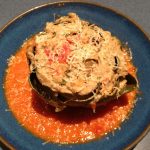
 When the artichokes are done, take them out and place them in the middle of a pasta dish. Then take a hand held blender, and puree the tomato sauce in the pot (or pour it into a blender and puree it). Pour the sauce around the artichoke, and grate fresh parmesan cheese over it all (if you wish). To eat it, start pulling off the leaves from the outside-in. Eat the meat that you find between the leaves, and also ‘pull’ the leaves through your teeth, scraping off their soft inner portion, which you’ll find more of as you work your way towards the centre. Dip the chunks of meat in the sauce…and the leaves too if you wish. So delicious! I’m sure you’ll find some way to enjoy the bonus meatballs…if you had any! Enjoy!
Join my email list and start living healthier!

Subscribe today and you'll receive a free e-guide that outlines the four key supplements you need for lifelong health!