
When you hear ‘granola’, do you think health food or junk food? Wait … granola could possibly be junk food? As in bad for you? Yup. It sure can.
Some brands of store bought granola are loaded with sugar. Just read the ingredients to see how many grams of sugar are listed, and remember that 4 grams of sugar is the same as one teaspoon of sugar. In addition, some brands may contain unhealthy oils, rancid grains, nuts, and/or seeds, preservatives, sulfites, and artificial sweeteners and flavours. If you find a truly healthy granola, the price may give you a shock.
It’s easy and economical to make your own granola. This recipe is based on a granola cluster recipe from Angela Liddon’s Oh She Glows vegan cook book, I’ve made a few changes to suit my tastes and accommodate what I regularly have on hand. Feel free to experiment by using different nuts, seeds, and spices! The recipe makes about 6 cups of granola. By the way, the Oh She Glows cook book is awesome. So many delicious recipes!
Important note! When buying/using the nuts, seeds, and grains for this recipe – or any other recipe for that matter – make sure they are not rancid! If they are rancid, they will smell ‘off’ and taste even worse. If you are buying them from a bulk container, smell them first and if in doubt, ask if you can taste a sample. If you suspect even the slightest bit rancidity, do not buy them! Rancidity is caused by the oxidization of oils in the nuts/seeds/grains, and oxidized oils are not a healthy thing to put into your body!
What You’ll Need:

- an oven that is preheated to 275F and a parchment lined baking sheet
- 1 cup of whole raw almonds
- 1/2 cup of walnut or pecan pieces (I sometimes find the pieces are rancid while the halves are not. If that is the case, buy the halves and then break/cut them up into smaller pieces)
- 3/4 cup of rolled oats (if you want to avoid gluten, make sure they are certified gluten-free)
- 1/2 cup of raw buckwheat groats (so nutritious!)
- 2/3 cup of mixed dried fruits. You can use whatever you like. I like to use black mission figs, cherries, and apricots, then cut them up into raisin-sized pieces. Whenever possible, I buy organic/no sulfite dried fruits. If you’ve never compared an organic, sulfite-free dried apricot to a ‘regular’ one, please do so next time you can and see what differences you notice!
- 1/2 cup of raw pepita seeds (the little green pumpkin seeds)
- 1/4 cup of raw sesame seeds
- 1/3 cup unsweetened shredded coconut
- 2 teaspoons ground cinnamon
- 1/4 teaspoon of fine grain sea salt
- 1/4 cup local raw honey
- 1/4 cup melted coconut oil
- 2 TBSP of your favourite nut or seed butter
- 2 teaspoons pure vanilla extract
Step 1: Prepare the Nuts
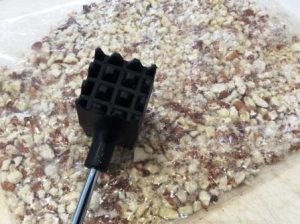
Turn 1/2 cup of the almonds into a coarse meal (sandy texture). The original recipe says to use a food processor, but I just put the almonds in plastic Ziploc bags (close the seal) and whack away at them with a kitchen mallet. Great exercise and stress release! :o)
Turn the other 1/2 cup of almonds into pieces using the same process (just don’t whack as long or as hard!). If you are using walnut or pecan halves, break them up too.
Step 2: Mix Up the Dry Stuff

Put the almonds, other nuts, oats, buckwheat groats, dried fruit, pepita and sesame seeds, shredded coconut, and cinnamon in a large bowl and mix together. Looks delicious already!
Step 3: Mix Up the Other Stuff

In a small measuring cup, mix together the honey, melted coconut oil, nut/seed butter, vanilla extract, and salt until well combined.
Step 4: Mixing It All Up

Pour the wet stuff into the dry stuff and mix it all up.
Step 5: Press It All Up

Dump the mixture onto the parchment paper lined baking sheet and gently press it down (just hard enough for it to hold together) into a 1/2 inch layer.
Step 6: Bake & Break

Bake for 40 to 45 minutes. If your oven tends to cook unevenly, you may want to rotate the baking sheet halfway through. You want the granola to have a lovely light golden bottom and also be firm to the touch. Once it’s done, take it out of the oven and let it cool on the pan for at least an hour. Then the fun part comes … break it all up!

Step 7: Store
I store my granola in a big glass jar. You can store it like this for 2-3 weeks in the fridge (if it lasts that long!) You can also freeze it in an airtight container/freezer bag for a few months – especially useful if you ever decide to double (or triple!) the recipe.

Step 8: Enjoy
Big chunks of this granola are a great snack as is – another snack idea to add to my ‘sugar craving buster‘ suggestions! I also love using it as a topping for a bowl of yogurt and berries. Enjoy!


 bars. Then there’s the not so obvious stuff that you might even consider to be ‘healthy’, such as instant oatmeal packs, flavoured yogurts, and granola bars. Read the labels on EVERYTHING and remember that 4 grams of sugar is equal to one teaspoon of sugar. Get the sugary stuff out of the house, and don’t bring any in. If that package of Oreo cookies isn’t in the pantry at that moment when you’re craving them, but a health alternative is, chances are the healthy alternative will win out over the inconvenience of having to drop everything to make an Oreo run. So what do I mean by healthy alternatives? Read on!
 have as much sugar, or you can make your own. Try some soda water with fresh squeezed lemon and lime and a splash of maple syrup, honey, or a tiny bit of stevia. If you just have to have that cookie or granola bar, go to a health food store and read labels until you find one that is low in sugar, or make your own. Try my
  contains are a great alternative to glucose as an energy source for our cells, in particular our brain cells. In fact, one of my favourite ways to calm a sugar craving is to take 4 or 5 Mary’s Crackers (or other gluten-free/wheat free cracker), spread a generous amount of coconut oil on each one, and then sprinkle a bit of unprocessed sea salt on top. This satisfies my sweet/salty cravings as my cells and adrenal glands appreciate the MCTs in the coconut oil and 60+ trace minerals contained in the unrefined salt!
 If I ever had a craving for a soft drink (which I NEVER do, even though we used to drink glasses of pop with dinner as kids), I would hands down go for a regular soft drink instead of a diet one. There are many studies now that show that consuming artificial sweeteners actually makes us crave sugar! While artificial sweeteners may trick our taste buds, they don’t satisfy our cells’ cravings for sugar. In fact, artificial sweeteners can interfere with a hormone called leptin, which plays a critical role in appetite regulation (e.g. it tells us to stop eating when we feel we are getting full).
 We often crave sugar because our cells are ‘sluggish’ – that is, we feel tired. Our cells can also feel ‘sluggish’ if we don’t drink enough water – and the fact is, most of us don’t. Before reaching for that sugary snack, try drinking a glass of water and wait for 10 or 15 minutes. You may find that it helps diminish or eliminate your craving.
  Blood sugar imbalance and sugar cravings go hand-in-hand. There are many nutrients that can help balance blood sugar, including B-vitamins, magnesium (chocolate cravings may be a sign of a magnesium deficiency), probiotics, omega-3 fish or krill oil, and vitamin D. Not all supplements are created equal, so make sure that you consult a nutritionist (like yours truly) to ensure that the supplements you are taking are going to make a difference.


 This slow-cooked winter veggie stew is loaded with health-boosting and tummy-warming goodness. It looks gorgeous and tastes amazing. It’s one of my favourite winter meals!
 This is a quick, easy, economical, and delicious way to cook chicken. I first tried it at my brother’s house during one of his famous multi-course farm-to-table gatherings. He has a wonderful hobby farm where he grows loads of gorgeous veggies and also raises pastured chickens for eggs and meat. This recipe works best if you have a convection broil setting on your oven.
 This broccoli salad is packed with nutrient-dense foods and makes a great side at any time of year. Use pomegranate seeds, diced red bell pepper, or dried cranberries instead of (or in addition to) the raisins for a festive look!
 My daughter made these pancakes for me last summer and they quickly became one of my favourites. They’re so easy to make and a great way to use up those really, really ripe bananas that a lot of people don’t like to eat! This recipe will make a couple of decent sized pancakes – enough to feed one person, or two not so hungry people.
 I try to avoid starchy side dishes such as rice and potatoes. An easy, delicious and nutritious alternative to both is cauliflower. In this recipe, I’ll be showing you how to make roasted cauliflower as a substitute for roasted potatoes. It’s super-easy, delicious, and packs a greater nutritional punch compared to roasted potatoes.
 These bars freeze well, and you can make substitutions to many of the ingredients to suit your taste. Not only are they easy to make, they are also soooo delicious and loaded with healthy, nutrient-rich ingredients. These bars are a GREAT alternative to the commercial, highly-processed and sugar-loaded granola bars that are packed into so many kids’ (and adults’) lunch bags. If there is a ‘nut-free’ policy at school or work, you can use seed butters instead of nut butters.
 This is one of my favourite dinners – especially for feeding a crowd. I’ve had this recipe for years. It’s from a very old Canadian Living Magazine (Jan 2001). I’ve made it a ton of times, but I don’t think I’ve ever made it the same way twice – and I swap out the wheat flour in the original recipe for almond or coconut flour. Curry dishes are pretty ‘accepting and forgiving’. so you can change them up according to what you have available in your fridge or pantry and they typically still turn out great.
 For her first day of senior kindergarten, my oldest daughter (who is now in her 20s) made sure that she had packed her most favourite snack food ever. They were little orange square crackers called “Cheese Nips”. I would never buy them in a million years now, but back then, I didn’t know what I know now. For some reason, my daughter always referred to these crackers as “Cheese Snips”, so that’s the name I’ve given to this cheesy cracker recipe that has only one ingredient – cheese. This recipe makes about 40 “Snips” (aka crackers – or frackers as my daughter used to say).
 These buckwheat pancakes are yum yum yummy and so easy to make! This recipe is my favourite pancake recipe and I consider it a bonus that these pancakes are gluten-free/wheat-free. Did you know that buckwheat is not a type of wheat or even a type of cereal grain? It’s actually a fruit seed that is related to rhubarb. That makes it a great alternative if you are sensitive to wheat or other gluten-containing grains.
 This tip was written to raise awareness of the numerous health issues you may be experiencing that are associated with eating sugar and anything that turns into some form of sugar, including grains, rice, corn, starchy foods, and anything that is made with them. It also shares how sugar is hiding in so many foods we buy and offers some tips that can help to balance blood sugar.
 In this blog, I share the reason why I’ve never purchased a 10-day detox kit, a few things you might want to consider if you are thinking about buying one, and a ‘Top 10’ list of things you can do to support your body’s natural detox mechanisms that are trying to do the job every day.
 In this blog, I talk about the importance of getting enough water into our bodies. I also share some thoughts on how much water is enough water, as well as ten high-water-content foods that can help us stay hydrated and healthy!
 The title of this blog is pretty self-explanatory! I also share some yummy alternatives to your favourite spud dishes!
 Read/re-read this tip just in time for BBQ season! In this blog, I explain some unhealthy compounds that BBQing meat, pork, poultry, and fish can introduce into our meals and some tips on how to limit or prevent their formation.


