Chocolate Nut (or Seed) Butter Banana Frozen Treats

These dairy-free, egg-free, gluten-free, and sugar-free (other than the natural sugars in the bananas) frozen treats are super easy to make and a perfect way to use up very ripe bananas! You can make them up in popsicle molds for a classic casual fudgesicle-like summer treat, or in muffin tins or other fancier molds to serve them up as a more formal dessert. Feel free to experiment with this recipe by adding your own favourite flavours … maybe some cayenne pepper, or chopped up nuts, or even some fresh summer herbs such as mint. This recipe makes about 12 popsicles or 12 ‘muffins’.

You Will Need:

  • 3 large and very ripe bananas
  • 1 cup of unsweetened non-dairy milk (e.g. cashew, almond, coconut, etc). I used a vanilla flavoured almond milk this time around. You can use your favourite flavour.
  • 1/2 cup of your favourite nut and/or seed butter. I used peanut butter this time.
  • 1 tsp of ground cinnamon or any spice you think would add a great flavour (optional and not pictured above – but highly recommended if you like cinnamon)
  • 1/2 cup of raw cocoa nibs or mini dark chocolate chips (optional and not pictured above – but highly recommended if you like chocolate)

Step 1: Blend

Add all the ingredients into a blender and blend until smooth with the chocolate chips/cocoa nibs still in chunks. You can add all or some of the cocoa nibs/chocolate chips in after blending the other ingredients if you want a chunkier treat.

Step 2:  Freeze

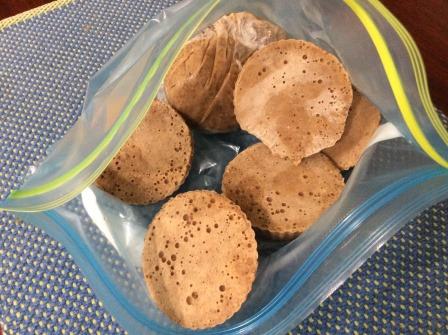
Pour the mixture into popsicle molds or muffin tins. Line the muffin tins with silicon liners or plastic wrap so the frozen treats can be easily removed. Freeze for 1 to 2 hours, depending on how soft or hard you like your ice cream. If you opt to use muffin tins, and you’re not planning to serve the treats right away, freeze them for longer – at least 3 hours – so they are frozen solid. Then remove them from the tin (and the plastic wrap or silicon liners) and put them in a freezer bag so that they don’t get freezer burn. You may want to wrap them individually in plastic wrap and then put them in a freezer bag. I like to write the date on the bag so I know how long they’ve been in the freezer (as if they’d be in there too long!!!).

Step 3: Serve

Note that while the popsicle option is ready to enjoy right out of the freezer, the muffin tin option will need 5 minutes or so at room temperature so that it gets soft enough to eat with a spoon. You can fancy it up by adding toppings – use your imagination – edible flowers, fresh herbs, chopped up nuts, shredded coconut …. you get the idea! I’ve topped this batch with toasted pine nuts (left over from pesto I made a few days ago), fresh mint and a chive flower from the garden, and some shredded coconut!

Enjoy!

Trouble Sleeping? This Supplement Can Help!

Getting a good night’s sleep is a major foundation of supporting mental, emotional, and physical health; but unfortunately, lack of sleep seems to be a significant issue with so many people.

In a blog I wrote several years ago, I shared some practical, natural tips that can help to improve the quality and quantity of your sleep.

In this blog, I am shining the spotlight on a natural supplement that is often associated with promoting sleep. Whether or not you’ve tried it before, and whether or not it worked for you, please keep reading, because not all supplements are created equal … what else is in the supplement, the dosage, when it is taken, and how it is taken can all make a difference in whether or not it will work for you. The supplement I’m talking about is melatonin.

What Is It And What Does It Do?

Melatonin is a natural hormone that is secreted by a tiny gland nestled deep within your brain – the pineal gland. The pineal gland is often referred to as the ‘biological time keeper’. Its most recognized function is that it maintains your body’s circadian rhythm – your body’s built in clock that regulates your sleep and awake cycles, your eating patterns, and many other physiological processes in your body. This built in clock is affected by many things, including sunlight, temperature, lifestyle patterns, and hormones.

One of melatonin’s main functions is to maintain your body’s circadian rhythm by playing a role in the biological regulation of sleep. It also buffers cortisol – your body’s main stress hormone, which is often chronically high for many individuals dealing with so many daily stressors. Unfortunately, your melatonin levels drop as you age, typically around age 40. This is significant because the functions of melatonin go far beyond getting a good night’s sleep. Melatonin also helps to protect you against certain infections, reduces symptoms of menopause, and protects your brain function as you age.

A melatonin product that I have recently started stocking is Melatonin-B6/Mg – a new product from Biotics Research Canada. In addition to melatonin, this product also delivers:

  • Vitamin B6: Vitamin B6 plays a critical role in the formation of dopamine, serotonin, epinephrine, and norepinephrine – neurotransmitters that are involved in regulating your sleep, your wakefulness, your mood, how your body responds to stress, and much more.
    Magnesium: Magnesium is involved in hundreds of processes in your body. It can also affect your sleep quality, including helping to increase your total sleep time, reducing the time it takes you to fall asleep, and and re-setting your body’s sleep-wake cycle (which is also helpful to manage jet lag!).

What You Need To Keep In Mind

Remember, in addition to what’s in a supplement, dosage is also important. Recent research suggests that lower doses of melatonin (e.g. 0.3 – 1.0 mg) can be more effective than the typical dose of 3 mg found in most supplements . Also, the timing of taking melatonin can make a big difference in how it will work for you. Everyone is different, so you should work with a health care professional (like me!) to figure out what will be best for you.

To learn more about the many ways melatonin can benefit you, and how it is being used to treat various health issues, watch this great video entitled “The Power of Melatonin”.

How You Can Get Some Melatonin-B6/Mg

To order your bottle of Melatonin-B6/Mg, please email me at info@perfectresonance.com, with the subject line MELATONIN and I’ll confirm one is put aside for you for pick up at the Marshall Health Clinic (2605 Carling Avenue) OR if you live in Canada, I can have the product shipped directly to your home (note there will be a $5.00 shipping fee). As of June 2018, the price of a 60 tablet bottle is $30 + HST (price subject to change).

Take control of what you can, and here’s to a good night sleep!

Caution: Melatonin is often not recommended for pregnant women.

5 Grab-and-Go Breakfasts

In this blog, I’m sharing 5 yummy recipes for grab-and-go breakfasts, but first, a bit of breakfast conversation.

Do You/Should You Eat Breakfast?

I’m guessing that at some point you’ve heard someone say that breakfast is the most important meal of the day – or that you should eat breakfast like a king, lunch like a prince, and dinner like a pauper!

Despite this, perhaps some of you skip breakfast, daily or frequently, either because you don’t have time, you’re not hungry in the morning, or you’ve heard that skipping breakfast will help you lose weight. If that’s the case, you may be interested in a small new study published in the American Journal of Nutrition.

This study suggests you should eat breakfast. It showed that compared to eating 3 meals a day, skipping breakfast lead to higher post-meal insulin levels and increased fat oxidation. In easier to understand terms, this means skipping breakfast may lead to issues with blood glucose balance and may also promote low-grade inflammation throughout the body. Both of these outcomes can interfere with weight management, cardiovascular health, and a host of other health issues … but it was a small study, so far from delivering conclusive results.

The truth is, you’d be hard pressed to find any conclusive studies regarding the question of whether or not you should eat breakfast. So what should you do? Are you ready for some earth-shattering advice on this question? OK … here it is:

Eat breakfast if you’re hungry … and/or if it makes you feel better.

That’s it – just listen to your body! If you’re hungry in the morning, and you feel better when you eat breakfast, then eat breakfast. If you’re not hungry in the morning and you don’t feel good when you eat breakfast, then don’t eat breakfast … but beware of the following!

The Problem:

If you leave home without having breakfast, chances are you’ll be hungry soon afterwards, when you’re away from your kitchen that is stocked with healthy breakfast foods (It is, right? Right!) – and by healthy breakfast foods, I’m not talking breakfast cereals, store-bought muffins or granola bars, or toast with PB&J). If you don’t eat breakfast before you leave home, chances are you’ll end up buying something that isn’t all that good for you.

The Solution:

Whether you’re racing against the clock to get out the door in the morning, or you’re too tired to make yourself a healthy breakfast, or you’re just not hungry (yet!), don’t let any of those be reasons for not having a healthy breakfast. To help you out, here are 5 Grab-and-Go breakfasts that you can prepare ahead of time. On those busy mornings when you’re rushed to get out the door, you’ll be thankful that you did! All of these breakfasts are loaded with healthy fats, proteins, and carbs that will fuel you through your morning!

#1 – Basic or Fancy Eggs to Go

Eggs are nature’s perfect food, offering healthy proteins and fats, including cholesterol. Yes, cholesterol is healthy! Hard boiled eggs will keep in the fridge for up to a week and make a great grab-and-go breakfast or any time snack. If you can find a source of eggs from pastured hens, that is the ultimate!

You can also make some more interesting grab-and-go egg breakfasts such as egg muffins or a quiche. Make them when you have time and then refrigerate or freeze for grab-and-go breakfasts.

There are loads of variations on how to make egg muffins (just Google ‘egg muffins’). Basically, to make a dozen egg muffins, you beat a dozen eggs, then mix in some sautéed diced veggies and maybe some fresh herbs (whatever strikes your fancy – think omelette), and season to your taste. Pour the mixture into a greased muffin tin and bake in a 350F oven for about 15 minutes, or until the egg muffins are firm/an inserted toothpick comes out clean. Remove from oven, let cool, remove from muffin tin, and refrigerate (up to a week) or freeze them individually in small freezer bags. Defrost overnight and you’ll have a grab-and-go breakfast the next morning!

If you make a quiche ahead of time, it will keep in the fridge for up to a week or you can freeze it in individual serving sized slices. Here’s one of my favourite quiche recipes – my Greens and Feta Quiche with an Almond Crust.

#2 – Power-Packed Cookies or No-Bake Yummy Snack Bars


These cookies and bars freeze well, and you can make substitutions to many of the ingredients to suit your taste. Not only are they easy to make, they are also soooo delicious and loaded with healthy, nutrient-rich ingredients. They are a GREAT alternative to store bought cookies and bars that are typically highly-processed and loaded with sugar and unhealthy fats.

#3 – Mason Jar Yogurt Parfait

For this yummy grab-and-go breakfast, simply alternate layers of WHOLE FAT, plain, organic yogurt (Greek is higher in protein), mixed berries, and chopped up nuts and seeds (or a healthy granola) in a mason jar. Put the lid on and refrigerate. You can make a bunch of these at once. They’ll keep nicely in the fridge for several days, especially if you use whole berries (e.g. raspberries, blueberries, blackberries) or other fruits that won’t go mushy quickly.

#4 – Mason Jar Oatmeal with Toppings

Place equal amounts of oats and a non-dairy ‘milk’ (e.g. almond milk, cashew milk, coconut milk, etc), ¼ tsp of cinnamon, and some chopped up dried fruit, nuts, and/or fresh green apple in a mason jar. Put on the lid (make sure it’s tight!), and shake.

Place in the fridge overnight. You’ll have oatmeal to go in the morning. Note that for one serving, I usually use ½ cup each of oats and ‘milk’. I like to add fresh fruit in the morning before I head out (papaya this time – did you know it’s a digestive aid?).

Oh – and here’s a little short cut I sometimes use. I substitute the oatmeal with a Jordan’s cereal (already has nuts, seeds, dried fruit in it!)

These can keep in the fridge for up to 5 days – just note that the oatmeal will get softer/mushier/creamier the longer it sits. You can add more liquid in the morning if you like.

#5 – Mason Jar Chia Pudding

Chia pudding is super easy to make in advance. It’s a great source of nutrients, including fibre and inflammation-busting omega-3 fatty acids. You can also take a lot of liberty making it to your liking … including getting your chocolate fix! You can add fresh fruit to the jar before you head out if you wish. Check out the video below for instructions and some flavour ideas.

Enjoy!

References:

https://academic.oup.com/ajcn/article/105/6/1351/4668664

http://time.com/4786181/skipping-breakfast-health-benefits/

https://www.huffingtonpost.com/anne-ricci/should-you-eat-or-skip-br_b_10502220.html

Chickpea Water as an Egg Substitute!

What came first, the chickpea or the egg? :o)

One of my daughters told me about using chickpea water as an egg substitute, and it works quite well! A great alternative to eggs if you’re vegan, or if you have allergies or sensitivities to eggs.

Apparently the water from certain other canned legumes works too, but I haven’t tried any others yet.

So, next time you open a can of chickpeas to make a yummy recipe … like my Chickpea and Artichoke Salad, or my Hummus, or my One-Pot Winner-Winner Coconutty Chicken Curry Dinner , save that chickpea water and try it out as an egg substitute, perhaps in some baking … like my Power-Packed Cookies!

Watch the video below to see how you can make use out of the water from canned chickpeas!

Pancetta and Sage Wrapped Salmon

This recipe is super easy and it is absolutely delicious. If you or someone you know is a bacon lover but isn’t crazy about salmon, this recipe just might be a game changer! I love this recipe because it’s simple and quick enough to make for dinner on any night, and it’s also a hit at dinner parties. Serve it up with your favourite veggie sides, and enjoy!

This month, I’m trying something a bit different. I’m including a video version of the recipe, as well as my usual photos and written instructions.


What You’ll Need (makes 4 servings):

  • about 500 – 550 grams of skinless salmon fillets (organic or wild caught if available)
  • 16 slices of thinly sliced pancetta (you want the pieces to hold together fairly well, but not be too thick – the video explains why!)
  • a bunch of fresh sage
  • a TBSP or so of olive oil

Step 1: Prep the Salmon

  • Cut the salmon into 4 equal pieces


Step 2: Get Wrapping

  • Place 4 pieces of pancetta on a large, flat surface (your kitchen counter for example), so that they are slightly overlapping to form a square(ish) layer
  • Place one of the four pieces of salmon on the edge of the pancetta layer, closest to you
  • Place two or three sage leaves (‘furry’ side up) on the salmon
  • Roll the salmon and sage leaves up in the pancetta, doing your best to keep the pancetta pieces intact, and rolling it tightly so it stays together
  • Repeat the above for each piece. You can cook the wrapped salmon as soon as you are done wrapping all the pieces OR you can wrap each piece in wax, plastic, or parchment paper, put them in a container, and place in the fridge until you are ready to cook, as pictured below.
  • There are a couple of advantages to doing this. One is that you can prepare the salmon ahead of time – as early as first thing in the morning to as late as 30 minutes before dinner. The other is that even just 30 minutes in the fridge helps the pancetta to better stick to the salmon.

Step 4: Get Cooking

  • Heat the olive oil in a non-stick pan (I like ceramic) at around or just under medium heat
  • Place the pancetta wrapped salmon in the pan (of course, you’ve removed any wax, plastic, or parchment paper first!)
  • Cook the salmon for about 2 minutes per side (4 sides!). Cooking time could be shorter or longer depending on how you like your salmon cooked; however, you want it to be long enough so the pancetta crisps up and I find that 2 minutes per side is just about right.
  • In the last 30 to 60 seconds of cooking, add some fresh sage leaves to the pan (see below). This will add extra flavour, and also the sage will crisp up and make a great garnish

Step 5: Serve With Your Fave Veggie Sides

  • This time, I served the salmon with a garden salad, some roasted asparagus, and roasted cauliflower. I don’t have a roasted asparagus recipe on my website, but you’d basically prep the asparagus the same way, but reduce to cooking time to 7 to 10 minutes, flipping once halfway through.

Enjoy! 

Should You Stop Taking Fish Oil?

You may have heard, or may soon hear, about a new meta-analysis published in the Journal of the American Medical Association (JAMA) this month basically stating that fish oil supplements are useless; more specifically, that they don’t reduce the risk of coronary heart disease, non-fatal heart attacks and strokes, or diabetes. The headline caught my attention, because I have seen many clients with cardiovascular and/or blood sugar related issues benefit from taking fish oil and/or krill oil, both excellent sources of inflammation-busting omega-3 fatty acids.

What’s important to keep in mind when you hear or read nutrition or nutritional supplement related research headlines in the news is that sometimes, the headlines ignore some very important details of the research.

In an article entitled: Perpetuating Nutritional Ignorance among Doctors and Recycling Bad Science: Another Nail in the Coffin for JAMA’s and AMA’s Dying Credibility, written by Clinician & Researcher Dr. Alex Vasquez, Dr. Vasquez reveals the data analysis of the fish oil meta-analysis published in JAMA was poorly done, leading to unreliable research, and by association, potentially unethical research. You can also hear his take on things by watching this video.

Dr. Vasquez states that, unlike fish oil, what really has no clinical value is publishing poorly conducted research, like this meta-analysis that concluded that fish oil supplements are pretty much useless. Here are a few of the faults he found related to the study published in JAMA:

  • Very important data was excluded from the meta-analysis.
  • Many of the studies included in the meta-analysis used non-therapeutic doses of fish oil, so there was no chance at showing efficacy. That means that the dose of fish oil used was lower than the dose required to deliver positive, therapeutic results (you can bet that doesn’t happen with prescription drug research). Only 3 of the 10 studies included in the meta-analysis used the recognized therapeutic dose of 1800 mg/day.
  • 9 of the 10 studies included in the meta-analysis used unnatural forms of fish oil, which are more difficult to digest and absorb than natural forms. This is a big issue for me as I have seen time and time again that the quality of a supplement is critical to its therapeutic effects. With supplements, you need to ask yourself: What is the source? How is it processed? How is it packaged? How is it handled from manufacturing to storage to shipping? The omega-3 fatty acids in fish oil are very easily oxidized/damaged, for instance by heat and light. I would never, ever, buy big clear bottles containing hundreds of clear fish oil capsules – like some of the brands that you see in some retail stores. The fish oil in those capsules could very well already be oxidized/damaged, so they not only won’t protect you from various health issues, they will likely create them!
  • The conclusions are at odds with the data; that means, that if the raw data is analysed without any ‘author bias’ the conclusion actually would have been that fish oil did offer a benefit in most of the studies included in the meta-analysis … but that isn’t what made the headlines. Remember, researchers can skew results by ‘massaging’ the data.
  • There was funding bias. Unfortunately, when it comes to research headlines on natural supplements, you have to follow the money. Apparently, several of the authors were paid/funded by drug companies.


Hmmmm … seems there was something fishy going on with that study!

(sorry, couldn’t resist!)

Remember, quality and proper dosing are important when it comes to supplements. If a doctor told you to take 10 mg of a prescription drug daily, would you expect that drug to work if you decided to take less than the prescribed dose and/or not take it every day?

Despite this latest news headline regarding fish oil, I am going to keep taking it (and/or krill oil) daily. If you are looking for a high quality fish oil that delivers results, I personally take and recommend Biotics Research BioMega-3 Liquid fish oil. At Biotics Research Corporation, all their omega-3 fatty acids are routinely tested for heavy metal contamination, PCBs and other chemical impurities. You can learn more about it in this blog I wrote a few years ago.

You can order a bottle of Biomega-3 Liquid through through Perfect Resonance Natural Health Counselling. The current price (as of April 2018) is $52 + HST. At a dose of 1 teaspoon daily, this product provides about a one-and-a-half month supply.

To order, please email info@perfectresonance.com and put ‘FISH OIL’ in the subject line. You will receive a confirmation email with payment instructions when your order is ready for pick up through Perfect Resonance Natural Health Counselling, located in the Marshall Health Clinic at 2605 Carling Avenue, Ottawa ON. Shipping to an address within Canada can also be arranged with pre-payment. Please note that this option will include an additional $5.00 shipping charge.

As always, whenever you start taking a new supplement, it’s important to let your doctor and/or other health care practitioners know, especially if you are on any medications.

Take control of what you can!

References:
https://vimeo.com/265987272

https://www.bioticscan.com/UserFiles/File/n3_JamaNailCoffin.pdf

Great Granola

When you hear ‘granola’, do you think health food or junk food? Wait … granola could possibly be junk food? As in bad for you? Yup. It sure can.

Some brands of store bought granola are loaded with sugar. Just read the ingredients to see how many grams of sugar are listed, and remember that 4 grams of sugar is the same as one teaspoon of sugar. In addition, some brands may contain unhealthy oils, rancid grains, nuts, and/or seeds, preservatives, sulfites, and artificial sweeteners and flavours. If you find a truly healthy granola, the price may give you a shock.

It’s easy and economical to make your own granola. This recipe is based on a granola cluster recipe from Angela Liddon’s Oh She Glows vegan cook book, I’ve made a few changes to suit my tastes and accommodate what I regularly have on hand. Feel free to experiment by using different nuts, seeds, and spices! The recipe makes about 6 cups of granola. By the way, the Oh She Glows cook book is awesome. So many delicious recipes!

Important note! When buying/using the nuts, seeds, and grains for this recipe – or any other recipe for that matter – make sure they are not rancid! If they are rancid, they will smell ‘off’ and taste even worse. If you are buying them from a bulk container, smell them first and if in doubt, ask if you can taste a sample. If you suspect even the slightest bit rancidity, do not buy them! Rancidity is caused by the oxidization of oils in the nuts/seeds/grains, and oxidized oils are not a healthy thing to put into your body!

What You’ll Need:

  • an oven that is preheated to 275F and a parchment lined baking sheet
  • 1 cup of whole raw almonds
  • 1/2 cup of walnut or pecan pieces (I sometimes find the pieces are rancid while the halves are not. If that is the case, buy the halves and then break/cut them up into smaller pieces)
  • 3/4 cup of rolled oats (if you want to avoid gluten, make sure they are certified gluten-free)
  • 1/2 cup of raw buckwheat groats (so nutritious!)
  • 2/3 cup of mixed dried fruits. You can use whatever you like. I like to use black mission figs, cherries, and apricots, then cut them up into raisin-sized pieces. Whenever possible, I buy organic/no sulfite dried fruits. If you’ve never compared an organic, sulfite-free dried apricot to a ‘regular’ one, please do so next time you can and see what differences you notice!
  • 1/2 cup of raw pepita seeds (the little green pumpkin seeds)
  • 1/4 cup of raw sesame seeds
  • 1/3 cup unsweetened shredded coconut
  • 2 teaspoons ground cinnamon
  • 1/4 teaspoon of fine grain sea salt
  • 1/4 cup local raw honey
  • 1/4 cup melted coconut oil
  • 2 TBSP of your favourite nut or seed butter
  • 2 teaspoons pure vanilla extract

Step 1: Prepare the Nuts

Turn 1/2 cup of the almonds into a coarse meal (sandy texture). The original recipe says to use a food processor, but I just put the almonds in plastic Ziploc bags (close the seal) and whack away at them with a kitchen mallet. Great exercise and stress release! :o)

Turn the other 1/2 cup of almonds into pieces using the same process (just don’t whack as long or as hard!). If you are using walnut or pecan halves, break them up too.

Step 2: Mix Up the Dry Stuff

Put the almonds, other nuts, oats, buckwheat groats, dried fruit, pepita and sesame seeds, shredded coconut, and cinnamon in a large bowl and mix together. Looks delicious already!

Step 3: Mix Up the Other Stuff

In a small measuring cup, mix together the honey, melted coconut oil, nut/seed butter, vanilla extract, and salt until well combined.

Step 4: Mixing It All Up

Pour the wet stuff into the dry stuff and mix it all up.

Step 5: Press It All Up

Dump the mixture onto the parchment paper lined baking sheet and gently press it down (just hard enough for it to hold together) into a 1/2 inch layer.

Step 6: Bake & Break

Bake for 40 to 45 minutes. If your oven tends to cook unevenly, you may want to rotate the baking sheet halfway through. You want the granola to have a lovely light golden bottom and also be firm to the touch. Once it’s done, take it out of the oven and let it cool on the pan for at least an hour. Then the fun part comes … break it all up!

Step 7: Store

I store my granola in a big glass jar. You can store it like this for 2-3 weeks in the fridge (if it lasts that long!) You can also freeze it in an airtight container/freezer bag for a few months – especially useful if you ever decide to double (or triple!) the recipe.

Step 8: Enjoy

Big chunks of this granola are a great snack as is – another snack idea to add to my ‘sugar craving buster‘ suggestions! I also love using it as a topping for a bowl of yogurt and berries. Enjoy!

Privacy Policy

Website Maintenance and Services by Andrew Wardell